
For a long time, the Aventon Level was the “safe” bet in the ebike world. It was the Toyota Camry of commuters: reliable, reasonably priced, and exactly what you expected. If you wanted a bike that just worked for your 5-mile ride to the office, you bought a Level and did not think twice about it. It was a tool, not a tech statement.
With the release of the Level 4 series, Aventon has decided to move the goalposts. Instead of refining a single model, they have split the 4th-generation lineup into two distinct personalities: the Level 4 REC and the Level 4 ADV.
The REC is the logical evolution of the Level 3, keeping the same approachable value that built the brand. The ADV, however, is a massive leap into premium territory. We are talking mid-drive motors, electronic auto-shifting, and enough smart tech that the bike essentially functions as its own security personnel the second you walk away from it. But as we like to say here, more tech could mean more complexity.
To help you decide if that $800 price jump is an investment or an over-complication, we need to look at what is happening under the paint.
Aventon Level 4 REC vs ADV: Specs, Price, and Key Differences
The gap between these two bikes is much wider than just a few hundred dollars. They use entirely different motor architectures, battery chemistries, and drivetrain philosophies. Before we get into the ride feel, let’s take a look at the data for the Aventon Level 4 series lineup.
Feature | Level 4 REC | Level 4 ADV |
Price | ~$1,999 | ~$2,799 |
Motor Type | 750W Rear Hub (1,425W Peak) | Aventon Ultro S Mid-Drive |
Torque | 80 Nm | 100 Nm |
Battery | 733Wh (LG Cells) | 800Wh (Samsung Cells) |
Drivetrain | Shimano 8-Speed | Shimano CUES 10-Speed |
Shifting | Manual Trigger | Electronic + AutoShift |
Weight | ~70 lbs | ~61 lbs |
Max Range | Up to 75 Miles | Up to 110 Miles |
Suspension | 80mm Fork | 100mm Thru-Axle Fork |
What’s New on the Aventon Level 4 Series?
If you are riding a Level 2 or 3 right now, the Level 4 series represents the biggest generational shift in Aventon’s history. It is no longer a single bike, but a two-tiered series designed to capture both the budget-conscious commuter and the high-performance enthusiast.
- The Power Leap: The previous models were mostly 500W machines. The Level 4 REC jumps to a 750W nominal motor that can peak at over 1,400W. This means when you are at a dead stop at a red light with a line of cars behind you, you have the “oomf” to get across the intersection before the lead car even hits their gas pedal.
- Torque Tuning: We moved from 60Nm on the Level 3 to 80Nm on the REC and 100Nm on the ADV. In the ebike world, wattage is your top speed, but torque is your “get up and go.” This extra torque makes the bike feel much lighter than it actually is when you are climbing.
- The Smart Shift: The Level 3 was a traditional bicycle with a motor attached. The Level 4 is what the industry calls a “connected device.” With integrated 4G and GPS, the bike is always “talking” to the cloud… wherever that is.
Level 4 REC Review: Hub-Drive Feel and Commuter Value
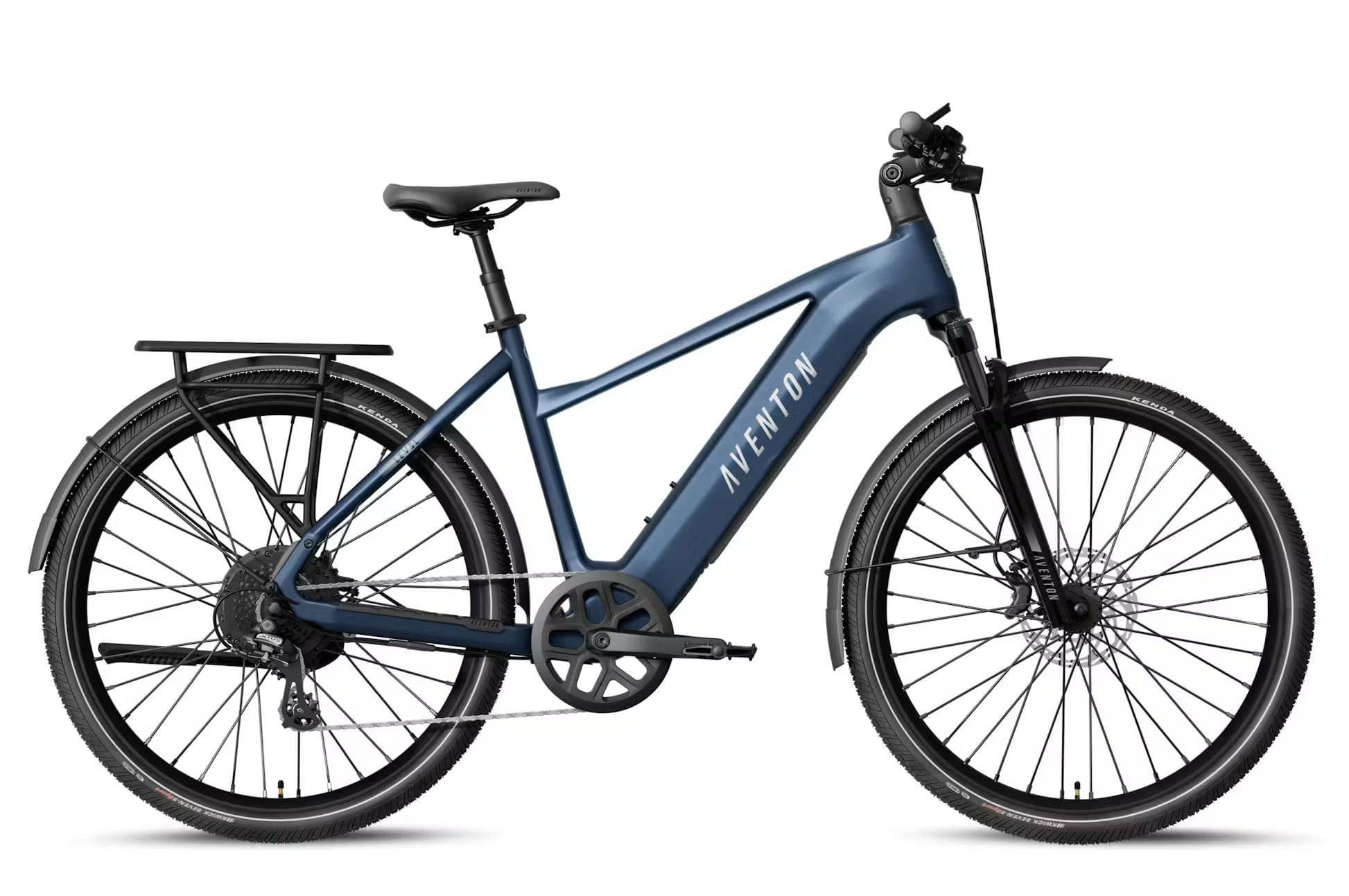
The REC is for the rider who wants that punchy, “scooter-like” acceleration. Because it uses a rear hub motor, the power is delivered directly to the rear wheel. This means you can rely heavily on the thumb throttle to get you up to speed without much leg work.
Aventon Level 4 REC Hub Motor
On the REC, the motor and the pedals are separate systems. You can pedal along if you want the exercise, or you can let the motor do the heavy lifting. This makes the REC an excellent “last-mile” tool for people who want to show up to the office without needing a shower. It is predictable, punchy, and fast.
How Regenerative Braking Helps the REC
One of the coolest additions to the REC is regenerative braking. Every time you squeeze the brake levers, the motor reverses its polarity to help slow the bike down. This does two things:
- It trickles a small amount of energy back into the LG-cell battery.
- It saves your mechanical brake pads from wearing out as quickly. In a city with a lot of stop-and-go traffic, this can add a noticeable buffer to your total range.
Level 4 ADV Review: Mid-Drive Power and AutoShift Features
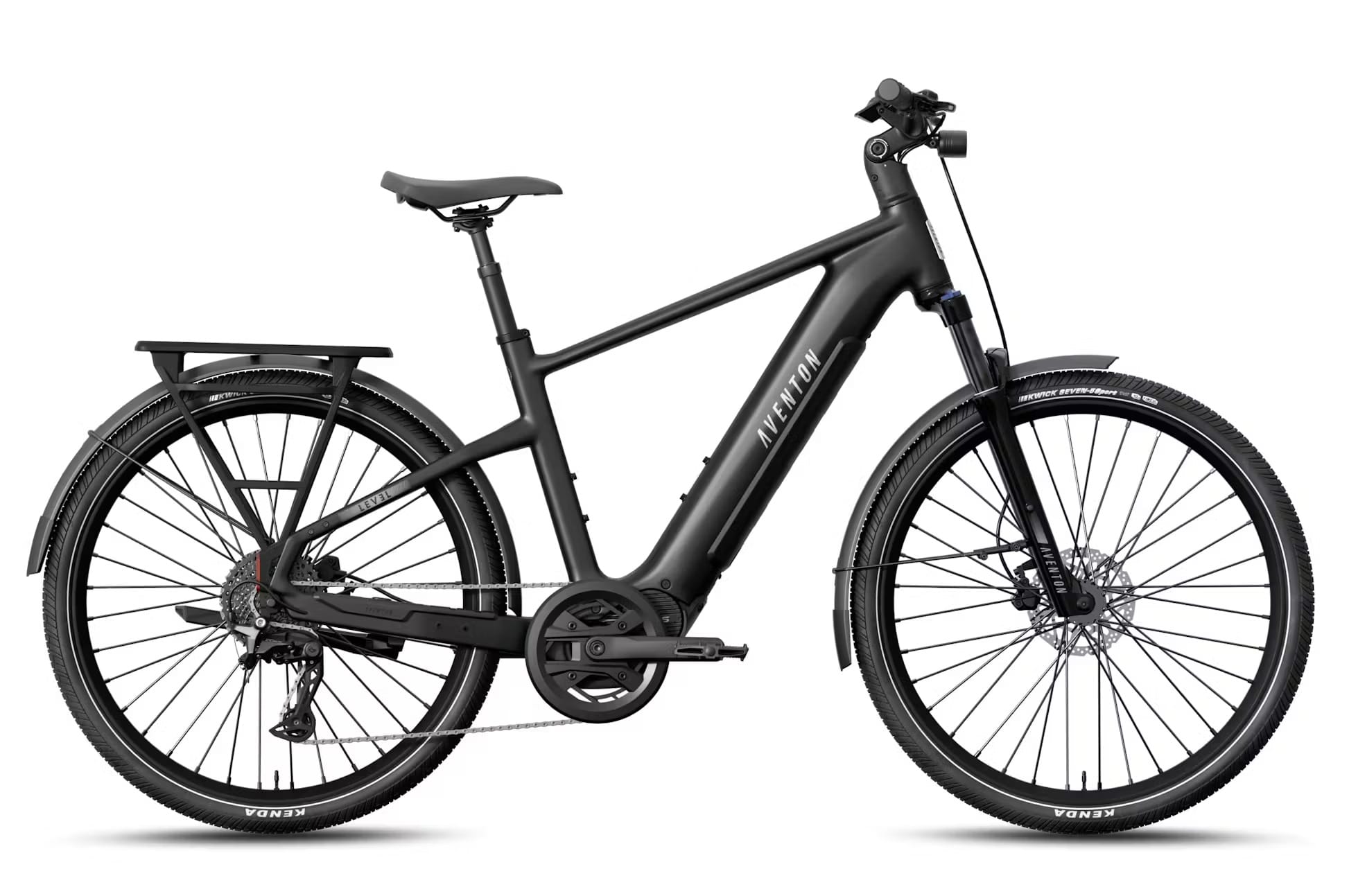
The ADV is built around the Aventon Ultro S mid-drive system. By moving the motor from the rear wheel to the center of the bike (the cranks), Aventon has changed the fundamental physics of the ride.
ADV’s Mid-Drive Setup
In a hub motor (like the REC), the motor has one “gear.” In a mid-drive (like the ADV), the motor drives the actual chain. This means the motor can use the 10 gears of the Shimano CUES drivetrain as a lever.
- On a steep hill, you shift to a low gear, and the motor gets a massive mechanical advantage to crawl up the incline.
- On a flat road, you shift to a high gear, and the motor can help you cruise at 28 mph with ease.
AutoShift and Uphill Assist
The ADV features AutoShift technology. Sensors monitor how fast you are pedaling and how much pressure you are putting on the cranks. If the bike feels you are “laboring” on a hill, it shifts to a lower gear for you. It is essentially an automatic transmission for your bike.
Furthermore, the Uphill Start Assist is a lifesaver. If you have ever tried to start a 60-pound bike from a dead stop on a steep hill, you know how awkward it is. The ADV senses the tilt of the bike and provides an instant surge of torque the second you touch the pedal, preventing you from wobbling or tipping over.
ACU Features: 4G, GPS, Security, and App Controls
Aventon is leaning hard into the “connected bike” trend with their new ACU ecosystem. Both models come equipped with a 4G module and a GPS chip that are powered by the main battery.
- Security: If your bike is moved while it is locked, your phone will buzz with an alert. You can track the bike’s location in real-time and even “immobilize” the motor so the thief is left riding a very heavy, non-electric bicycle.
- Customization: Through the Aventon app, you can tune the motor. If you think “Level 1” assist is too weak, you can slide a bar in the app until you find the perfect feeling.
The “Honest Bike” Philosophy
This brings us to what we call the Honest Bike philosophy. At Top5ebikes, an “Honest Bike” is one that prioritizes the rider’s long-term ownership experience. It uses standard parts that any local bike shop can fix, and it does not try to lock you into a proprietary tech ecosystem.
The Level 4 REC is a very honest bike. It uses a standard Shimano 8-speed drivetrain and a common hub motor. If Aventon disappeared tomorrow, you could still fix this bike.
The Level 4 ADV is a bit more of a gamble. While the hardware is top-tier (Shimano CUES is incredibly durable), the electronic AutoShift and 4G security mean the bike is heavily dependent on Aventon’s software servers. It is a trade-off: you get incredible “Tesla-like” convenience, but you lose a bit of that mechanical independence. For most commuters, the security features are worth the risk, but it is something to keep in mind if you plan on keeping the bike for a decade.
The silver lining here is that unlike the ‘ghost’ brands on Amazon, Aventon has built a massive network of local service partners. Even if you buy the ADV online, you aren’t stuck fixing a mid-drive motor on your kitchen table; you can actually bring it to a human being at a shop down the street who has the tools to plug into the ACU system.
REC vs ADV: Which One Should You Buy?
Choosing between these two comes down to your geography and your “commuter personality.”
The Level 4 REC is the winner if:
- You live in a relatively flat city.
- You prefer using a throttle rather than pedaling hard.
- You want the most “bang for your buck” and value mechanical simplicity.
- You need an easy-to-repair daily driver.
The Level 4 ADV is the winner if:
- Your commute involves massive bridges or steep hills.
- You want the most “natural” cycling feel (mid-drive).
- You want a lighter bike (remember, the ADV is about ~9 lbs lighter than the REC).
- You are replacing a car and want the 110-mile range and “set it and forget it” AutoShift convenience.
Final Verdict: Is the Level 4 ADV Worth It Over the REC?
The Aventon Level 4 series is a clear sign that the ebike industry is maturing. We are moving away from “generic bikes with batteries” and toward specialized transportation platforms.
The REC remains the gold standard for the sensible, budget-conscious commuter. It is powerful, smart, and stays true to Aventon’s roots. The ADV, however, is a glimpse into the future. It is a high-performance machine that handles the “boring” parts of cycling (like shifting and hill starts) for you, so you can just focus on the road.
Aventon has basically taken the guesswork out of the equation, leaving you with two versions of a machine that is built to be a permanent fixture in your life rather than a seasonal phase.
See you out there!
FAQs: Aventon Level 4 REC vs ADV
What Is the Difference Between the Aventon Level 4 REC and ADV?
The biggest difference is motor design. The REC uses a 750W rear hub motor that delivers punchy throttle-driven acceleration, while the ADV uses a mid-drive motor that works through the bike’s gears for smoother climbing, better hill efficiency, and a more natural pedaling feel. The ADV also adds AutoShift, Uphill Start Assist, and a larger battery.
Is the Aventon Level 4 ADV Worth $800 More Than the REC?
The ADV is worth the extra $800 if you ride steep hills, want lighter weight, need longer range, or prefer a premium mid-drive ride feel. If your commute is flatter and you mainly want strong throttle power at a lower price, the REC offers better value.
Which Aventon Level 4 Model Is Better for Hills?
The ADV is clearly better for hills because its mid-drive motor can use the Shimano CUES drivetrain to multiply torque through the gears. That gives it a major advantage on steep climbs compared to the REC’s rear hub motor.
Does the Aventon Level 4 REC Have Better Throttle Performance?
Yes. The REC feels stronger from a standstill if you rely heavily on throttle riding. Because its hub motor powers the rear wheel directly, it gives more scooter-like acceleration with less rider input.
What Is the Range Difference Between the Level 4 REC and ADV?
The REC offers up to 75 miles of range, while the ADV can reach up to 110 miles under ideal riding conditions. Riders with longer commutes or car-replacement needs will benefit more from the ADV’s larger battery capacity.
H3: Does the Aventon Level 4 ADV Require More Maintenance?
Not necessarily more maintenance, but it is more complex. The ADV’s AutoShift system, mid-drive motor, and software-connected features add more electronic dependency than the simpler REC. The REC is easier for long-term DIY ownership and simpler repairs.
Is the Aventon Level 4 REC or ADV Better for City Commuting?
For flat urban commuting, the REC is often the better choice because it is cheaper, simpler, and throttle-friendly. For mixed terrain, bridges, steep grades, or riders replacing car trips, the ADV is usually the better commuter investment.
Do Both Aventon Level 4 Bikes Have GPS and Security Features?
Yes. Both the REC and ADV include Aventon’s ACU ecosystem with built-in 4G connectivity, GPS tracking, motion alerts, and remote motor immobilization through the Aventon app.
Which Aventon Level 4 Bike Is Easier to Repair Long Term?
The REC is easier to repair long term because it uses a simpler hub motor system and fewer proprietary electronic components. The ADV is more dependent on Aventon software integration, making it less mechanically independent over time.
Should You Buy the Aventon Level 4 REC or ADV in 2026?
Choose the REC if you want affordable commuter value, strong throttle acceleration, and mechanical simplicity. Choose the ADV if you want premium ride refinement, better hill climbing, longer range, and smarter automation features.