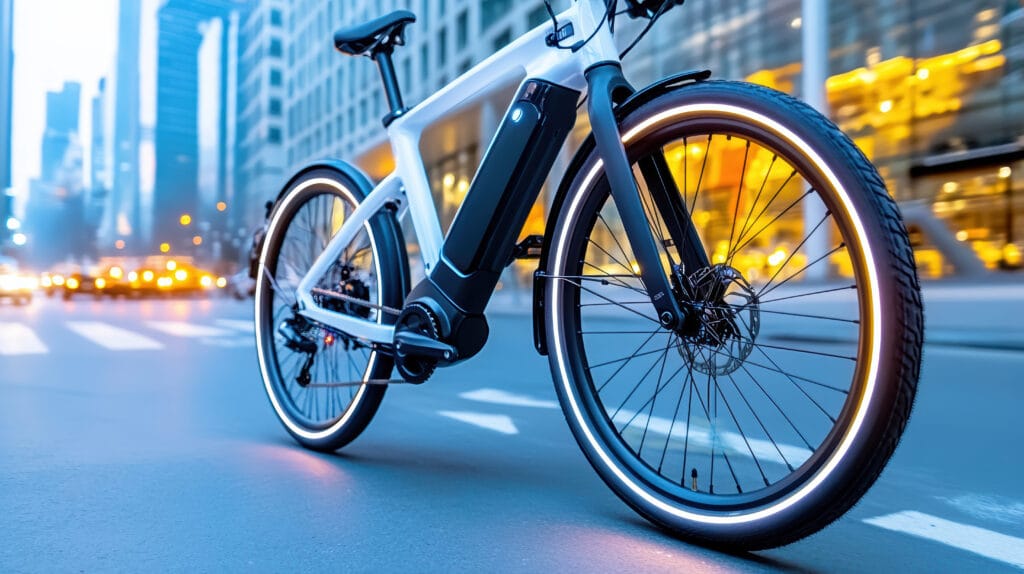
The “anything goes” era of ebiking in California is officially in the rearview mirror. On September 27, 2024, Governor Gavin Newsom signed Senate Bill No. 1271 (Chapter 791) into law, and as of 2026, the new rules are in full effect. This isn’t just about changing a few labels; it’s a significant update to how electric bicycles are defined and regulated under California ebike laws.
Whether you’re a seasoned commuter or just looking to buy your first rig, understanding the updated California ebike laws is essential for staying compliant. This legislation clears up several long-standing gray areas while introducing new safety standards that affect everyone on the road. Here is exactly what you need to know to keep your ride legal and safe.
What is SB 1271? The New California Ebike Law Explained
SB 1271 was designed to tighten the rules surrounding the rapidly evolving ebike market and update California ebike laws for modern electric bikes. It provides a legal “floor” for safety and a “ceiling” for power. By clarifying definitions and enforcing stricter labeling, California is attempting to align its rules more closely with global standards (like those in Europe) while curbing the rise of high-powered “outlaw” bikes that blur the line between a bicycle and a motorcycle.
How California Ebike Laws Define an Electric Bicycle
Under the new definition, an electric bicycle is strictly defined as a device with:
- Fully Operable Pedals: If you can’t realistically pedal it, it’s not a bike.
- 750W Motor Limit: The motor cannot exceed an output of 750 watts.
California Ebike Classes Explained: Class 1, Class 2, and Class 3 Rules
California’s three-tier system has been refined to eliminate the “Class 3 Throttle” loophole. Previously, many Class 3 bikes were sold with throttles that cut out at 20 mph. SB 1271 has officially ended this practice.
Class 1 Ebikes (Pedal Assist up to 20 mph)
These bikes remain the most widely accepted. The motor only provides assistance when you are actively pedaling, and that assistance cuts out once you hit 20 mph. No throttles are permitted on Class 1 bikes.
Class 2 Ebikes (Throttle Enabled up to 20 mph)
Class 2 bikes allow the motor to propel the bike without pedaling (throttle-only) up to 20 mph. These remain legal, but the law now explicitly forbids any throttle that could push the bike beyond 20 mph.
Class 3 Ebikes (Pedal Assist up to 28 mph)
Class 3 bikes are the high-performance workhorses of the industry. Under SB 1271, Class 3 bikes must now be strictly pedal-assist only. Throttles are prohibited for motor-only operation. Additionally, all Class 3 bikes must be equipped with a speedometer to ensure riders can monitor their speed on public paths.
The “Walk Assist” Exception: To help riders maneuver heavy bikes in tight spaces, the law now allows a “walk-assist” throttle on all classes that can propel the bike up to 3.7 mph (6 km/h). This mirrors European standards and is intended only for help while walking beside the bike.
These classifications form the foundation of modern California ebike laws and determine how electric bikes can be used on roads, bike lanes, and shared paths.
Key Changes to California Ebike Laws Under SB 1271
Feature | Old System | New SB 1271 System |
Throttle Use | Allowed on Class 2 and (limited) Class 3 | Strictly Class 2 only (Full Power) |
Max Speed | Class 3: 28 mph (with 20 mph throttle) | Class 3: No throttle use above 3.7 mph |
Motor Power | 750W “Continuous” (Peak allowed) | Strict 750W Absolute Cap |
The 750W Motor Limit and the End of the “Peak Power” Loophole
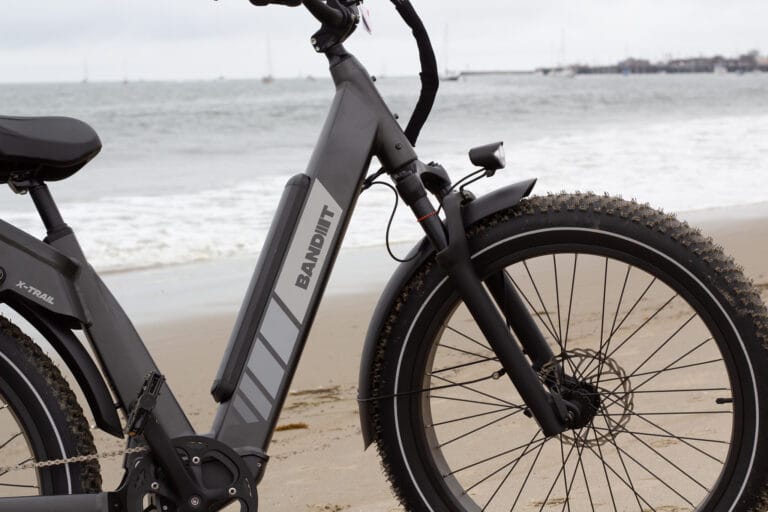
For years, manufacturers marketed bikes as having “750W motors” while actually allowing the peak power to surge to 1,000W or 1,500W. SB 1271 has removed the “continuous power” language from the law. 750W is now a hard cap. This means manufacturers must ensure their motors do not exceed 750W at any point. Furthermore, false labeling is now a crime under the Vehicle Code. If a manufacturer labels a bike as a “Class 2 Ebike” but it’s actually capable of motorcycle speeds, they (and you) may face significant legal penalties.
Ebike Battery Safety Rules and 2026 Fire Code Requirements
To address the rise in battery fires, the California State Fire Marshal has integrated new safety standards into the California Fire Code.
- Testing Requirements: Effective January 1, 2026, all new ebikes and their storage batteries must be tested by an accredited laboratory to meet ANSI/CAN/UL 2849 or EN 15194 standards.
- Compliance Markings: Every compliant bike must display a permanent logo, wordmark, or label from the testing lab.
- Rental Enforcement: If you run a rental business, you have until January 1, 2028, to ensure your entire fleet meets these safety and testing standards.
Illegal Ebike Modifications and New Enforcement Rules
If you’ve modified your bike to unlock higher speeds, you are now a primary target for enforcement under California ebike laws.
- AB 1774 (Modification Ban): It is now illegal to modify an ebike to alter its speed capability beyond its legal class definition. Selling “speed-mod” kits is also prohibited.
- AB 875 (Impound Power): Local law enforcement now has the authority to impound ebikes for at least 48 hours if they don’t meet the three-class definition or have been illegally modified.
Local Ebike Restrictions in Marin and San Diego
While SB 1271 sets the state rules, two new bills give local counties more control:
- Marin County Restrictions (AB 1178): Authorities can now prohibit anyone under 16 from operating Class 2 (throttle) ebikes and can mandate helmet use for all Class 2 riders.
- San Diego County Restrictions (AB 2234): This gives the county the power to restrict anyone under 12 years old from operating Class 1 or Class 2 ebikes entirely.
Pros and Cons of SB 1271
Every legislative shift is a double-edged sword. While SB 1271 is designed to make the roads safer, it definitely creates some friction for both riders and the people building the bikes.
The Pros: Why the New Rules Improve Safety
- A Safety Upgrade: By pulling throttles off high-speed Class 3 bikes and capping motor power at a strict 750W, the state is trying to reduce the number of high-speed accidents in busy bike lanes and multi-use paths.
- Rules That Actually Make Sense: The new classification system removes the “gray area” loopholes. It’s now crystal clear what is a bicycle and what is an unregistered motorcycle.
- Fire Prevention: With the 2026 battery standards, we’re moving away from the era of “mystery batteries” that pose fire risks. This keeps your garage (and your neighborhood) a lot safer.
The Cons: Challenges Riders and Manufacturers Face
- Fewer Fun Options: If you loved the convenience of a throttle-assisted Class 3 bike for your hilly commute, these new restrictions are going to feel like a step backward.
- Market Growing Pains: Manufacturers are currently scrambling to redesign models and update firmware. This could lead to temporary supply chain delays or confusion over which 2026 models are actually compliant.
- Higher Costs: Stricter testing and UL-certification requirements aren’t free. Unfortunately, those increased manufacturing costs will likely be passed down to us at the register.
The Future of Ebikes Under California’s New Rules
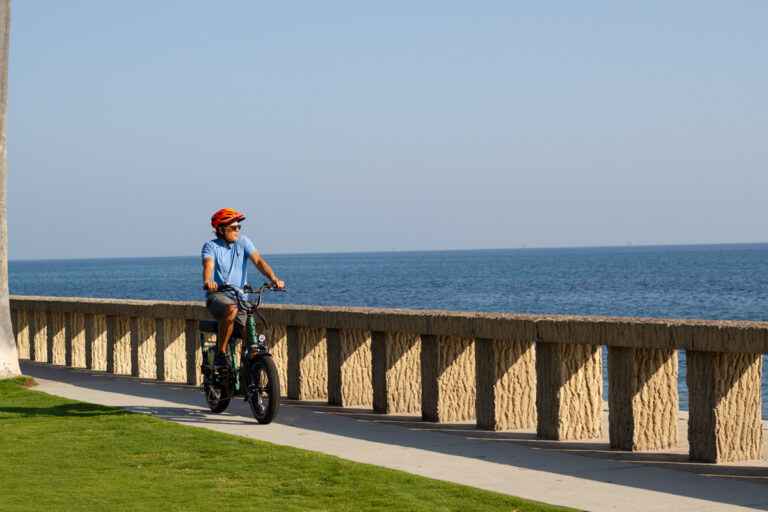
Despite the new red tape, don’t let the regulations discourage you. SB 1271 is a sign that ebikes are no longer a “niche hobby”, they are a legitimate part of California’s transportation infrastructure. The state is finally taking them seriously because they are a pivotal tool for beating traffic and reducing our carbon footprint.
Yes, it will take a minute to get used to the new Class 3 rules, but these changes are a move toward a more sustainable, long-term future for riding. California is leading the way in electric mobility, and by setting these standards now, we’re ensuring that ebikes stay accessible and safe for everyone for decades to come.
2026 California Ebike Laws Compliance Checklist
If you’re feeling overwhelmed by the legal jargon, here is your practical, no-nonsense roadmap to staying on the right side of the law:
Verify Your Ebike Class:
Don’t just trust the sticker on your frame from three years ago. If you have a Class 3 bike, check if your throttle assists over 3.7 mph. If it does, you’re currently riding a moped in the eyes of the law.
Avoid Illegal Speed Modifications:
We all want more speed, but “unlocking” your motor or bypassing the speed governor is now a direct ticket to an impound lot. If you need more power, look into getting a dedicated moped or motorcycle license rather than risking your ebike.
Check Battery Safety Certification:
If you’re shopping for a replacement battery or a new rig this year, look for the UL 2849 or EN 15194 certification. This is the only way to guarantee your bike won’t be flagged under the new fire safety mandates.
Check Local Ebike Regulations:
Remember, a state law is just the baseline. Counties like Marin and San Diego are already using their new authority to set age limits and helmet rules. Check your local city council’s website before you ride in a new area.
Support Ebike Advocacy and Education:
The best way to keep these laws fair is through advocacy. Support organizations that promote ebike education and safety training. The more informed the community is, the harder it is for the state to pass “knee-jerk” regulations that don’t make sense for riders.
Understanding California Ebike Laws in 2026
Ebikes are a movement, and SB 1271 is the “growing up” phase of that movement. Whether you’re zipping along on a Class 2 throttle or pushing your Class 3 pedals to the limit, these rules are here to make sure you can keep doing it safely for years to come.
The industry is evolving fast, and while the “outlaw” era might be winding down, the era of high-quality, safe, and reliable electric mobility is just beginning. Gear up, stay informed, and let’s ride into this new chapter responsibly.
Happy riding!
Frequently Asked Questions About California Ebike Laws
Are ebikes legal in California?
Yes. Electric bicycles are fully legal in California as long as they meet the state’s three-class system and follow California ebike laws regarding speed limits, motor power, and safety requirements. To qualify as an ebike, the motor must not exceed 750 watts and the bike must have fully operable pedals. Riders must also follow the specific rules for Class 1, Class 2, or Class 3 electric bicycles.
What are the three classes of ebikes in California?
California divides electric bicycles into three categories.
– Class 1 ebikes provide pedal assistance only and stop assisting at 20 mph.
– Class 2 ebikes include a throttle that can power the bike up to 20 mph without pedaling.
– Class 3 ebikes are pedal-assist bikes that can reach speeds of up to 28 mph but cannot use a throttle for motor-only operation under SB 1271.
Are throttle ebikes legal in California?
Yes, but only under certain conditions. Throttles are legal on Class 2 ebikes and can power the bike up to 20 mph without pedaling. Under California ebike laws updated by SB 1271, Class 3 ebikes are no longer allowed to use throttles for propulsion. The only exception is a walk-assist function that can move the bike at very low speeds, typically around 3.7 mph.
What is the maximum motor power allowed for ebikes in California?
Under California ebike laws, the maximum motor power allowed is 750 watts. SB 1271 removed the previous “continuous power” language and replaced it with a strict cap. This means an ebike motor cannot exceed 750 watts at any point during operation, including peak power output.
Can you modify an ebike to go faster in California?
No. Modifying an ebike to exceed its legal speed or power limits is illegal in California. Laws such as AB 1774 prohibit altering the bike’s speed capability beyond its assigned class. Selling or installing speed-modification kits is also prohibited. Law enforcement now has the authority to impound illegally modified ebikes.
Do ebikes in California need UL certification?
Starting January 1, 2026, all new ebikes and ebike batteries sold in California must meet approved safety standards such as ANSI/CAN/UL 2849 or EN 15194. These testing requirements are designed to reduce battery fire risks and ensure safer electrical systems in electric bicycles.
Do you need a license to ride an ebike in California?
No driver’s license is required to operate a standard electric bicycle that complies with California ebike laws. However, riders must still follow local traffic laws and age restrictions. For example, riders under 16 are not allowed to operate Class 3 ebikes.
Can police impound an ebike in California?
Yes. Law enforcement can impound an ebike if it does not meet the legal definition of an electric bicycle or if it has been illegally modified. Under new enforcement powers, officers may impound non-compliant ebikes for at least 48 hours.
Are ebikes allowed on bike paths in California?
In most areas, Class 1 and Class 2 ebikes are allowed on bike paths and multi-use trails unless local authorities restrict them. Class 3 ebikes are usually limited to roadways and bike lanes along streets unless a city or county specifically allows them on shared paths.
What changed in California ebike laws in 2026?
The biggest changes involve stricter enforcement of SB 1271, new limits on throttle use for Class 3 ebikes, and updated battery safety regulations. The law also closes loopholes related to peak motor power and increases enforcement against illegal modifications and misclassified ebikes.