
Lectric eBikes spent seven years becoming the biggest electric bike brand in North America the hard way: no venture capital, no billion-dollar valuation, just cheap folding bikes that worked and sold in huge numbers. So when that same company funds a brand new label built to sell premium bikes, it is worth asking what it sees in the market that the rest of us do not.
That label is Monarc Bikes, a separate company out of Minnesota backed by Lectric’s money and supply chain. The story here is not that another ebike exists. It is that the biggest name in cheap ebikes has opened a second front in the premium tier, right as a long list of better-funded rivals collapsed into bankruptcy. It is also arriving with leverage, since its two launch bikes match or beat their direct competitors on specs while asking the same money or less. Here is what Monarc is, how its bikes stack up against what riders can already buy, and what the move signals about where the market is heading.
What Is Monarc Bikes?
Monarc is a premium ebike brand backed by Lectric eBikes. It started as a project inside Lectric and spun out into its own Minnesota company with its own engineering, marketing, and customer service teams. The two people running it both came from Lectric, the company that figured out how to win on value: Julia Moran was Lectric’s Principal Engineer and Ryan Callahan was its Head of Product.
The Lectric connection is the first thing to know, and to Monarc’s credit it is not buried. Monarc runs as a separate brand but leans on Lectric’s supply chain, purchasing power, and back-end operations. That backing is why a brand nobody had heard of six months ago can ship name-brand parts at these prices, and it is what lets Monarc offer a five-year warranty with phone support from humans, which is rare in this market.
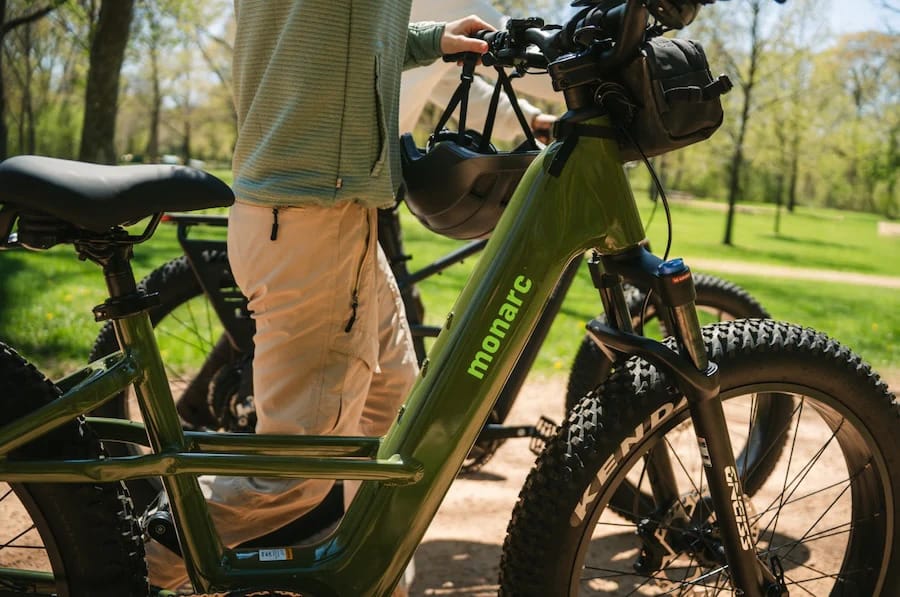
So far there are two bikes. The Marker is a fat-tire adventure bike at $1,999 that is set to ship in July, and the Tracer is a city commuter at a $1,899 launch price. Both bikes come with two batteries in the box instead of one, which is the brand’s signature move and the feature its competitors will find hardest to match. Monarc’s stated mission is premium ebikes without the premium markup, and for once the product backs the slogan.
One note on credibility, since the brand is new. The specs below are what Monarc and early hands-on reviewers have confirmed, which covers pricing, motor and battery figures, brakes, drivetrain, warranty, and a handful of independently tested range numbers on the Tracer. What is not yet proven is long-term reliability, how the service holds up in practice, and how the bikes wear over years of riding, because nobody has owned one that long. Where a figure is a manufacturer claim rather than a tested result, this piece says so.
Why Lectric Built a Second Brand
If Lectric already dominates the budget aisle, why not just sell a nicer bike with a Lectric badge? Because the badge is the problem. To millions of buyers, Lectric means affordable and practical, and that name on a $1,900 premium bike confuses the message. A clean new brand lets Monarc chase a higher-spec, higher-spending rider without dragging Lectric’s value reputation along for the ride. There is a competitive reason too: Velotric and Aventon have climbed into the space just above entry level, where riders want better brakes, bigger batteries, and dependable support but do not want to pay boutique prices. Lectric could not go after that profitable, growing slice under its own name. Monarc is its way in, using Lectric’s manufacturing scale to offer more bike for the money than the brands already competing there.
The pattern confirms it. Monarc is one of three brands Lectric launched in 2026, alongside a relaunch of the once-bankrupt Juiced Bikes and a new e-motorcycle line called Juiced Powersports, with about $10 million invested across the three. A company does not stand up three brands unless it believes the market is wide open.
How Monarc Compares to the Competition
This is not a full review of any of these bikes. It is a spec-by-spec snapshot of where Monarc lands against the commuter and recreational options riders can already buy for the same money.
Price and power first:
|
Model |
Price |
Motor (Peak) |
Torque |
|
Monarc Tracer |
750W (1,638W) |
85 Nm |
|
|
Monarc Marker |
750W (1,638W) |
85 Nm |
|
|
Lectric XPress2 |
750W (1,310W) |
85 Nm |
|
|
Velotric Discover 3 |
750W (1,100W) |
75 Nm |
|
|
Aventon Level 4 REC |
750W (1,188W) |
80 Nm |
Then range, hardware, and coverage:
|
Model |
Battery |
Range |
Brakes |
Warranty |
|
Monarc Tracer |
2 × 720Wh |
130 mi |
4-piston hydraulic |
5 years |
|
Monarc Marker |
2 × 720Wh |
120 mi |
4-piston hydraulic |
5 years |
|
Lectric XPress2 |
672Wh |
60 mi |
2-piston hydraulic |
1 year |
|
Velotric Discover 3 |
730Wh |
80 mi |
2-piston hydraulic |
2 years |
|
Aventon Level 4 REC |
733Wh |
75 mi |
2-piston hydraulic |
2 years |
Each competitor plays a clear role. The Lectric XPress2 is the cheapest bike here. It is the budget commuter, and Monarc built its bikes to sit a step above it. The Velotric Discover 3 and the Aventon Level 4 REC both cost $1,999, the same as the Marker. The Velotric is the pick for a soft, comfortable commute. The Aventon is the pick for smart features and a trusted dealer network.
The two new Monarc bikes stand out for three reasons. Number one, they are the only bikes here that come with two batteries. Number two, they have the strongest brakes and the longest warranty in the group by a wide margin. Number three, the Tracer can do all of that for less than either $1,999 rival. On paper, that is a lot of bike for the money.
The sections below cover each bike one at a time and explain what its numbers mean for the rider it was built for. They also cover the two questions the spec sheet cannot answer yet. The first is whether Monarc uses a torque sensor or a cadence sensor. The second is whether the bikes hit their claimed range out on the road.
Monarc Tracer
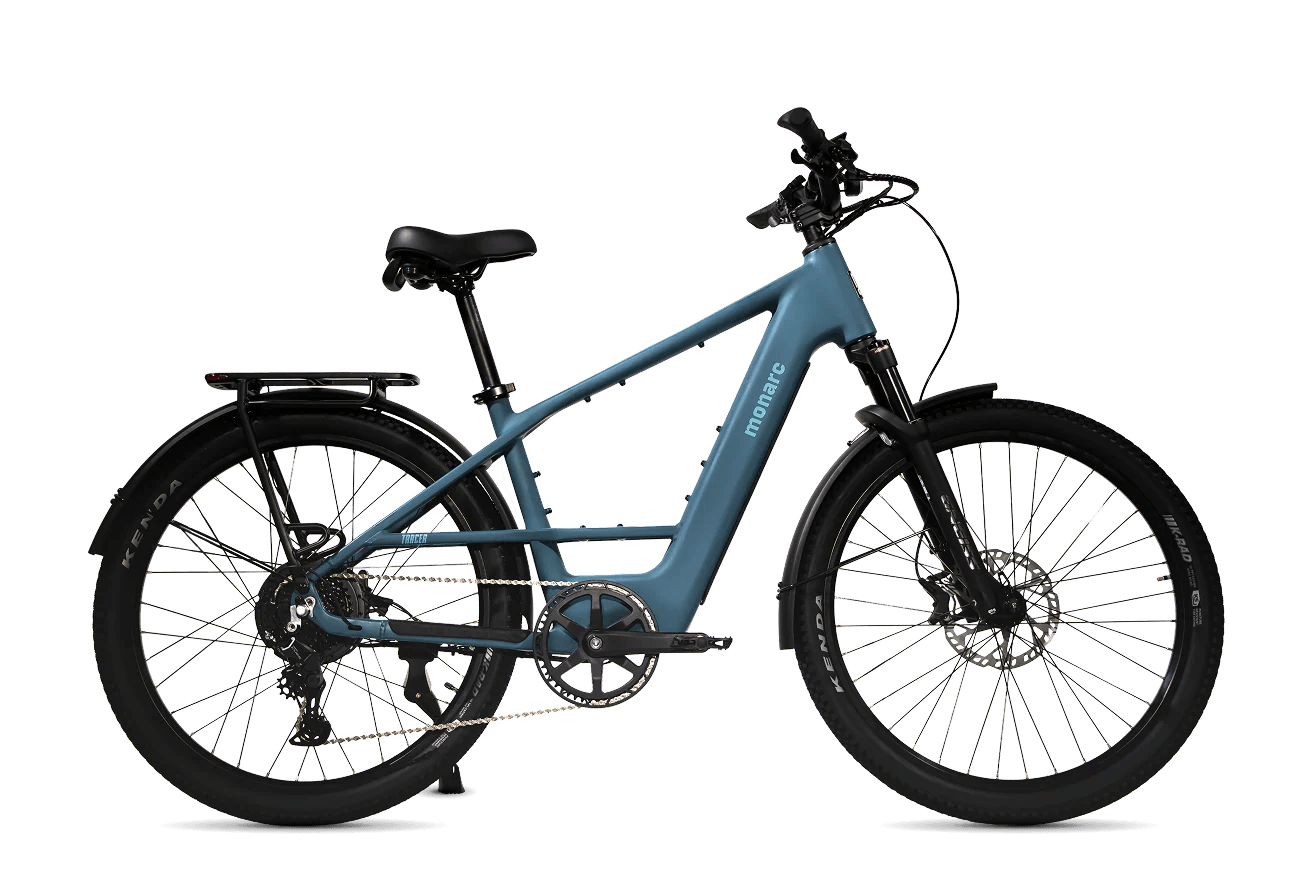
The Tracer is the commuter, and it is the bike that makes Monarc worth the attention. For $1,899 you get a Bafang B750 hub motor that peaks at 1,638 watts with 85 Nm of torque, a Shimano Cues 9-speed drivetrain, four-piston hydraulic brakes for strong stopping power, an 80mm suspension fork, and a 3.5-inch color touchscreen. It ships as a Class 2 bike and unlocks to Class 3 for pedal assist up to 28 mph.
The headline feature is the battery. Most bikes hand you one pack and charge a few hundred dollars for a spare, but the Tracer includes two 720Wh packs for 1,440Wh in total, and that is where the up-to-130-mile claim comes from. You run one pack at a time, so the main benefit is carrying a charged backup and cycling each pack half as often, which stretches the lifespan of both. Testers at Electric Bike Review got 35 miles in max-power mode and 67 miles in eco mode on a single pack, which means the two-battery range is usable rather than theoretical (Electric Bike Review). Pair that battery setup with the five-year warranty and the pitch is hard to argue with.
For the city commuter Monarc is chasing, the priorities line up well. The four-piston brakes handle stop-and-go traffic, the torque carries you over bridges and overpasses, and the combined battery is enough to erase range anxiety on a daily round trip. At roughly 64 to 66 pounds depending on the frame, the Tracer is heavy to carry, which makes it a better fit for a rider with ground-floor or garage storage than for someone in a walk-up apartment. Neither Monarc bike folds either, despite Lectric’s folding heritage, so this is not the bike for anyone who needs to stow it under a desk or in a car trunk.
There is one honest catch worth flagging. The Tracer comes in two frame styles, a step-over and a step-through, but each style is offered in just a single size rather than a small, medium, and large. That is a cost-saving choice that may leave riders at the far ends of the height range without a good fit.
Monarc Marker
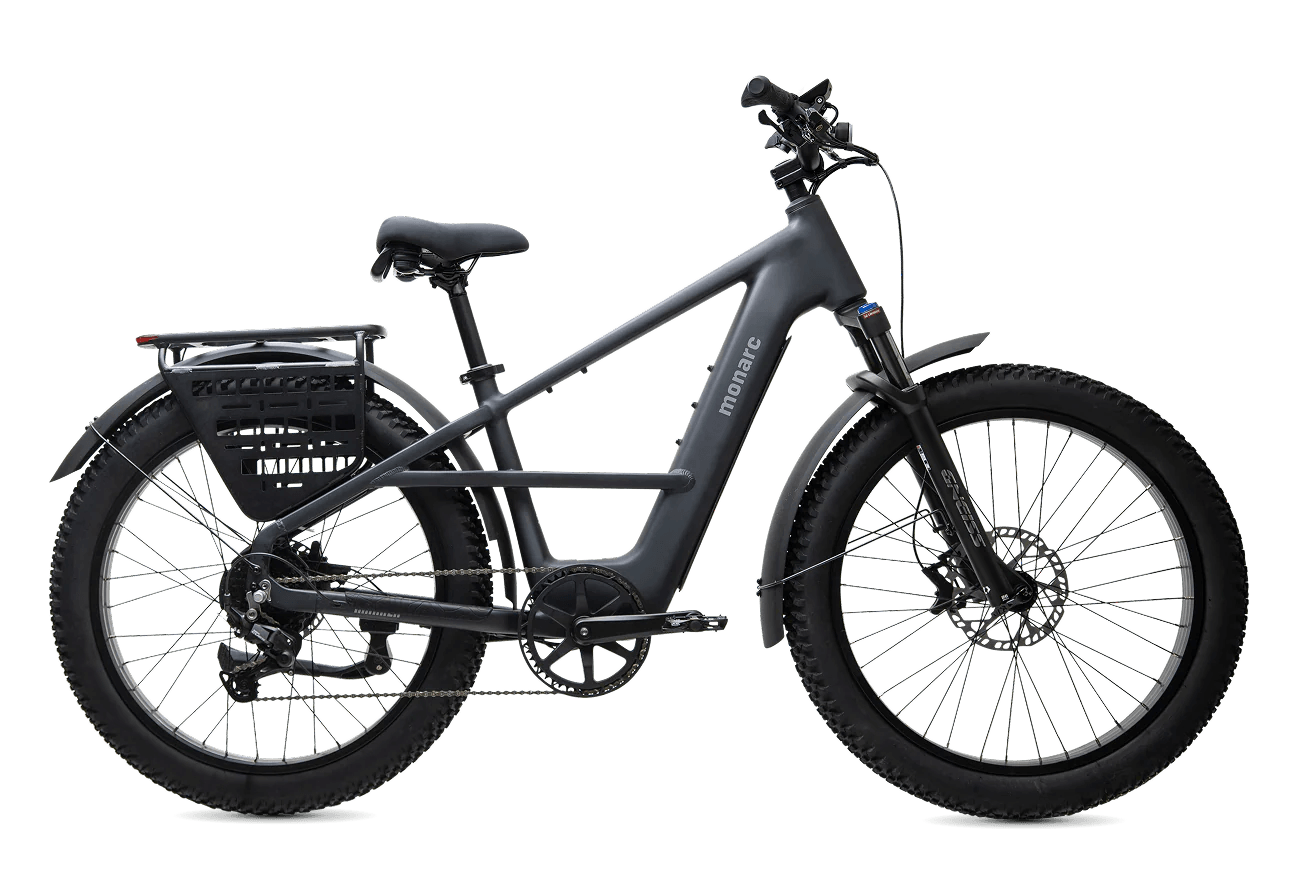
The Marker is the recreational and light-adventure pick, built for a different rider than the Tracer. At $1,999 it pairs the same Bafang B750 motor and dual 720Wh batteries with Kenda 26-by-4-inch fat tires, an 80mm fork, and the same four-piston brakes. Monarc claims up to 120 miles across both packs. It weighs 87 pounds and carries a 420-pound total payload, which is the spec a suburban recreational rider should care about, because it leaves room for a passenger seat, panniers, or a hauling load that a lighter commuter frame cannot take. The trade-off is the usual one for a fat-tire bike. The weight and wide tires make it slower and less nimble than the Tracer, which is why it belongs on trails, dirt, and sand rather than a tight city commute.
Lectric XPress2
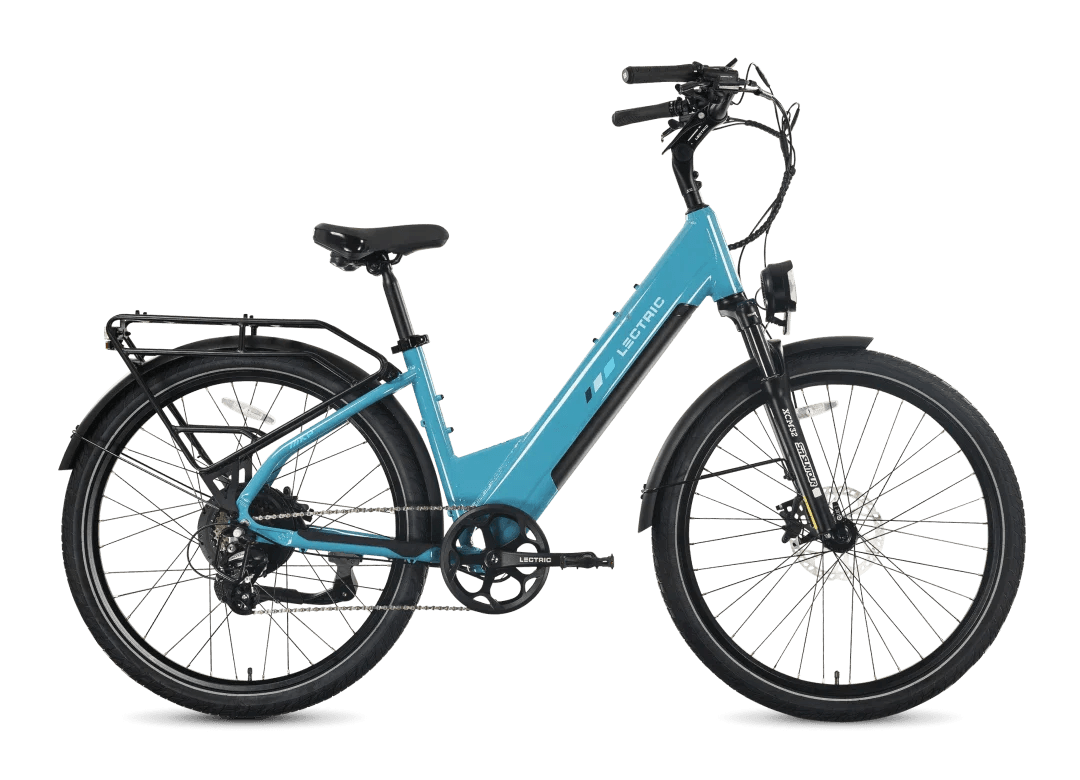
The XPress2 shows how Lectric keeps the two brands from stepping on each other. At $1,399 it is Lectric’s long-range commuter, with a 750W motor peaking at 1,310 watts and 85 Nm of torque, a 672Wh battery good for up to 60 miles, an SR SunTour 80mm fork, hydraulic brakes, and a Shimano Altus 8-speed. For the price it is one of the best commuter values going.
What it lacks is the Tracer’s second battery, higher peak power, four-piston brakes, and longer warranty, with one year of coverage against the Tracer’s five. That gap is deliberate. Monarc is meant to sit a clear step above the XPress2, which is exactly how Lectric wants it.
Velotric Discover 3
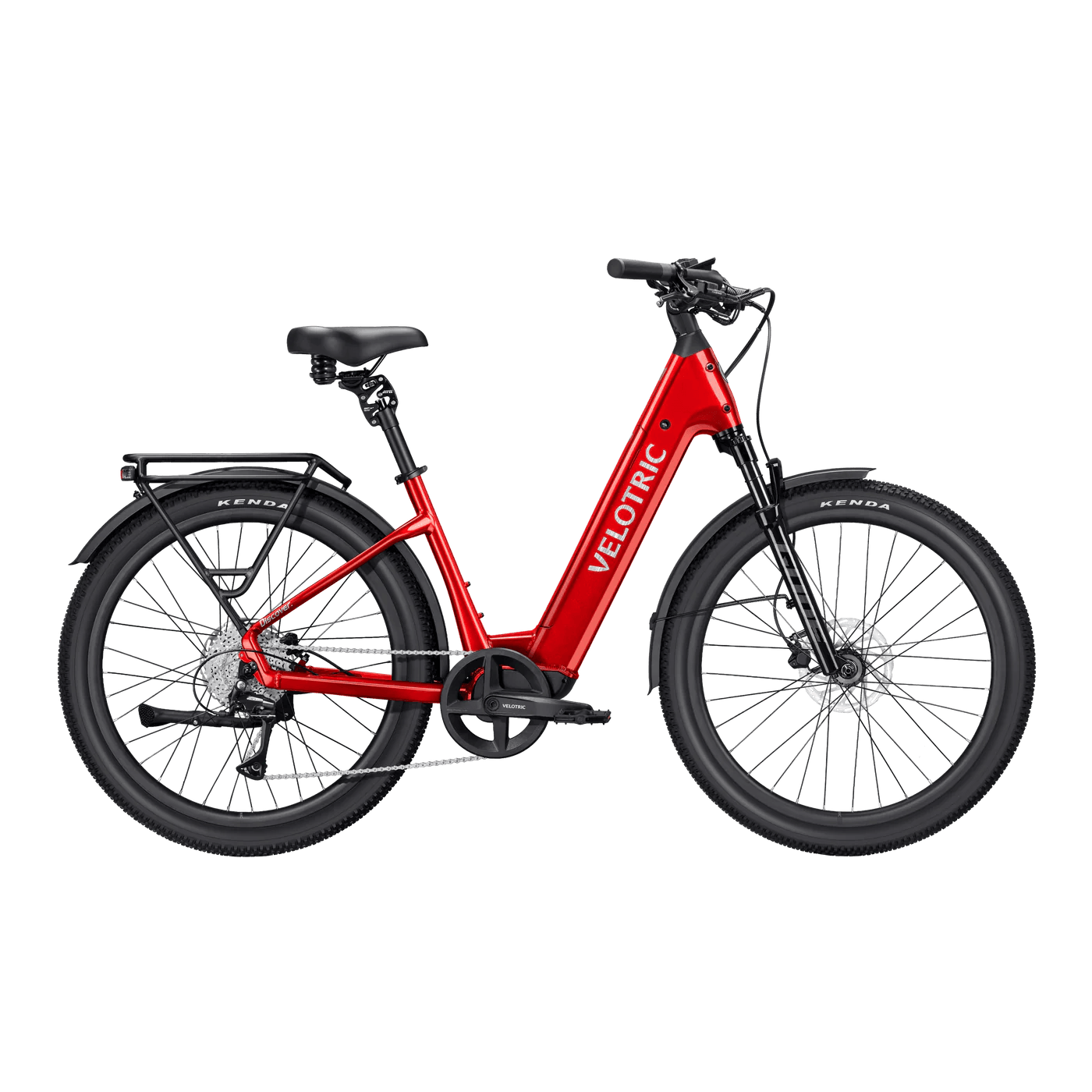
Velotric has grown fast in the comfort-commuter space, and the Discover 3 is its mainstream pick at $1,999. It offers up to 80 miles of range, a 750W motor peaking at 1,100 watts, 75 Nm of torque, a 730Wh battery, and hydraulic brakes, all backed by a two-year warranty.
Next to the Tracer, the Discover 3 costs $100 more, claims 50 fewer miles of range, has less peak power and torque, and ships with a single battery. It still makes sense for the comfort-focused commuter who values a soft, upright ride and a settled brand over raw numbers, and its confirmed torque-sensor option is a meaningful ride-feel advantage the Tracer has not matched on paper, since Monarc still will not say which sensor it uses. For the rider chasing the most capability per dollar, though, the Tracer wins this matchup.
Aventon Level 4 REC
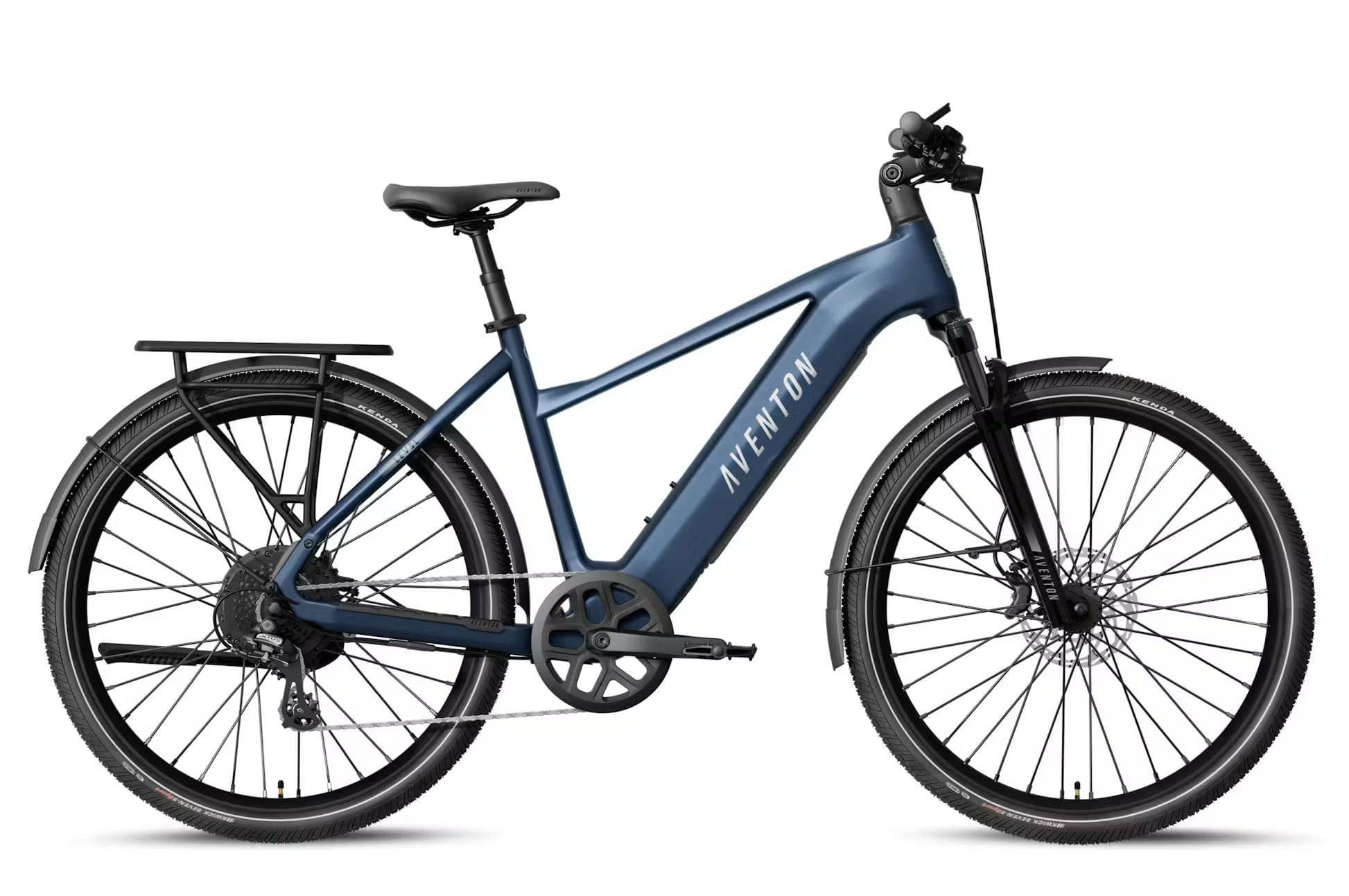
Aventon’s Level line is one of the most trusted names in commuting, and the Level 4 REC at $1,999 is the recreational version. It runs a 750W hub motor with 80 Nm of torque and a 1,188-watt peak, a 733Wh LG-cell battery good for up to 75 miles, hydraulic brakes, and useful smart features like 4G and GPS tracking. It weighs 68.5 pounds and comes with a two-year warranty.
For the recreational rider who wants smart features and a polished package, the Level 4 REC is the bike to beat on trust, since it brings a dealer network, an app, built-in 4G and GPS theft tracking, and years of track record. The Tracer counters with more peak power, far more total battery, a longer warranty, and a lower price. Which one wins comes down to whether you value a proven name and connected features or a bigger spec sheet for less money.
Anyone can reprint a press release, so here is our honest read on Monarc. On the numbers, the Tracer is priced right and beats its direct commuter rivals on battery, brakes, and warranty, while the Marker gives recreational riders a fat-tire option with serious hauling capacity. That makes Monarc the most aggressive value play in this bracket on paper. There are two open questions it cannot answer yet, which are the type of pedal-assist sensor it uses and whether a first-year brand can deliver the ride quality and the service to match the spec sheet. Both of those take road miles and a full review to judge, so for now we would shortlist Monarc rather than crown it.
What This Means for the Budget Ebike Market
When the biggest name in affordable ebikes decides it needs a second brand to go upmarket, that says something about how the market has matured. The days of one company selling one cheap bike to everyone are over. Buyers now split into distinct groups, from budget commuters to higher-end recreational riders, and brands are spinning up separate labels to serve each group on its own terms. For smaller value brands this is a warning shot, because the dominant player can now attack the premium tier with the same scale advantages that won it the budget tier, and a rival without Lectric’s purchasing power has a much thinner cushion than it did a year ago.
The timing makes it louder. Over the past two years a long list of ebike companies has gone bankrupt, including Rad Power Bikes, which raised nearly $330 million and was once valued at $1.65 billion before filing for Chapter 11 (Electrek). While venture-funded rivals folded, the bootstrapped company spent $10 million launching three brands. That is a profitable business pressing its advantage while the field thins out. Lectric CEO Levi Conlow has said as much, arguing that the market “actually lacks a lot of worthy competition right now” (TechCrunch).
Bottom Line
Monarc is worth watching. Lectric’s backing gives it a credibility floor that almost no first-year brand gets, and the specs, pricing, and five-year warranty add up to more than a marketing story, with the Tracer making the strongest case in the commuter class on paper. Paper is not pavement, though, and whether Monarc earns a spot on your shortlist depends on how the bikes ride and how the support holds up over years, which needs a full review to judge. For now, treat it as a promising new option rather than a settled winner. If you are shopping this bracket, our guide on what to look for in a budget commuter ebike and our roundup of the best budget electric bikes under $1,500 are good next stops.
Frequently Asked Questions
Who makes Monarc bikes?
Monarc is a standalone brand based in Minnesota that is backed by Lectric eBikes, the largest electric bike maker in North America. It runs its own engineering, marketing, and customer service teams, and it is led by two former Lectric leaders, Julia Moran and Ryan Callahan. Lectric provides the money and the supply chain, while Monarc operates as its own company.
How much does the Monarc Tracer cost?
The Monarc Tracer commuter launched at $1,899, and the fat-tire Marker sells for $1,999. Both prices include two batteries in the box, which is the feature that sets Monarc apart from most rivals at this price.
How far can a Monarc ebike go on a charge?
Monarc claims up to 130 miles for the Tracer and up to 120 miles for the Marker, but those figures assume you carry both batteries and swap them, since each bike runs one pack at a time. On a single pack, testers at Electric Bike Review got 35 miles in full-power mode and 67 miles in eco mode on the Tracer (Electric Bike Review).
Is the Monarc Tracer better than the Lectric XPress 2?
The Tracer sits a clear step above the XPress 2 on specs, with a second battery, higher peak power, four-piston brakes, and a five-year warranty against the XPress 2’s one year. The XPress 2 is the better buy if you want a strong commuter for $1,399 and do not need the extra range or hardware. They are built to serve different budgets, which is exactly why Lectric runs them as separate brands.
Do Monarc ebikes have a torque sensor or a cadence sensor?
Monarc has not confirmed which pedal-assist sensor the Tracer and Marker use, so this is one spec worth asking about before you buy. A torque sensor scales the motor to how hard you pedal and feels more natural, while a cadence sensor delivers a fixed level of assist once it detects pedaling.
Are Monarc ebike batteries safe and UL-certified?
Yes. The Marker carries UL 2849 certification for the bike and UL 2271 for the battery, which are the safety standards that matter most for electric bikes. UL certification is one of the first things to check on any ebike, given the fire stories around cheap uncertified packs.