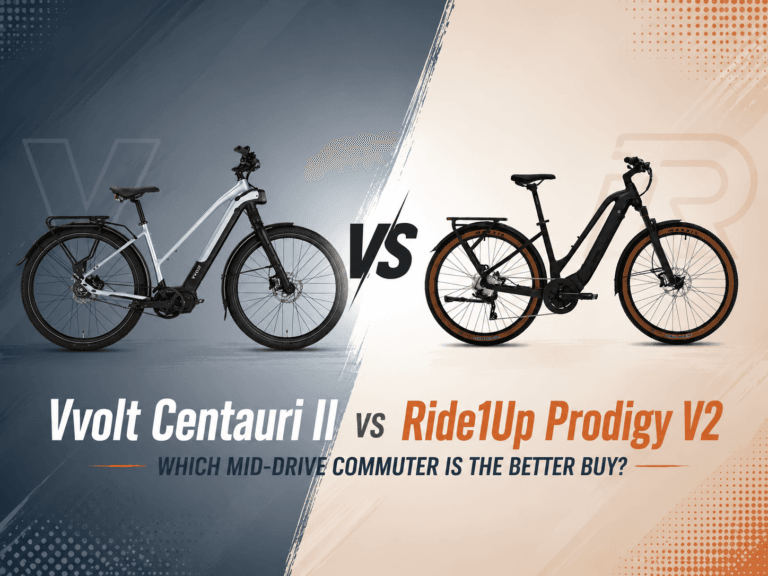
Two Very Different Answers to the Same Commuter Problem
Mid‑drive commuter ebikes all promise the same thing on paper: smoother power, better hill climbing, and a ride that feels more like a “better version of your legs” than a push from behind. That’s the brochure version.
The reality is that not all mid‑drives are trying to solve the same problem. The Vvolt Centauri II and the Ride1Up Prodigy V2 are a great example of that. On a product page they look similar: mid‑drive, Class 3, hydraulic brakes, integrated lights, commuting in mind. In person, they’re answering two different questions.
The Centauri II is built for people who want a bike that just quietly gets them to work every day without asking for much in return. The Prodigy V2 is built for riders who like having more dials to turn: different drivetrains, more suspension travel, and a mid‑drive that feels closer to higher‑end European systems.
If we’re talking “bang for your buck,” the trick is not deciding which bike is “better.” It’s deciding which bike is better for your kind of riding and your appetite for tinkering.
The Quick Specs That Actually Matter
Before we get into how these bikes feel, here are the key numbers that matter on the road, not just on the spec sheet.
Centauri II vs Prodigy V2 — At a Glance
Feature | Vvolt Centauri II | Ride1Up Prodigy V2 |
Price | $2,399 | $1,795 (chain) / $2,495 (belt/CVT) |
Motor & torque | Mid‑drive, 350W nominal, 120 Nm | Brose TF mid‑drive, 250W nominal, 90 Nm |
Battery & range | 490 Wh, up to 60 miles | 504 Wh, 30–50 miles |
Top assist speed | 28 mph (Class 3) | 28 mph (Class 3) |
Gearing | Auto‑shifting 3‑speed internal hub | 9‑speed derailleur or Enviolo CVT hub |
Drive | Gates CDX belt drive | Chain or Gates belt (CVT trims) |
Suspension | Compact front monoshock (30 mm) | Traditional fork (100 mm, trim‑dependent) |
Weight | 53 lb | 58 lb (chain) / 61 lb (belt/CVT) |
Both are proper mid‑drive commuters. The Centauri leans harder into torque and simplicity. The Prodigy leans harder into comfort and options.
Vvolt Centauri II — The “Just Ride It” Commuter
The Centauri II is aimed at riders who want mid‑drive power and belt‑drive calm, but would happily let the bike handle the gears in the background. That’s the entire design brief.
You get a mid‑drive with real torque, an automatic internal hub that shifts for you, and a belt instead of a chain. It’s basically trying to take all the parts of commuting that feel like “extra chores” and quietly remove them.
How the Centauri II Rides
On the road, the Centauri II feels calm and sorted. You hop on, pick an assist level, start pedaling, and the bike makes the gear decisions in the background. There’s no “oh, I forgot to downshift before that red light” moment, because the hub is taking care of it as your speed changes.
The belt drive is one of those things you stop noticing until you get back on a chain bike and remember what chain noise and grease look like. The bike stays quiet, your pant leg stays cleaner, and you’re not fussing with lubing and cleaning as often.
The front monoshock is more of a “civilized city” solution than a mini mountain bike fork. It takes the edge off potholes, cracks, and rough pavement, but it’s not trying to turn your commute into a trail ride. The upside is that the bike stays lighter and more responsive than a lot of overbuilt commuters.

Who It’s Great For
- You mostly ride paved streets, bike lanes, and multi‑use paths.
- You want the motor to feel strong at low speeds and on hills, but you don’t want to manage a 9‑speed drivetrain every morning.
- The idea of “automatic shifting and belt drive” sounds more appealing than flipping through gears and wiping down chains.
If your natural approach to bikes is “set it up once and then forget about it,” the Centauri II is very much in your lane.
Ride1Up Prodigy V2 — The “More Options, Same Commute” Bike
The Prodigy V2 takes the same mid‑drive commuter idea and gives it a more classic “bike person” twist.
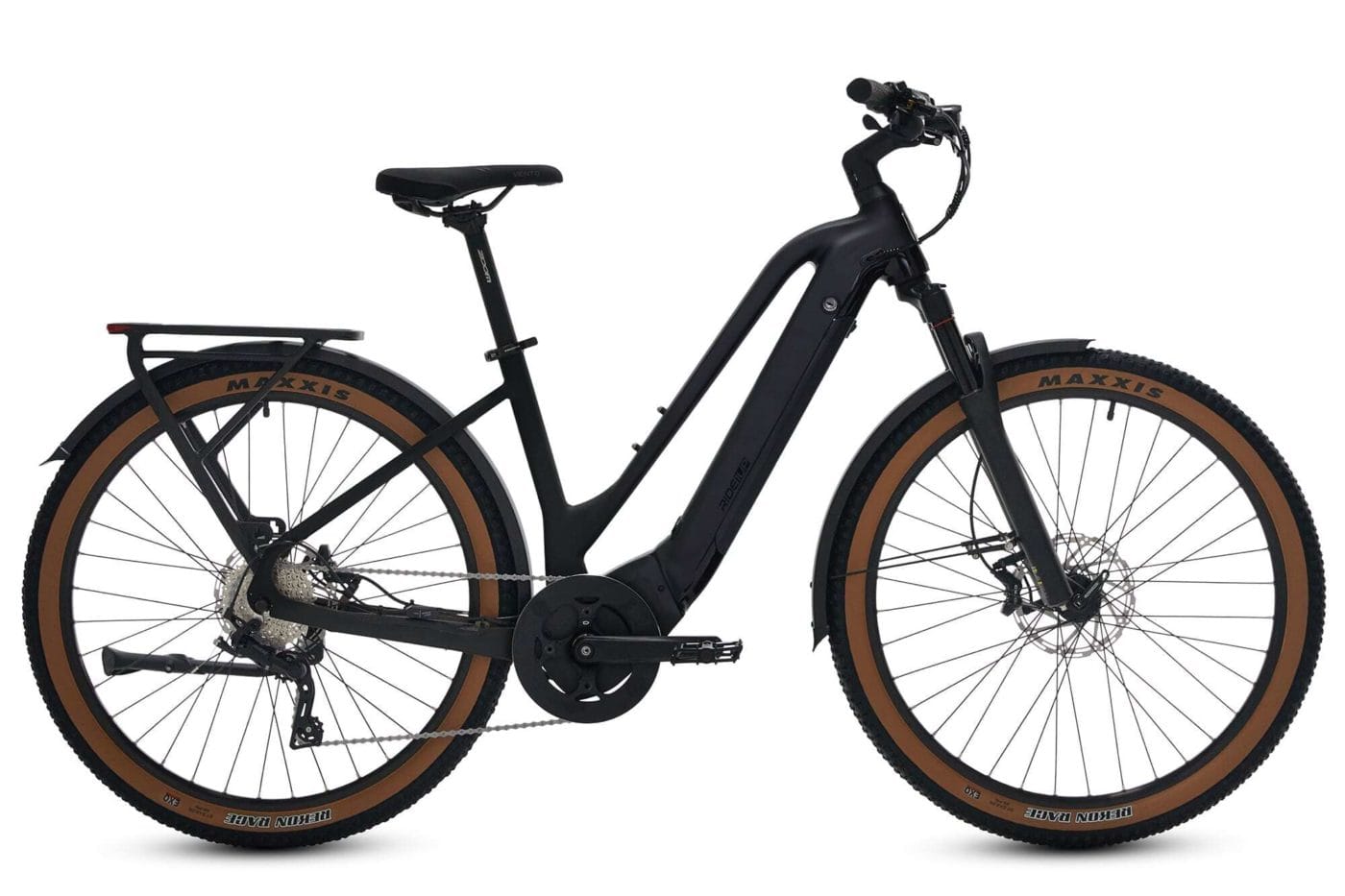
You still get a mid‑drive and Class 3 performance, but the emphasis shifts. The Brose TF motor is chosen for its smoothness and natural feel. The fork has more travel. The drivetrain is something you actively choose: chain + 9‑speed if you want maximum value and familiarity, or belt + CVT if you want a smoother, lower‑maintenance setup.
The Prodigy V2 is built to feel engaging on the ride itself, not just competent enough to get you from A to B.
How the Prodigy V2 Rides
The Prodigy V2 feels closer to a traditional performance bike that just happens to have a very helpful motor. The Brose system ramps in softly, keeps noise low, and doesn’t feel like it’s constantly reminding you that there’s a machine doing the work.
The longer‑travel fork makes a noticeable difference if your commute includes broken pavement, gravel connectors, or just generally rough roads. You can hit things harder without the front of the bike feeling nervous.
On the drivetrain side, you have to be okay with the idea of managing gears. The 9‑speed chain version gives you a wide range to play with and is great if you’re already used to shifting on non‑ebikes. The CVT/belt version takes more of the “thinking” out of it by letting you dial in resistance smoothly, but there’s still more interaction than on the Centauri’s auto hub. If you’re new to shifting, there is a small learning curve, but it’s measured in a handful of rides, not a training course.
Who It’s Great For
- You like the idea of a mid‑drive that feels closer to what you’ve seen on higher‑end European commuters.
- You want to pick between chain or belt, and between stepped gears or CVT, instead of being handed one fixed setup.
- Your riding includes rougher roads, some gravel, or weekend rides where a more traditional bike feel matters.
If your natural approach to bikes is “I don’t mind tweaking things and I actually enjoy having gears to play with,” the Prodigy V2 makes a lot of sense.
Bang for Your Buck — Two Ways to Measure It
Centauri II — Value as “Less Work for You”
On the Centauri side, you’re paying for:
- A high‑torque mid‑drive that makes hills and heavier loads feel less dramatic.
- Auto‑shifting and a belt drive that quietly remove most drivetrain maintenance from your life.
- A lighter‑weight frame and compact suspension that keep it feeling nimble without turning it into a tank.
If we define “bang for your buck” as “how much daily hassle does this bike remove per dollar,” the Centauri II scores high. You’re basically trading a bit of upfront price for a calmer ownership experience and less time thinking about gears and chains.
Prodigy V2 — Value as “More Bike for the Money”
On the Prodigy side, you’re paying for:
- A Brose mid‑drive that’s widely respected for ride feel and refinement.
- A lower entry price on the chain versions compared with a lot of other mid‑drive commuters at this spec level.
- The option to step up to belt/CVT without leaving the platform, if you decide you want less maintenance and a nicer feel down the line.
- More suspension travel and a more “traditional” geometry that’s happy doing double duty: commute during the week, ride more varied routes on the weekend.
Here, “bang for your buck” looks more like “how much configurable performance and familiar bike feel do I get per dollar?” If you’re the kind of rider who uses that configurability, the Prodigy V2 gives you a lot to work with.
So Which One Should You Actually Buy?
If you asked us, “okay, but which one should I actually get?” the answer would depend less on torque numbers and more on what type of rider you are when the commute isn’t perfect.
Choose the Vvolt Centauri II if:
- You’ve never cared about what gear you’re in and don’t plan to start.
- You want something that feels strong, quiet, and predictable, and you’re happy to let the bike handle shifting for you.
- You’d rather spend a bit more up front than keep paying in time and maintenance for a derailleur setup later.
Choose the Ride1Up Prodigy V2 if:
- You’re already comfortable shifting on a regular bike, and the idea of having more control over gears sounds good, not stressful.
- You want that Brose mid‑drive feel and the option to pick your drivetrain style.
- Your routes go beyond smooth city streets and you like the idea of a commuter that doesn’t flinch at rougher riding.
A useful way to decide is to picture a bad commute day, not a perfect one. If you imagine yourself running late, tired, maybe in the rain, and still wanting the bike to make most of the decisions for you, the Centauri II is probably the better fit. If you picture yourself wanting to shift, push a bit, and treat the ride as “real bike time” with motor backup, the Prodigy V2 is the one that will keep you happier long term.
In the end, both bikes can get you there. The better one is the one you’re still happy to grab when the weather and your mood aren’t cooperating.
FAQ — Vvolt Centauri II vs Ride1Up Prodigy V2
Which bike is better for hills?
Both climb well, but the Centauri II’s higher torque and auto‑shifting give it the edge for riders who don’t want to think about gears. The Prodigy V2 feels great on hills too, especially if you shift properly and use the Brose motor the way it’s meant to be used.
Which one is easier to live with day to day?
The Centauri II. Belt drive, internal hub, and auto‑shifting take most routine drivetrain maintenance off your plate. The Prodigy V2 asks a bit more from you in terms of shifting and occasional adjustment, especially in the chain‑drive trims.
Which bike feels more “like a normal bike”?
The Prodigy V2. Between the Brose motor, traditional fork, and 9‑speed or CVT drivetrain, it feels more like a familiar commuter or weekend bike that happens to have assist.
Is the Prodigy V2 available without a belt drive?
Yes. Chain‑drive versions use a standard derailleur and cost less than the belt/CVT trims. Those chain versions are the best starting point if you want maximum value and are comfortable maintaining a derailleur.
Does the Centauri II feel limited by the 3‑speed hub?
For most commuting, no. You don’t get the huge range of a CVT or 9‑speed, but the automatic 3‑speed setup covers typical city speeds well, and the motor’s torque fills in a lot of the gaps you’d notice on an acoustic bike.
Which offers the better value overall?
If you want minimal maintenance and the least mental overhead while riding, the Centauri II is the better value. If you want more options, more traditional bike feel, and a lower entry price into mid‑drive commuting, the Prodigy V2 is the better value.