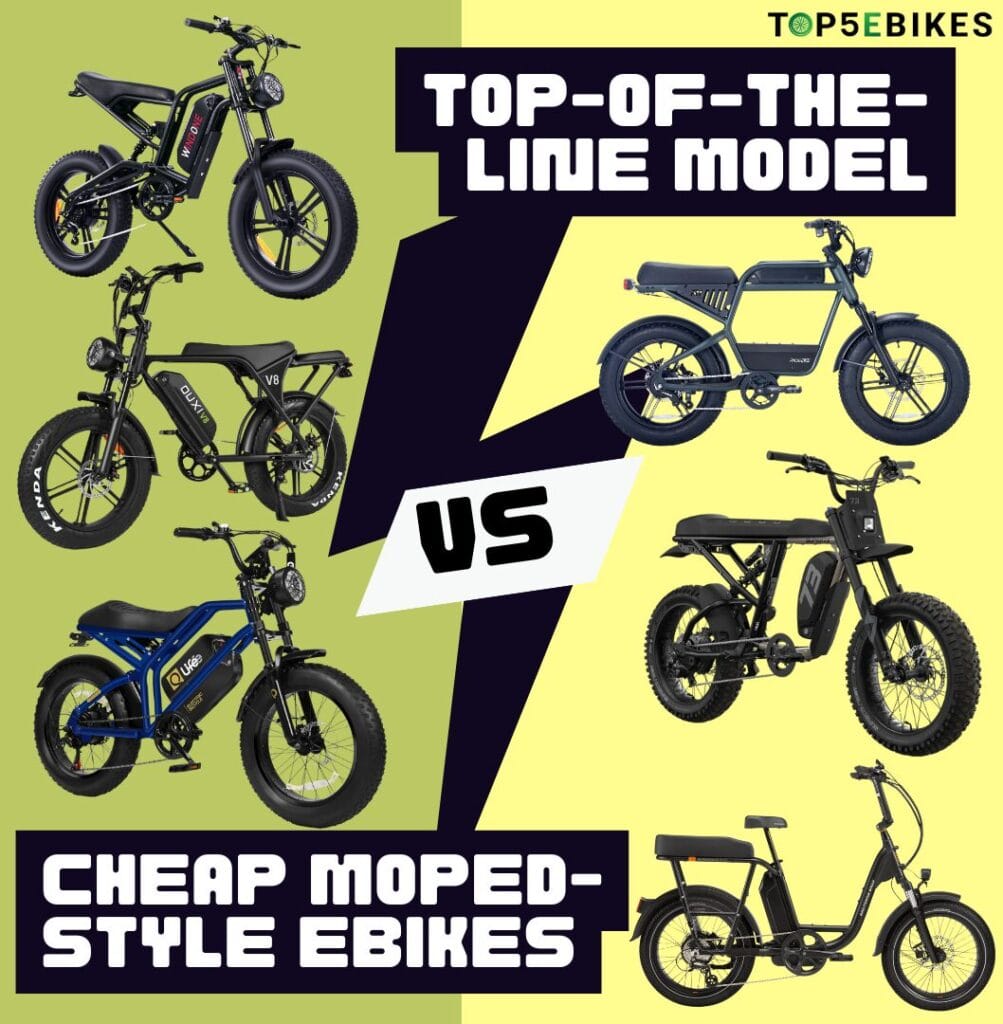
If you’ve been browsing for a moped electric bike lately, you’ve probably noticed two very different worlds. On one side, you’ve got the ultra-affordable Amazon listings — full of fat tires, twist throttles, and eye-catching “1000W peak!” claims for under a grand. On the other, you’ve got the more established electric moped bike brands, the ones that cost more but feel built for the long haul.
Both groups have their place. The trick is knowing what you actually get for your money.
If you’re trying to decide between a budget moped-style electric bike and a premium one, this guide makes the choice more clear. We’ll walk through how they ride, what they’re made of, and what you can expect once you’ve put a few miles on them.
What Makes a Moped-Style Electric Bike?
A moped style electric bike blends the look and riding position of a small motorcycle with the convenience and rules of a bicycle. Think:
- long bench seat
- fat 20×4″ tires
- twist throttle
- moto-inspired frames
- pedal assist (sometimes optional)
Most riders pick this category because they want that “twist and go” freedom — something that feels a little like a scooter, a little like a minibike, but without the hassle of registration or a motorcycle license.
Just like mopeds themselves, these bikes span a massive range of quality.
The Cheapest Moped Electric Bike Options on Amazon (2025)
Windone E2 — ~$907
If you want big features for under a grand, the Windone E2 brings a lot to the table.
Specs you get:
- 48V 13Ah battery (~624Wh)
- 1000W peak brushless hub motor
- Full suspension
- 20×4″ fat tires
Ride characteristics:
The Windone rides like a heavy, playful mini-moto. The power is enough for city cruising, and the suspension smooths out rough paths surprisingly well. The catch? The refinement isn’t quite there. You’ll notice a louder motor, a heavier feel on bumps, and components that work fine but don’t offer the polish of higher-end bikes.
Best for:
Short-to-medium rides, casual urban cruising, riders who want an electric bike moped vibe without stretching their budget.
OUXI V8 Max — ~$819
The OUXI V8 Max delivers the essentials of a moped-style ride without overcomplicating things. It’s light, quick to launch, and has a playful throttle response that beginners tend to love.
Specs you get:
- Advertised 1000W peak motor (varies by listing)
- 16″ (mini) or 20″ fat tires
- Removable battery
- Throttle-forward design
The real ride experience:
The V8 Max feels more like a compact runabout than a true moped electric bike. It launches with enthusiasm, but you’ll feel the limits in the brakes, the shorter wheelbase, and the basic ride comfort. It’s the kind of bike that makes quick neighborhood loops and coffee runs feel fun, but it’s not something you buy for long stretches or daily commuting.
The best part? It’s beginner-friendly. If you’re new to throttle bikes, the V8 delivers that mini-moto feel without a big learning curve or big price tag.
Best for:
New riders, short city loops, campus or neighborhood riding, someone who wants a low-commitment entry into the moped-style category.
Qlife Moped E-Bike — ~$899
Out of all the Amazon options, the Qlife might win the “best curb appeal” award. At first glance, it looks like a shrunken-down moto: long saddle, big stance, fat tires, and a frame that really leans into the moped aesthetic.
Specs you get:
- Claimed 1500W peak motor
- 20×4″ fat tires
- Moto-influenced frame design
The real ride experience:
The Qlife feels bigger and more planted than the OUXI, which gives it a confidence boost, but the components remind you it’s still a sub-$800 bike. The motor has decent punch, the ride is stable, and the seating position is comfortable for quick rides. But the brakes, wiring, and overall refinement lag behind more established brands.
It’s one of those bikes that wows you on day one because of the look, but long-term riders may start noticing rattles or wear sooner than expected.
Best for:
Style-focused riders, short commutes, casual cruising, or anyone who wants that “mini Super73 look” without the $2k+ investment.
What You Get When You Spend More: Premium Moped Electric Bikes
Stepping into the $1,500–$4,000 range brings noticeable upgrades. Premium models offer smoother rides, stronger braking, better components, and support you can rely on. Here’s what that extra cost gets you.
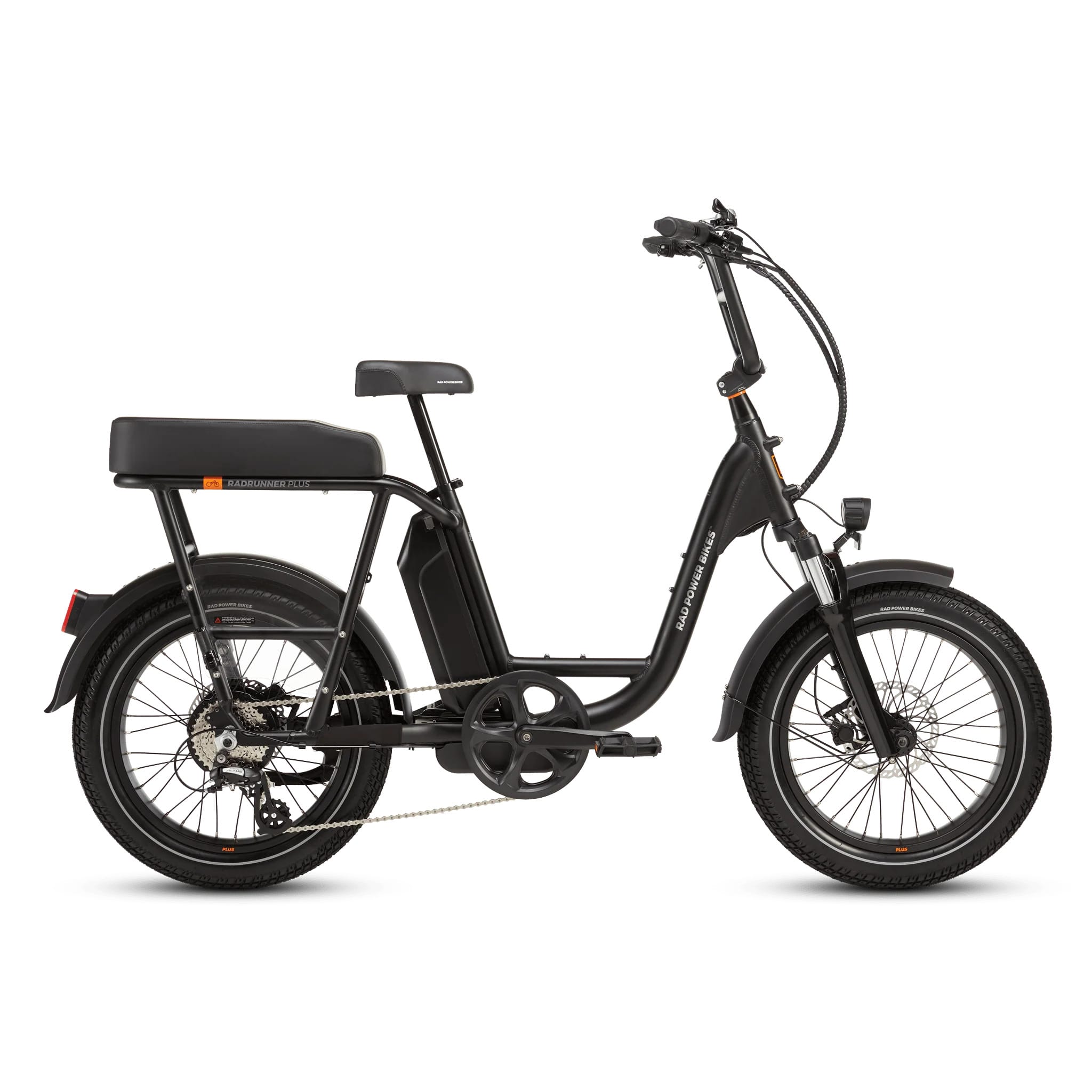
Rad Power Bikes RadRunner Plus — $1,499–$2,299
The RadRunner Plus isn’t trying to be the flashiest moped-style ebike, it’s trying to be the one you can count on every single day. And that’s exactly why so many riders swear by it. The power delivery is smooth, the handling is predictable, and the utility-focused frame makes it one of the easiest bikes to use for daily trips around town.
Why it stands out:
- 750W geared hub motor with reliable torque
- 624 Wh battery with real 40–45 mile performance
- Passenger-ready setup out of the box
- Hydraulic brakes + solid build quality
- A service + parts network that Amazon brands can’t touch
There’s nothing dramatic about the RadRunner Plus. It just works. It starts every morning, hauls groceries without complaining, and feels safe in traffic.
Best for:
Daily commuting, hauling kids or cargo, new riders who want a stable learning curve, anyone who values reliability above raw speed.
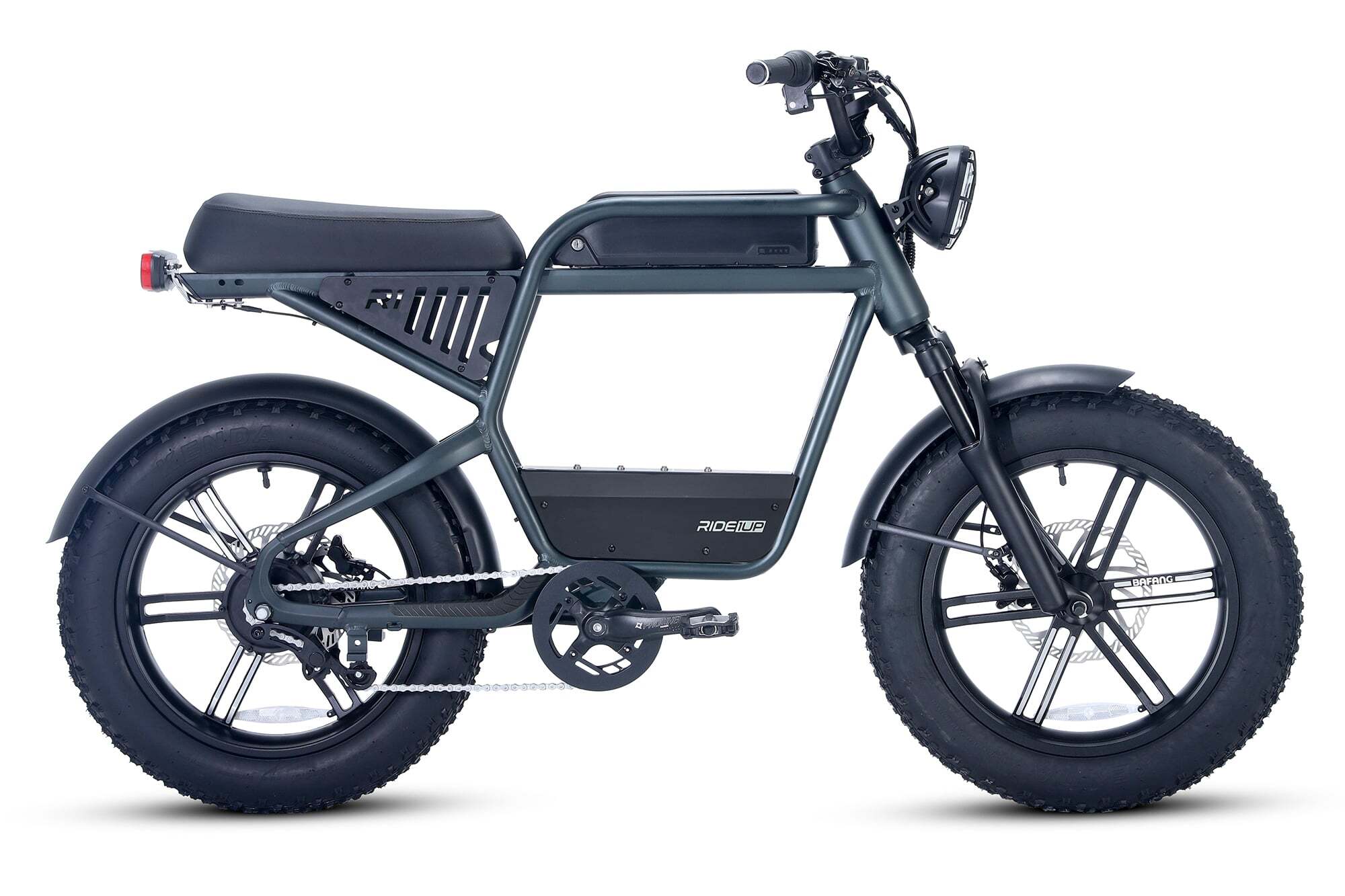
Ride1Up Revv 1 — $1,995–$2,595
The Revv 1 is the bike you buy when you want a confident, energetic ride with a throttle that reacts the way it should. It’s built on a stiff, moto-inspired frame with dual suspension that smooths out rough pavement and keeps you planted when you twist hard. The motor response is immediate, predictable, and genuinely fun… the kind of “flickable but stable” feel you normally only get on higher-end minibikes.
Why riders love it:
- 1000W motor that feels stronger than the numbers suggest
- 52V (15Ah or 20Ah variation available) battery system for better torque and stability
- Hydraulic brakes that actually match the power output
- A frame that feels overbuilt in a good way
The Revv 1 is for riders who want to feel the ride, not just commute from point A to B.
Best for:
Thrill-seekers, hill riders, heavier riders, or anyone who wants the strongest performance without jumping into Super73 pricing.
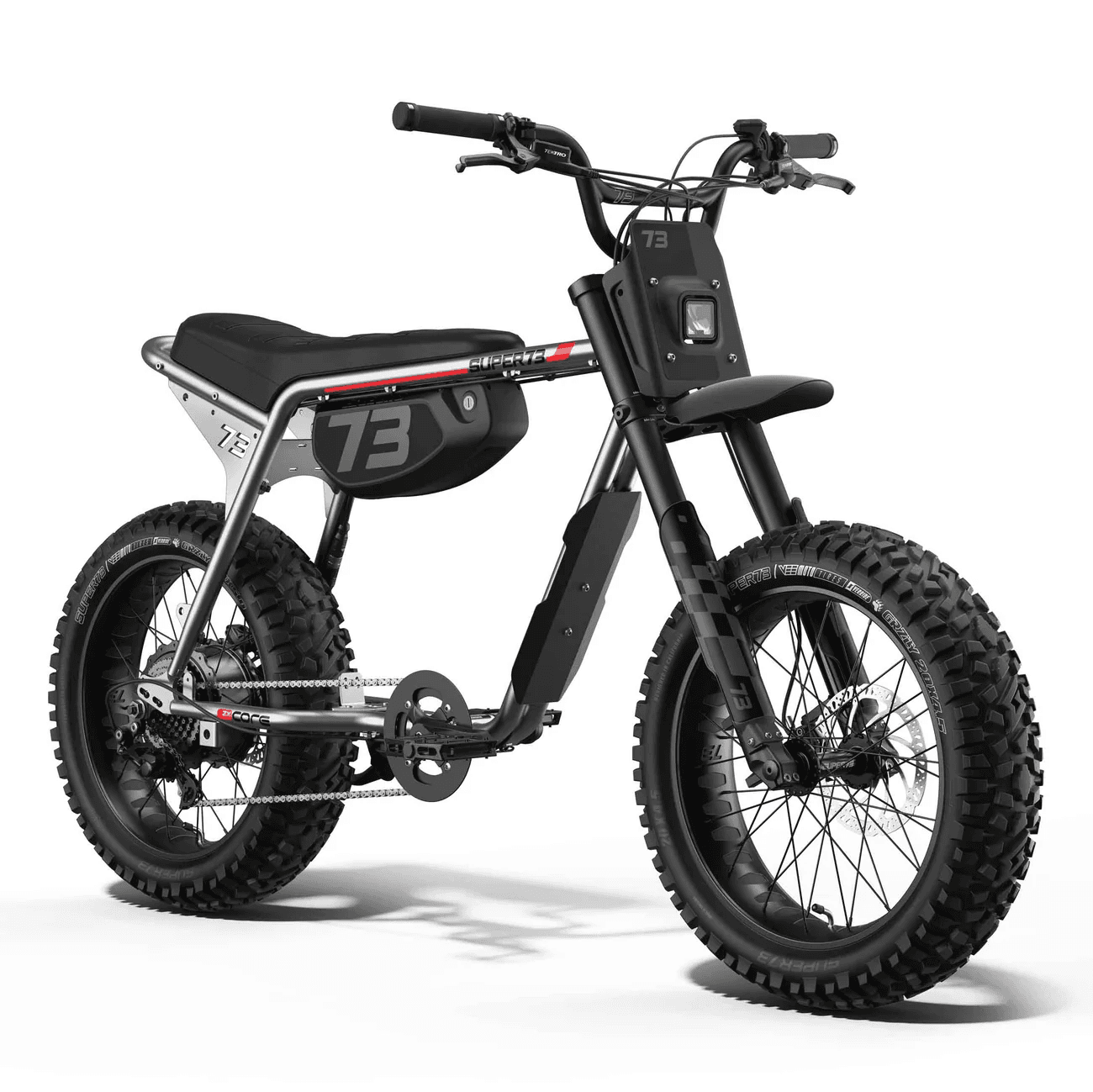
Super73 R Core — $3,995
The R Core isn’t just a bike; it’s a statement piece. The build quality is on another level — thick welds, rigid frame, adjustable suspension, and a battery that gives you the freedom to wander without constantly checking your remaining miles.
Why it’s in its own league:
- Aircraft-grade aluminum frame
- Enormous 960Wh battery with impressive real-world range
- Fully adjustable dual suspension that handles almost anything
- Hydraulic four-piston brakes borrowed from motorcycle DNA
- An immediately recognizable design
The R Series rides like a true moto-inspired ebike should: stable at speed, confident on rough terrain, and comfortable for long stretches.
Best for:
Riders who want the very best, adventurers who go off-pavement regularly, or anyone upgrading from a budget Amazon bike to something life-proof.
Budget vs Premium: What Actually Changes?
Specs don’t tell the whole story. Two bikes can look similar on paper but feel very different on the road. Here’s what really changes in practice.
Ride Quality
Budget: Fun and punchy out of the box, but you’ll notice heft and a little rattliness once speeds increase. Throttle response can be jumpy. Suspension is usually a simple spring setup that takes the edge off, not something you’d call plush.
Premium: The throttle rolls on smoother. The bike tracks straighter at speed. Suspension is better damped, so bumps feel more like a muted thud than a bounce. Geometry and frame stiffness keep the bike composed when you hit a pothole or brake hard. It feels like someone tuned the whole package, not just bolted parts together.
Components and Build Quality
Budget: Mechanical brakes or entry hydraulic sets, generic rotors, off-brand shifters (if equipped), basic contact points. Nothing wrong with “basic,” but you’ll notice longer stopping distances and more lever effort, especially on downhills.
Premium: True hydraulic systems with upgraded calipers, rotors, and wheel builds. Everything feels more precise, and braking performance is a clear step up.
Battery Performance and Real-World Range
Budget: Capacity looks good on paper, but you’ll see more voltage sag on hills, and range varies more with weather and rider weight. Chargers are slower, and the BMS (battery management system) is often basic.
Premium: You get higher-grade battery cells and smarter power management, which means the bike keeps its strength longer into the ride. Range is more consistent, and the bike doesn’t fade as quickly when climbing or carrying extra weight.
Service, Parts, and Long-Term Support
Budget (Amazon storefronts): Limited parts catalogs, mixed warranty experiences, and longer downtime if something small fails. Many use generic components that can be hard to match later.
Premium brands: You’ll find better access to replacement parts, quicker customer support, safer battery certifications, and a larger base of riders sharing solutions. For frequent riders, this level of backup makes ownership far more convenient.
Who Each Category Is Really For
Budget moped-style options ($500–$900)
Buy this if you want: the look, the twist-and-go fun, short city rides, a low-commitment first step into the category. Great for coffee runs, campus hops, and weekend loops.
Know before you buy: You’re trading polish and long-term refinement for price. Plan on shorter realistic range, simpler brakes, and more hands-on tinkering if something loosens up.
Premium moped electric bikes ($1,500–$4,000)
Buy this if you want: dependable commuting, stronger hill power, shorter stopping distances, better suspension, and real support. These are the bikes you can count on Tuesday at 7:45 a.m. when you’re late for work.
Know before you buy: You’re paying for the ride you feel at mile fifteen and month fifteen. It’s comfort, stability, and parts availability.
Electric Moped Bike Comparison Table
Here’s a breakdown of specs and what they tell you:
|
Model |
Price |
Motor |
Battery / Range |
Components |
Extras |
|
Qlife Moped E-Bike |
~$899 |
~750-1500 W Peak |
Dual battery 1248Wh total, Removable Battery |
Basic brakes & components, Dual suspension |
Fat tires, throttle |
|
OUXI V8 Max |
~$819 |
~750-1000 W Peak |
Dual battery 1440Wh total, Removable Battery |
Front Shock Absorbers & Hydraulic Disc Brakes |
Throttle, fat tires |
|
Windone E2 |
~$907 |
~750-1000 W nominal/peak |
624Wh, up to ~46 miles |
Full suspension, hydraulic brakes |
Moto-style frame |
|
RadRunner Plus |
~$1.4-2.3k |
~750 W geared hub |
624Wh, up to ~45+ miles |
Higher-end brakes, support network |
Cargo utility, passenger ready |
|
Ride1Up Revv 1 |
~$2k-$2.5k |
~1000W |
780Wh/1040Wh system, ~60 miles or more |
Premium suspension, hydraulic brakes |
High-end components |
|
Super73 R |
~$3,995 |
~750W nominal |
960Wh pack, 40-55 miles |
Top-tier build & brand |
Full moto look & performance |
Final take: Moped-Style Electric Bikes
Budget moped-style ebikes deliver the vibe and the fun at prices that are tough to argue with. Premium models deliver the ride you’ll still love after the honeymoon period. Pick the bike for the way you actually plan to ride. If that means short hops and weekend loops, save your cash. If it means daily miles, hills, cargo, or passengers, step up—your future self will be glad you did.