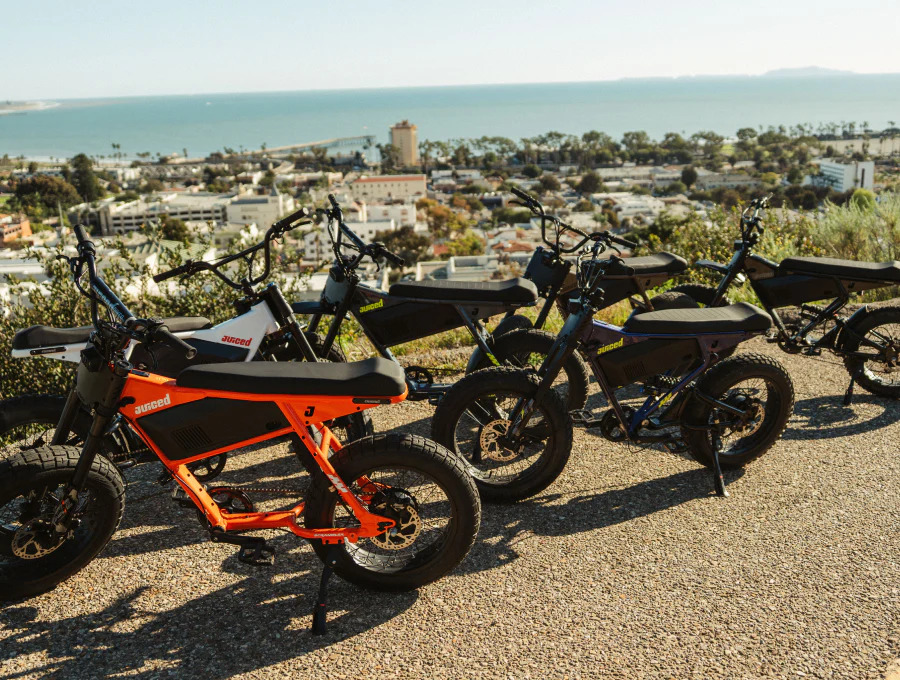
Juiced Bikes Is Back — Should You Rush Out To Buy One?
For a long stretch of the last decade, Juiced Bikes and its Scrambler moped-style ebike were some of the loudest names in high-power electric bikes. Then the lights went out. Financial trouble, an asset auction, and months of silence left owners wondering if their next replacement battery would ever ship.
That is the backdrop for the brand’s return. In 2025, the founders of Lectric eBikes acquired the Juiced Bikes brand and intellectual property at auction, laying the groundwork for a relaunch under new ownership. In 2026, that plan finally turned into product. Juiced announced a comeback built around a new Scrambler lineup, and those models are now listed as in stock and shipping in the U.S., not just sitting on a pre-order page.
The short version: Juiced Bikes is back as a relaunched brand under different owners, and the Juiced Bikes Scrambler is leading the return. The longer version is where things get a little more complicated.
Juiced Bikes Scrambler
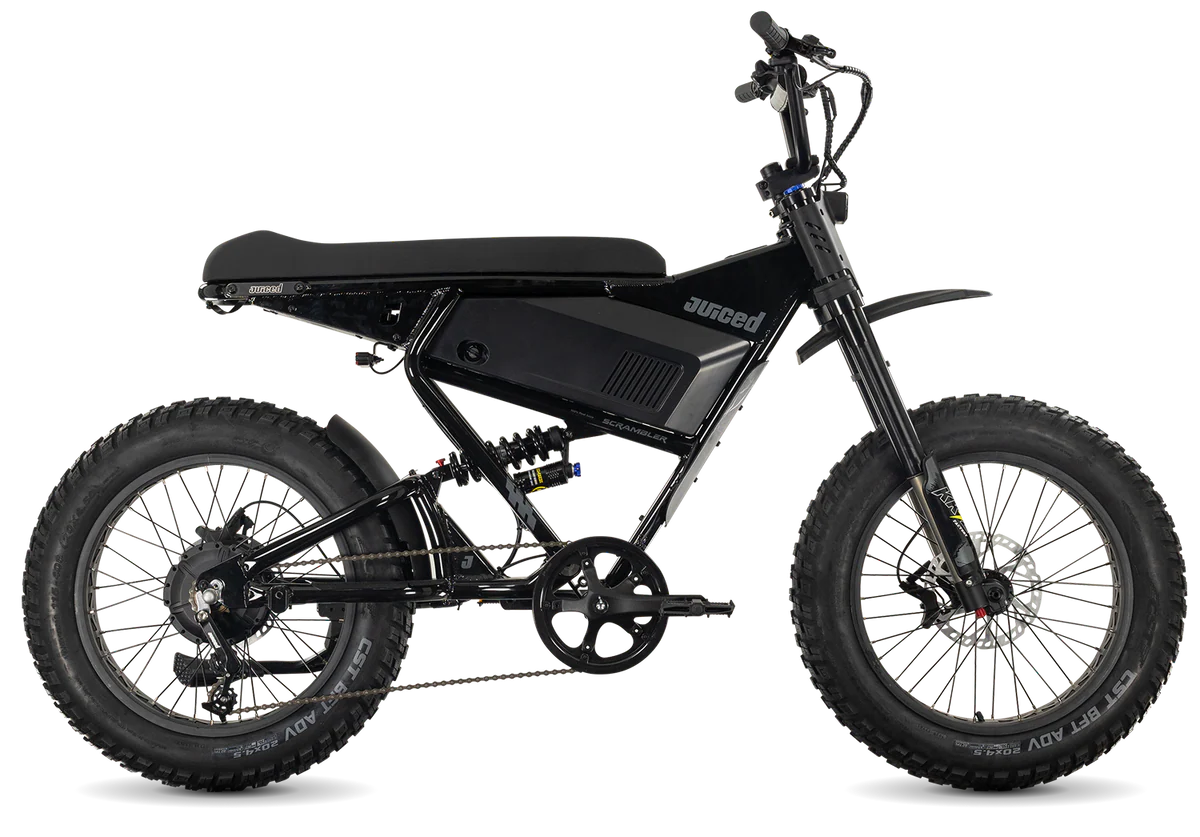
The Juiced Scrambler has always been the brand’s poster child: a moto-inspired, long-seat, throttle-equipped ebike that sits somewhere between “bicycle” and “small motorcycle.” Fans loved the power and styling. Regulators noticed it too. The Juiced Bikes Scrambler ebike sits in exactly that gray area, which is a big part of why it built such a loyal following the first time around.
The latest Juiced Scrambler comes in two versions: a Hardtail (HT) and a Full Suspension (FS). Both share the same moto-style silhouette and 52V drive system, but the FS adds rear suspension for riders who want a more stable, off-pavement feel.
Both Scrambler models use a 750W nominal rear hub motor paired with a 30-amp controller, which lets peak output climb to 1,764W. Juiced says the Scrambler can be configured as a Class 1, Class 2, or Class 3 ebike, with pedal assist up to 28 mph where that is legal and lower-speed settings available for stricter markets. Power comes from a 52V, 19.2Ah battery, or about 998Wh, and Juiced lists a maximum range of up to 60 miles in ideal conditions.
The Scrambler brings four-piston hydraulic disc brakes and an inverted KKE suspension fork with around 140 mm of travel. It also uses UL-certified battery systems, and the FS version adds a rear shock for riders who actually leave pavement.
Juiced Scrambler HT vs FS: Key Differences
|
Feature |
Scrambler HT |
Scrambler FS |
|
Rear suspension |
None |
KKE rear shock |
|
Front suspension |
KKE inverted fork, 140 mm travel |
KKE inverted fork, 140 mm travel |
|
Motor |
750W nominal rear hub, 1,764W peak |
750W nominal rear hub, 1,764W peak |
|
Torque |
90 Nm |
90 Nm |
|
Battery |
52V 19.2Ah |
52V 19.2Ah |
|
Top speed |
Up to 28 mph |
Up to 28 mph |
|
Throttle speed |
Up to 20 mph |
Up to 20 mph |
|
Tires |
Chaoyang 20 x 4 in. |
CST BFT ADV 20 x 4.5 in. |
|
Weight |
83 lbs |
85 lbs |
|
Payload capacity |
300 lbs |
225 lbs |
|
Price |
$1,694 |
$1,894 |
On paper, the two bikes share the same foundation. The main difference is the ride character. The HT is the simpler and slightly lighter version, while the FS offers rear suspension, cushier 4.5 in. tires and is built for riders who want more comfort and control once the pavement gets rough.
What is still unknown is how those claims translate into real-world range, how the frame and components hold up under daily use, and how the new Juiced customer support operation performs once more Scrambler units are out in the wild. Early reviews are only just starting to put serious miles on these bikes.
Who Is Behind the Relaunch and Does It Matter
If you watched the original Juiced Bikes grind to a halt, “who owns Juiced now?” is not a minor detail. During the 2024 collapse, Juiced’s assets, trademarks, and intellectual property were auctioned to repay creditors. The sale specifically carved out things like existing inventory and older warranty obligations, leaving many legacy Juiced owners in a gray area for long-term support.
The new chapter is different on paper. The Juiced Bikes brand and IP were acquired by a company led by Lectric eBikes co-founders Levi Conlow and Robbie Deziel. They have said that Juiced will operate as a separate brand under their leadership rather than being folded directly into Lectric’s main lineup. That separation matters because it suggests a dedicated product roadmap and team rather than a pure rebadge exercise.
For buyers, the key point is simple: the relaunched Juiced Bikes is not the same legal entity that sold you an original Scrambler or CrossCurrent. Whatever warranty or support commitments you get today are based on the new company’s policies. Before you buy, it is worth reading the current Juiced Bikes warranty terms and watching how the first wave of Scrambler owners describe their support experiences once the initial excitement wears off.
It is also where ebike insurance starts to make more sense. A moped-style ebike that will see higher speeds, heavier loads, and more urban riding is a natural candidate for third-party ebike coverage, especially with a brand that is technically in its second life.
The Market Juiced Is Returning Into Is Not the Same One It Left
When Juiced Bikes was at its peak, the direct-to-consumer ebike field was relatively sparse. There were a few established brands, a few aggressive upstarts, and a lot of open space between “premium European commuter” and “questionable marketplace special.” Today that middle ground is crowded and noisy.
On one side, value-driven brands like Lectric, Aventon, Ride1Up, and others have normalized sub-$2,000 ebikes with hydraulic brakes, integrated lighting, torque sensors, UL-listed batteries, and decent support. On the other, ultra-budget brands push flashy moped-style ebikes onto marketplaces at prices that would have looked impossible five years ago, often trading long-term service for short-term sticker appeal.
Layered on top are tariffs and supply-chain pressures on Chinese-made ebike components and complete bikes, which squeeze margins and encourage quiet downgrades in spec or sudden price jumps. A high-power, dual-suspension-capable moped-style ebike like the Juiced Scrambler is not cheap to build, certify, and ship, even if the Juiced Bikes Scrambler price looks sharp on a product page.
That means Juiced is not returning to the same open lane it once occupied. The brand cannot simply replay its old “more volts and watts for less money” formula and expect the same attention. It needs to convince riders that the new Juiced Scrambler is a better bet than proven options on the market and that this relaunch will be more durable than the last chapter that ended in an auction.
Moped-Style Ebikes Are Under Legislative Pressure — And the Scrambler Sits Right in the Crosshairs
The Juiced Bikes Scrambler sits in the exact corner of the ebike market that regulators have been staring at: throttle-equipped, high-power, motorcycle-inspired ebikes that regularly hit speeds many cities never envisioned when they legalized “electric bicycles.”
Most U.S. ebike regulations revolve around three basic classes. Class 1 bikes use pedal assist only, up to 20 mph. Class 2 adds a throttle that can move the bike without pedaling, also capped at 20 mph. Class 3 uses pedal assist up to 28 mph and usually cannot use certain bike paths even where it is allowed on the road.
The Juiced Scrambler can be configured into these classes on paper, but once riders unlock the higher-power settings it behaves much more like a small electric moped than a traditional commuter, especially under throttle.
Cities are tightening rules in response. New York City is the clearest example. NYC allows ebikes, but now caps micromobility speeds at 15 mph on city streets. It has also rolled out rules requiring UL-certified batteries, along with stricter safety standards for retailers and delivery operations. City agencies have also stepped up enforcement around sidewalk riding, bike lane behavior, and unregistered mopeds. Other dense markets are watching and actively debating where throttle ebikes and moped-style designs should be allowed to ride and at what speeds.
For a moped-style ebike like the Juiced Scrambler, that creates a real friction point. On paper, you get a class-legal electric Scrambler ebike with a big 52V battery, strong power, and respectable top speed. In practice, local regulations may limit where you can legally ride at those speeds, how fast you are allowed to go in bike lanes or shared paths, and how enforcement treats a bike that looks more like a motorcycle than a commuter with a rear rack.
If you are considering the Scrambler or any similar moped-style ebike, a few steps are non-negotiable:
- Check your local and state laws carefully, especially if you are comparing ebike regulations by state.
- Look at how your area defines Class 2 and Class 3 ebikes, throttle use, and maximum legal speeds.
- Look for specific rules on moped-style ebikes, not just generic “electric bike” language, since body style and speed often change how rules are enforced.
- Be realistic about where you plan to ride most. A Scrambler that spends its life limited to 15 to 20 mph in bike lanes is a different proposition than one that can legally use 28-mph assist on open roads.
There is also the safety side. A bike that weighs what a moped weighs and accelerates the way the Scrambler does deserves more than a minimalist city helmet. Many riders step up to helmets rated for scooter or moped use, plus better lights and high-visibility gear, simply because the stakes are higher at this end of the ebike spectrum.

Should You Wait, Watch, or Walk Away
The honest answer is that nobody outside the new Juiced Bikes organization and its earliest customers can yet say how this relaunch will age. That does not mean you should ignore it. It does mean you should treat a Juiced Scrambler purchase as an informed bet, not a guaranteed win.
If you are Juiced-curious right now, think through a few questions before you commit:
- Warranty and support: Juiced’s current warranty spells out how long the frame, electronics, and batteries are covered, so it is worth reading that carefully and asking how straightforward the process looks if something fails in year two or three.
- Parts and availability: Are core wear items and proprietary components, like batteries, controllers, and displays, easy to find and clearly priced, or do they feel like an afterthought?
- Return policy: If the Scrambler shows up and does not fit your route or local ebike regulations, what are your options for returning or exchanging it?
- Independent reviews: Are you basing your decision on full, long-term reviews of production bikes and real-world range tests, or mostly on early-access content and marketing claims?
If your risk tolerance is low, waiting is the rational move. There is no shortage of proven alternatives if your bigger concern is learning how to buy an ebike from a new brand without becoming the test case.
If you are comfortable being an early adopter and accept that a relaunch involves some uncertainty, you can still put a Scrambler on your shortlist now, follow owner reports closely, and only buy once there is more data on long-term reliability and support.
Our Take
For longtime Juiced Bikes fans, seeing the Juiced Scrambler back as a real shipping product rather than a memory is a genuine moment.
On paper, the new Scrambler HT and FS look like proper successors to the original idea, with more range, more power, and a spec sheet that will make a lot of moped-style rivals work harder on value.
But none of that erases how the first chapter ended, or how much the market and regulatory landscape have shifted. The relaunched Juiced Bikes is a new company operating in a more crowded, more regulated segment, and the Scrambler sits in the exact category of ebikes that cities and states are rethinking most aggressively.
If you loved Juiced before, the comeback is worth following closely. For now, the sensible move is to treat the Juiced Bikes Scrambler as a promising but unproven return — a bike that could earn back trust over time if the company backs it with robust support, clear warranty policies, and honest communication as regulations evolve. Riders who decide it is not the right fit right now may be better served by looking at the best moped style ebikes already established in the market, or even shifting focus toward the best ebikes for commuting if what they really want is a more regulation-friendly daily rider.
Once we have a production Scrambler in hand and enough miles on it, we will follow up with a full Juiced Bikes Scrambler review.
FAQ: Juiced Bikes Scrambler Return
Is Juiced Bikes the same company as before?
No. The original Juiced Bikes company shut down and its assets and brand were later acquired at auction by a group led by the founders of Lectric eBikes. The relaunched Juiced Bikes is a new entity using the familiar name.
Who owns Juiced Bikes now?
Juiced Bikes is now owned by a company headed by Lectric eBikes co-founders Levi Conlow and Robbie Deziel, who say Juiced will operate as a separate brand under their leadership.
What is new about the Juiced Scrambler?
The latest Juiced Scrambler HT and FS add a 52V battery system, a 1,764W-peak rear hub motor, updated suspension including an inverted KKE fork and a full-suspension option, four-piston hydraulic brakes, and UL-certified battery systems, all at a sub-$2,000 price point.
How fast is the new Juiced Bikes Scrambler?
Juiced says the Scrambler can be configured as a Class 1, 2, or 3 ebike, with pedal assist up to 28 mph where that is legal. In stricter markets, lower-speed settings are available to comply with local ebike regulations.
Is the Juiced Scrambler legal in New York City?
New York City allows ebikes but caps speeds for micromobility devices at 15 mph and requires UL-certified batteries and compliance with local safety rules. Riders should confirm current NYC ebike regulations before riding.
Is now a good time to buy a Juiced Scrambler?
Because Juiced Bikes is relaunching under new ownership, many riders may prefer to wait for more independent long-term reviews and real owner feedback on reliability and support before committing. Early adopters should go in with a clear view of warranty terms, return policies, and local regulations.
What are the main alternatives to the Juiced Bikes Scrambler?
Riders who want a moped-style ebike but are cautious about a relaunching brand can consider established alternatives in the same general category, especially if they are prioritizing long-term support and parts availability.