

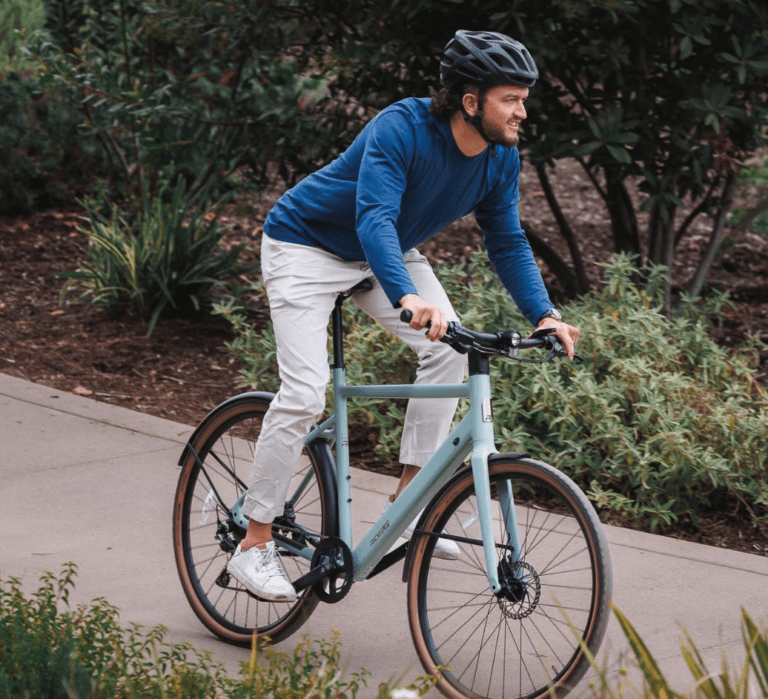
Note: The Roadster V2 is no longer sold new by Ride1Up, but many riders still own one — and it remains popular on the used market. This comparison is aimed primarily at current V2 owners and riders deciding whether the V3 is worth the upgrade. This is not a review of the Roadster V3, just an analysis based on newly released specs of this ebike.
When we first started Top5ebikes.com the Ride1up Roadster was one of the first ebikes we reviewed and it remains one of our favorite bikes ever. It checks so many boxes- its affordable, its light, it stores easily, and is not only very fun to ride but also a great looking bike!
If you’re riding a Ride1Up Roadster V2, the launch of the Ride1Up Roadster V3 probably raised a familiar question: Is this actually a meaningful upgrade, or just a refined version of the same minimalist commuter?
The Roadster line has always been about keeping things simple — lightweight, clean design, and fuss-free commuting. With the V3, Ride1Up didn’t abandon that philosophy, but they refined nearly every aspect of the bike to improve everyday usability while preserving its commuter DNA.
This comparison breaks down what’s changed from the V2 to the V3, how those changes affect real-world riding, and — most importantly — whether upgrading makes sense for current Roadster owners.
Motor & Power Delivery
Roadster V2
The original Roadster V2 features a 500 W peak geared rear hub motor (about 350 W nominal) paired with a cadence sensor — meaning assist kicks in once you start pedaling. It’s lightweight and peppy enough for flat city routes, but power delivery can feel on/off and less intuitive when you change pace or start from a stop.
Roadster V3
The Roadster V3 now has a 500 W hub motor, and features a cutting edge torque sensor with approximately 50 Nm of torque. The Intui-Drive Torque Sensor System is highly responsive, yet delivers smooth power and was developed by the same engineers that created the famed BOSCH eBike drive systems. With every pedal stroke riders are treated to a more intuitive and responsive experience compared to cadence-only systems.
Which is better?
If you care about how the assist feels — smoother starts, better modulation, and natural interaction with your pedaling — the V3’s torque sensor is a real step up. For simple flat commutes, the V2 still gets the job done, but it’s noticeably less refined.
Battery & Range
Roadster V2
The V2’s internal Samsung battery is compact with a capacity of around 36 V, ~7 Ah (~252 Wh). It kept the bike light (about 33 lbs) but limited range. Most riders saw about 20–35 miles per charge depending on terrain, assist level, and rider weight. In our testrides we were able to achieve 45 miles on one charge, primarily riding on flat terrain on pedal assist levels 2 and 3.
Roadster V3
The V3 gets a larger 36 V, 10 Ah (~360 Wh) Samsung GB50 battery, still removable for charging convenience. That added capacity typically translates to a bit more range and more confidence on all-day rides — especially at higher assist levels. The battery is UL 2849 certified with double gas vents for enhanced fire protection and safety.
Which is better?
For longer commutes or when you want more flexibility without worrying about range, the V3 clearly has an edge. Plus it’s a safer more advanced battery. If your usage is always short city hops, the V2’s range still works, though with less buffer.
Drivetrain & Maintenance Options
Roadster V2
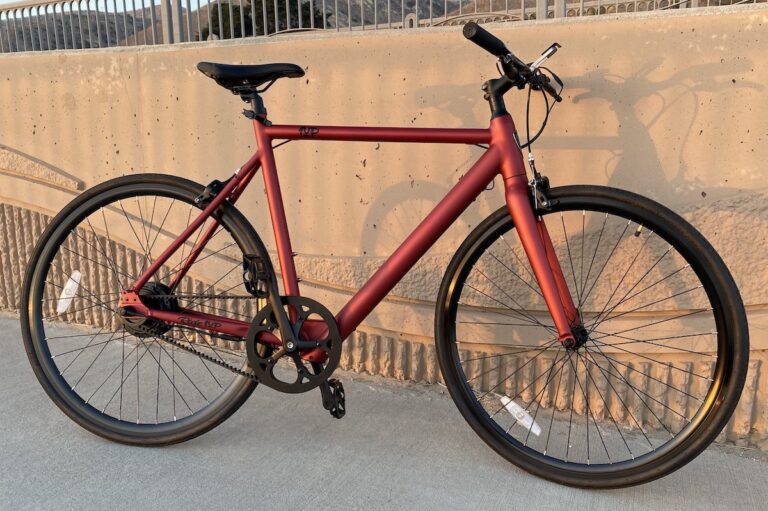
The original V2 uses a Gates carbon belt drive with a single speed — ultra-low maintenance and perfect for the simplicity the Roadster lineup is known for.
Roadster V3
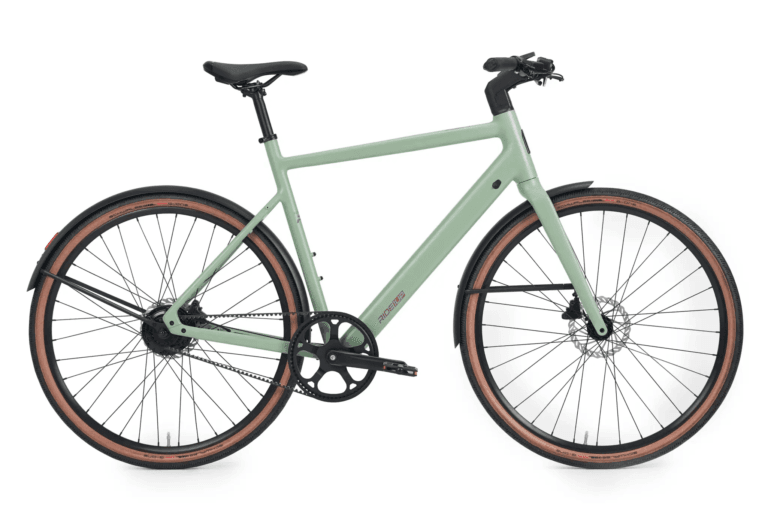
The newer model offers two drivetrain options- a belt drive for lower maintenance and a cleaner look or a 9-speed MicroShift chain drivetrain, which can be better for hills and mixed terrain. This gives riders more choice and maintains the “classic” Roadster aesthetic for those who still love the look and convenience of a belt drive.
Which is better?
If you ride hilly areas, the multi-speed option on the V3 is far more practical. For flat riding and minimal maintenance, the belt drive option keeps things low effort while still feeling more confident than the V2’s original system.
Brakes, Tires & Safety
Roadster V2
Stopping power on the V2 comes from Tektro V-brakes, which are lightweight and functional but don’t offer the modulation or confidence of more modern systems — especially if riding at faster speeds or on wet roads.
Roadster V3
The V3 upgrades to Tektro HD-R285 hydraulic disc brakes, which bring stronger, more consistent stopping power with less hand fatigue. The wider 700×45c tires also improve grip and comfort compared to the V2’s narrower setup.
Which is better?
From a safety and performance standpoint, the Roadster V3’s upgrades here are meaningful — especially if you ride at higher speeds or in varied conditions. The V2 continues to work fine for slow, short trips.
Display, Controls & Ride Tech
Roadster V2
The V2 uses a simple black-and-white LCD display that shows basic data like speed and battery level. It’s functional but limited.
Roadster V3
The V3 gets a 1.3″ VeloFox color OLED display with integrated throttle readouts that are easier to read at a glance and feel more modern overall.
Which is better?
If you enjoy quick access to ride information and appreciate a cleaner interface, the V3’s display is a nice upgrade. The V2 remains straightforward and distraction-free, which some riders prefer.
Ride Feel & Real-World Experience
Taken together, the upgrades on the Roadster V3 make for a noticeably more refined ride. Torque-based assist feels more intuitive, braking confidence is improved with hydraulics, and the larger battery means fewer range worries.
The V2 still excels at what it was built for: lightweight, uncomplicated city commuting. On shorter rides with minimal hills, the V2 feels nimble and efficient — and its simplicity can be a selling point.
Neither bike is designed for heavy cargo, aggressive climbs, or trail riding. They are solidly commuter/urban machines. What’s changed is how polished the commuter experience feels.
Roadster V3 vs Roadster V2 — Key Specs Comparison
Below is a breakdown of how the Roadster evolved from the V2 to the current V3.
Feature | Roadster V2 | Roadster V3 |
Price | $1045 | $1395 |
Motor | 500 W peak hub; cadence sensor | 500 W hub with torque sensor |
Pedal Assist | Cadence-based | Torque-based |
Battery | 36 V, ~7 Ah (~252 Wh) | 36 V, 10 Ah (~360 Wh) |
Drivetrain | Gates belt drive (single speed) | Belt or 9-speed chain |
Brakes | Tektro V-brakes | Hydraulic disc |
Tires | 700×28c | 700×45c |
Weight | ~33 lbs | ~40 lbs |
Display | Basic LCD | 1.3″ VeloFox color OLED |
Top Assist Speed | ~24–25 mph | ~28 mph |
Best For | Ultra-light city rides | Refined, longer commuting |
Pros & Cons of Upgrading
Pros
- Torque sensor delivers smoother, more intuitive assist
- Hydraulic brakes improve stopping and confidence
- Choice of drivetrain (belt or geared) increases versatility
- Larger battery boosts range flexibility and is UL 2849 certified
- Modern display improves ride feedback
Cons
- Slightly heavier than the V2
- V2 still works perfectly fine for short, flat commutes
- Upgrade cost may not be worthwhile if your riding hasn’t evolved
Final Verdict: Should You Upgrade?
If You Already Own a Roadster V2
Upgrading to the Roadster V3 makes sense if:
- You ride longer distances
- You want a smoother, more natural assist experience
- You value better braking and more versatile gearing
But if your use is strictly short, flat city runs and your V2 still works without issues, there’s no urgent need to upgrade — the original Roadster still does what it was designed for.
For New Buyers
Since the Roadster V2 is no longer available, the Roadster V3 is effectively the default choice — and fortunately, it’s a strong one. You’re getting a more refined commuter with better brakes, a torque sensor, a modern display, and drivetrain options, all while keeping the lightweight, minimalist spirit that defined the original Roadster.