Electric mountain bikes have become some of the most expensive models on the market. Once you step into the world of mid-drive motors and full-suspension frames from the big-name brands, you’re usually looking at a starting price of $6,000, and it’s not hard to find models that climb up to the cost of a used Honda Civic.
That’s why the Ride1Up TrailRush is such a massive outlier.
At $2,095 (and frequently on sale for $1,995), the TrailRush costs thousands less than the mainstream competition. But here’s the kicker: it’s not just a “mountain-style” cruiser. It has a legitimate German mid-drive motor, trail-ready parts, and modern geometry.
This naturally raises the question: How close does it actually get to the “gold standard” bikes from Trek and Specialized? To settle the debate, this Ride1Up TrailRush review puts the budget hardtail up against two 2026 heavy hitters: the Trek Rail+ 5 Gen 5 and the Specialized Turbo Levo 4 Alloy.
Ride1Up TrailRush Review: The Contenders at a Glance
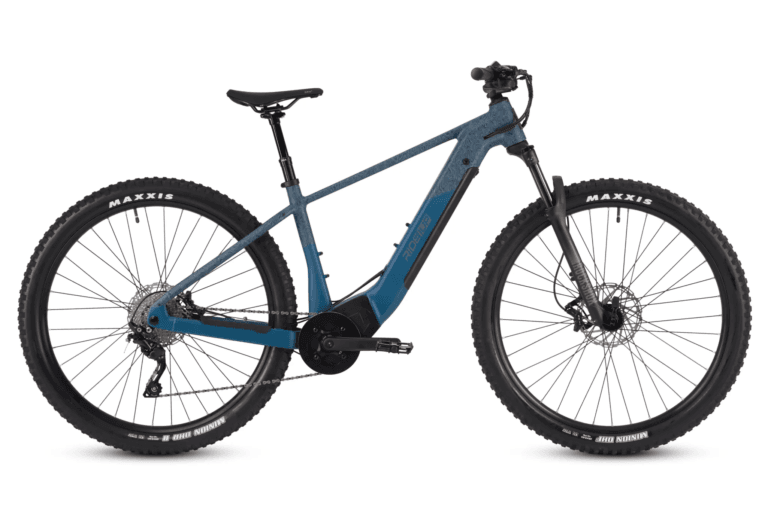
Ride1Up TrailRush
Don’t let the price tag fool you into thinking this is just a commuter with knobby tires. While most bikes in this bracket rely on cheap hub motors that feel like they’re pushing you along, the TrailRush uses a legitimate German mid-drive that works with your pedaling cadence.
Since it’s a hardtail, you aren’t losing energy to a rear shock, making it a fast, efficient climber. It’s a nimble tool for fire roads and flowy singletrack where you want speed and responsiveness without the extra bulk of a full-suspension rig. This is usually the first thing riders look at in any Ride1Up TrailRush review, since motor feel defines the entire ride experience.
- Motor: Brose TF Sprinter Mid-Drive (90 Nm)
- Suspension: 120mm RockShox Judy Silver TK (Front Only)
- Battery: 504 Wh Samsung
- Price: ~$2,095
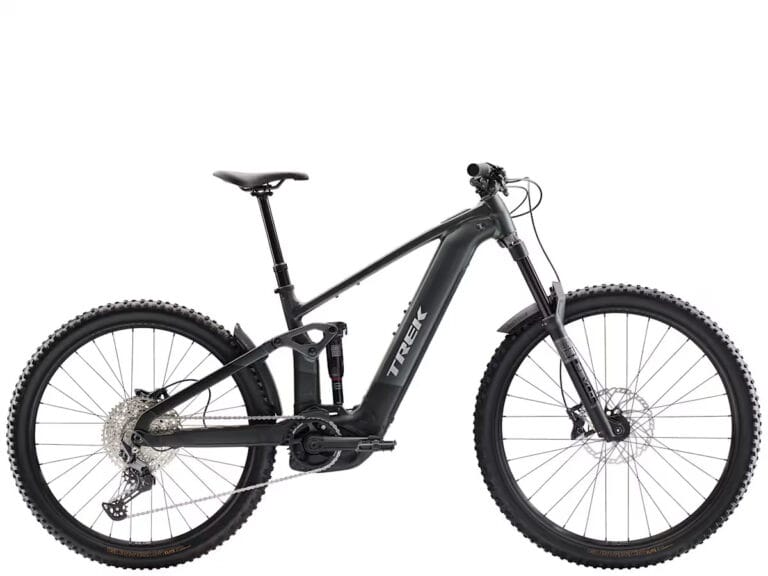
Trek Rail+ 5 Gen 5
If the TrailRush is a cross-country runner, the Rail+ is built for the heavy lifting. This is a full-suspension enduro machine designed to stay planted when the trail gets ugly. It uses a high-output Bosch motor specifically tuned to handle long, grinding climbs that would overheat lesser systems. With 160mm of travel, it’s the kind of bike that lets you stay in the saddle through roots and rocks that would bounce a hardtail off the line. It’s a stout, capable rig for riders who spend their weekends at the bike park or on steep, technical mountain terrain.
- Motor: Bosch Performance Line CX (85 Nm – 100 Nm)
- Suspension: 160mm RockShox Psylo Gold / Deluxe Select+ (Full)
- Battery: 800 Wh Bosch PowerTube
- Price: ~$6,099
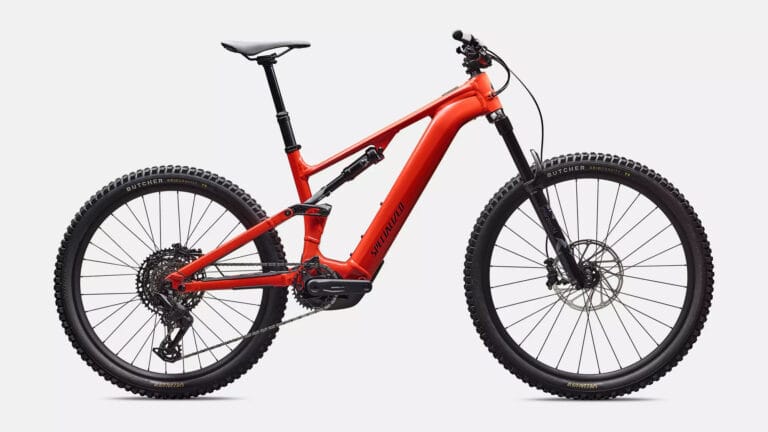
Specialized Turbo Levo 4 Alloy
The Turbo Levo is widely considered the smartest bike on the mountain. It’s famous for its “mullet” wheel setup, using a big 29-inch wheel up front to roll over obstacles and a smaller 27.5-inch wheel in the back to keep the bike snappy in tight corners. It has the most powerful motor and the biggest battery of the group, which means you can basically ignore your “range anxiety” and focus on the fact that the bike feels incredibly balanced, regardless of how fast you’re moving.
- Motor: Specialized 3.1 Mid-Drive (101 Nm)
- Suspension: 160mm Marzocchi Bomber Z1 / Bomber Inline (Full)
- Battery: 840 Wh M3 Integrated
- Price: ~$6,099
Motor & Torque: Subtle Support vs. Raw Power
In the world of eMTBs, torque is your best friend. It’s what gets you up a 15-percent grade without your heart rate hitting the redline. On paper, the Ride1Up TrailRush specs look similar to the other contenders, but the tuning and ride feel are where the gap shows up.
Ride1Up TrailRush
The TrailRush uses a Brose TF Sprinter that pushes 90 Nm of torque. The standout feature here isn’t just the power, it’s the silence. Most mid-drive motors use internal gears that produce a noticeable mechanical “whine,” but Brose uses an internal belt drive.
On the trail, that 90 Nm of torque doesn’t just “dump” all its power the second you touch the pedals. It’s tuned to be fluid; it builds power as you pedal harder, which is exactly what you want when you’re trying to find traction on a loose, technical climb. It’s punchy enough to get a 58 lb bike up a serious grade, but it does it without the jerky “kick” or the mechanical racket you’d find on a cheaper setup.
Trek Rail+ 5 Gen 5
Trek sticks with the Bosch Performance Line CX, which is essentially the gold standard for reliability. While it’s rated at 85 Nm (peaking higher in specific modes), it feels much more aggressive than the Brose.
You can hear the Bosch working, it has a distinct mechanical whir, but that sound comes with a level of responsiveness that is hard to beat. It’s tuned for those “all-day” mountain rides where you’re tackling thousands of feet of elevation. If you’re the type of rider who wants to feel that direct, mechanical connection and needs a motor that won’t back down during a thirty-minute sustained climb, this is the one.
Specialized Turbo Levo 4 Alloy
The Specialized 3.1 motor is the heavy hitter of this group, pumping out a massive 101 Nm of torque. Specialized spends a lot of time on their software tuning, and it shows.
This motor is designed to get you to the top of the trailhead as fast as possible so you can spend your energy on the descent. However, that extra power comes at a cost: it’s the thirstiest motor of the three, which is why Specialized had to pair it with such a massive battery to keep the ride from ending early.
The Verdict:
At 90 Nm, the TrailRush isn’t actually underpowered, it technically packs more raw torque than the Trek’s standard out-of-the-box setting. The real difference here is in the “brain” of the bike. While you’ll be manually clicking through the TrailRush’s four assist levels, the Trek and Specialized systems feature “Auto” and “eMTB” modes that use internal sensors to adjust the power for you based on how steep the hill is.
It’s essentially the difference between a high-quality manual transmission and a smart automatic; the TrailRush gives you all the muscle you need, but you’re the one who has to decide when to shift it into high gear.
Suspension: The Hardtail Reality Check
This is the biggest fork in the road (pun intended). This hardtail vs full suspension eMTB question is the real “price difference” hiding underneath the spec sheets.
- The TrailRush is a hardtail. You get 120mm of air-sprung travel in the front, but the back is rigid. This makes the bike lighter and more efficient on climbs, but on a bumpy descent, your legs are the rear suspension. It’s great for flow trails and fire roads, but it will chatter your teeth on a “black diamond” rock garden.
- The Trek Rail+ 5 Gen 5: The Rail+ is a dedicated full-suspension enduro rig. With 160mm of travel front and rear, this bike is designed to “erase” the trail beneath you. It uses a massive RockShox Psylo fork and a Deluxe Select+ rear shock to turn technical rock gardens into minor inconveniences. You can stay seated and pedal through roots that normally would buck you off a hardtail.
- Specialized Turbo Levo 4 Alloy: This bike is all about being snappy. Because it uses a smaller 27.5-inch rear wheel, it’s much easier to whip around tight corners than the Trek. It pairs 160mm of travel up front with 150mm in the back, using Marzocchi Bomber shocks that are built to be rugged and predictable. It’s a balanced setup that’s designed to stay composed when the trail gets fast, allowing you to hit mid-sized jumps and drops without the bike feeling like it’s bottoming out or getting squirrelly.
The Verdict: If your typical Sunday involves groomed dirt and local park loops, the extra $4,000 for a rear shock is probably overkill. But if you’re planning on hitting legitimate mountain terrain where the rocks are the size of basketballs, that price jump buys you the confidence to actually enjoy the descent rather than just bouncing your way to the bottom.
Battery & Range: Afternoon Loops vs. All-Day Epics
There is no getting around the math here.
- TrailRush: 504 Wh battery.
- Rail+: 800 Wh battery.
- Turbo Levo: 840 Wh battery.
For the Ride1Up TrailRush price, the smaller battery is the trade-off that keeps the bike from becoming a 60+ lb full-suspension monster.
The TrailRush is built for the 30–50 mile ride, providing plenty of juice for a 2-hour session without forcing you to lug around extra battery weight. The Trek Rail+ moves into “marathon” territory with its 800 Wh pack, providing the overhead needed to tackle thousands of feet of elevation in high-assist modes without constantly checking the display. On the Specialized Turbo Levo, the 840 Wh battery isn’t just about distance; it’s a necessity to feed the high-torque 101 Nm motor, ensuring you can keep the power at 100% for the duration of a technical, aggressive ride.
Ride1Up TrailRush vs. Premium eMTBs: Comparison Table
Category | Ride1Up TrailRush | Trek Rail+ 5 Gen 5 | Specialized Turbo Levo 4 Alloy |
MSRP | |||
Motor | Brose TF Sprinter mid-drive | Bosch Performance Line CX | Specialized 3.1 mid-drive |
Torque | ~90 Nm | ~85 Nm-100 Nm | ~101 Nm |
Battery Capacity | 504 Wh | 800 Wh | 840 Wh |
Frame Type | Hardtail | Full suspension | Full suspension |
Suspension Travel | 120 mm (front only) | ~160 mm front / rear | ~150–160 mm front / rear |
Drivetrain | Shimano 10-Speed Deore M6000 | Shimano Deore M6100, 12 speed | SRAM 70 trigger, 12-speed, single click |
Brakes | Quad-piston hydraulic | Hydraulic disc | Hydraulic disc |
Wheel Setup | 29″ | 29″ or 27″ (trim-dependent) | Mixed (29″ front / 27.5″ rear) |
Weight | 57 lbs | 55.74 lbs | 57 lbs |
Primary Use Case | XC / light trail / mixed use | Aggressive trail / all-mountain | Aggressive trail / all-mountain |
Matching Your Ride: Is the Ride1Up TrailRush Right for You?
The fastest way to decide is to look at where you actually ride. Don’t buy more bike than you need.
Ride1Up TrailRush vs Trek Rail: Who should choose which?
The “Flow State” Rider: If your local trails are mostly dirt, gravel, and flowy singletrack, the TrailRush is the smartest buy. You get a premium mid-drive motor for a third of the price of the big brands.
The “Gravity Junkie”: If you live for steep descents, jumps, and chunky rock gardens, you need the full-suspension stability of the Trek Rail+. A hardtail is just going to slow you down (and hurt) in that terrain.
Ride1Up TrailRush vs Turbo Levo: Who should choose which?
The “No Compromise” Techie: If you want the most powerful motor, a mixed-wheel “mullet” setup for tight turns, and the ability to ride 60 miles in one go, the Specialized Turbo Levo 4 is the benchmark for a reason.
Final Verdict
For riders researching a Ride1Up TrailRush review before buying, the biggest takeaway is that the Ride1Up TrailRush isn’t a “budget” bike in the way most people think. It’s a high-performance hardtail that happens to be affordable. You’re getting the same Brose motor technology found in bikes that cost three times as much.
Buy the TrailRush if: You want a legitimate eMTB experience, you appreciate a silent motor, and you’d rather spend that extra $4,000 on a mountain bike trip to Moab than on a rear shock you might not even need.
Skip it if: You are tackling aggressive, rocky terrain where a rigid rear end will be a literal pain in the neck.
Ultimately, Ride1Up has proven that you don’t need to spend $6,000 to get a machine that handles the hills and the dirt with a high-end feel. For the majority of trail riders, the TrailRush isn’t just a compromise, it’s the best value on the mountain.
Ride1Up TrailRush Review FAQ
Is the Ride1Up TrailRush worth it?
For riders who want a legitimate mid-drive eMTB without spending $6,000, the Ride1Up TrailRush delivers strong value. It offers a Brose motor, trail-ready components, and modern geometry at a fraction of the price of premium full-suspension models.
Is the TrailRush a real eMTB?
Yes. The TrailRush uses a mid-drive motor, air suspension fork, and modern trail geometry, making it a true eMTB. It’s best suited for flow trails, fire roads, and light singletrack rather than aggressive downhill terrain.
Ride1Up TrailRush vs Trek Rail+ 5 Gen 5: What’s the difference?
The TrailRush is a hardtail focused on efficiency and value, while the Trek Rail+ is a full-suspension enduro bike with more travel and a larger battery for rougher terrain and longer rides. The Trek costs significantly more but is built for more aggressive mountain conditions.
Ride1Up TrailRush vs Specialized Turbo Levo 4 Alloy: What’s the difference?
The Specialized Turbo Levo offers more torque, a larger battery, and full suspension designed for technical terrain and higher speeds. The TrailRush prioritizes quiet mid-drive performance and affordability, making it a better fit for riders who don’t need maximum power or downhill capability.
Hardtail vs full suspension eMTB: Which should you buy?
Hardtail eMTBs are lighter, more efficient on climbs, and often more affordable. Full-suspension eMTBs provide better comfort and control on rocky, technical descents. The right choice depends on how aggressive your local terrain is and how you prefer to ride.