The motor is one of the biggest things that changes how an ebike feels, but most product pages do a terrible job explaining it.
They will tell you the bike has a “powerful hub motor” or a “premium mid-drive system,” and then somehow expect that to answer all your questions. Helpful in the same way a restaurant menu saying “food included” is helpful.
Here is the simple version: a hub motor powers the wheel directly, while a mid-drive motor sends power through the bike’s gears. That one difference affects hill climbing, range, maintenance, price, weight balance, and how natural the bike feels when you pedal.
Neither setup is automatically better. Hub motors are usually more affordable and easier to live with, while mid-drive ebikes tend to shine when the ride gets steeper, heavier, or more technical.
The right choice depends on how you ride, where you ride, and whether you want the motor to feel like a helpful push from behind or a stronger version of your own legs.
Hub Motor vs Mid-Drive: Quick Answer
Choose a hub motor if you want a practical, lower-cost ebike for everyday riding on mostly predictable routes, and you would rather not think much about shifting.
Choose a mid-drive ebike if your rides include steeper terrain, heavier loads, or you want the motor to feel more connected to your pedaling, and you do not mind learning to shift well.
That is the buyer’s-guide answer. The slightly longer answer is that hub motors win on simplicity and price, while mid-drives win on climbing ability and ride quality. The “better” motor is the one that solves your actual riding problem, not the one that sounds fancier on a spec sheet.
The Main Difference: Where the Motor Sends Power
The easiest way to understand hub motor vs mid-drive ebikes is to look at where the power goes.
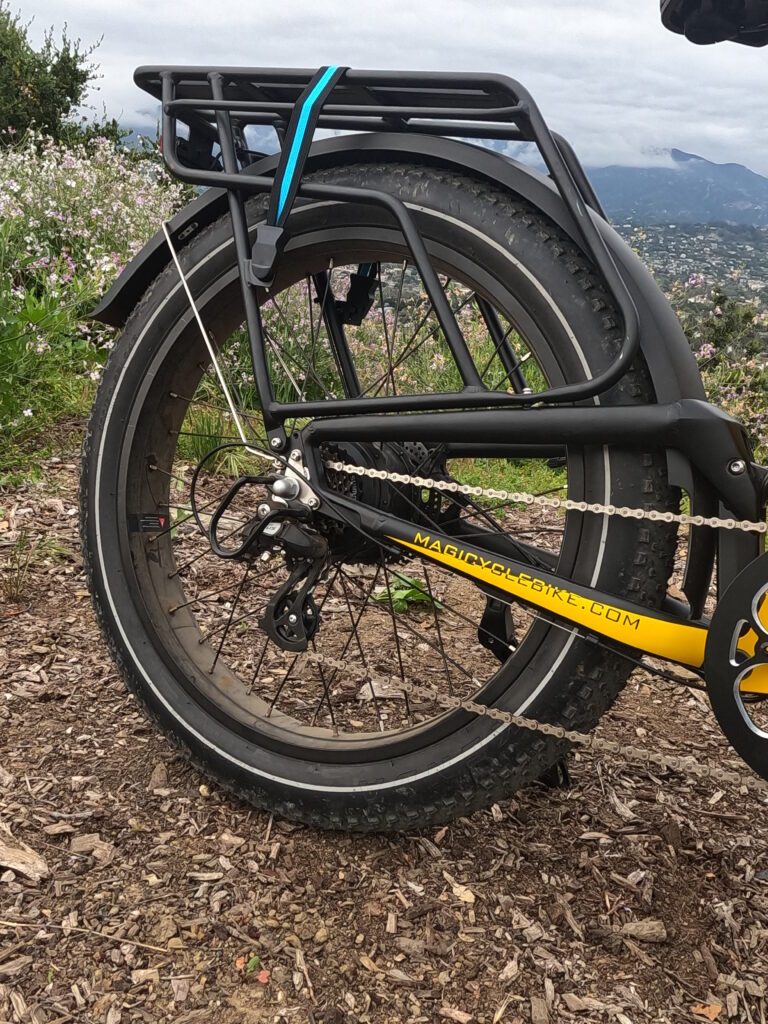
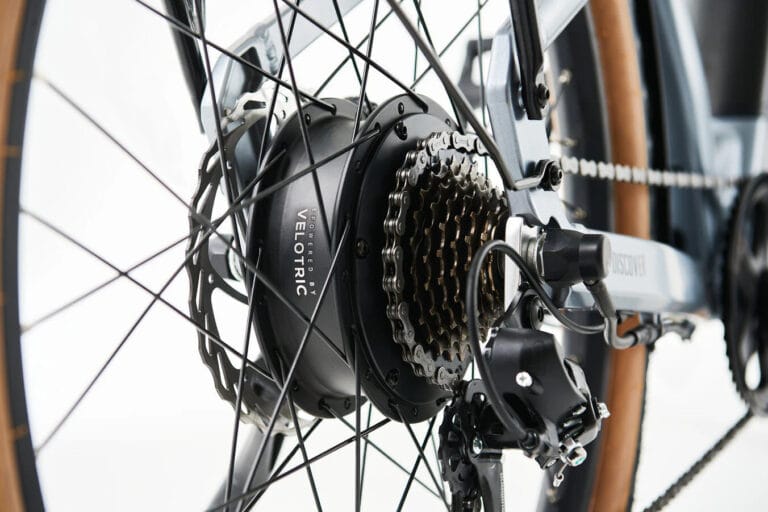
A hub motor sits inside the wheel, usually the rear wheel. When the motor turns on, it spins that wheel directly. The bike’s chain and gears are still used when you pedal, but the motor itself does not rely on them.
A mid-drive motor sits near the crank, where the pedals are. When the motor turns on, it sends power through the chain and gears, just like your legs do.
That difference sounds small until the road tilts upward. A mid-drive motor can use the bike’s gears to stay efficient on climbs. A hub motor has to push from the wheel, which can work fine on mild hills but becomes less efficient when the climb gets steep or the bike is loaded.
If hub motors are the straightforward option, mid-drives are the more involved one. One spins the wheel and asks nothing of you. The other joins the drivetrain and expects you to shift like you mean it.
What Is a Hub Motor Ebike?
A hub motor ebike has the electric bike motor built into the front or rear wheel hub. Most modern commuter and fat tire ebikes use rear hub motors because they provide better traction and a more natural feel than front hub setups.
Hub motors are popular because they are simple. The motor drives the wheel directly, which keeps the system easier to understand, easier to manufacture, and often easier on the wallet.
There is another reason they dominate the everyday market, and it is one product pages rarely mention: hub motors barely ask anything of the rider. Because the motor is usually powerful enough to carry the load on its own, you can leave the bike in one gear and mostly forget shifting exists. For a huge share of riders, that is exactly the appeal. Most people are not chasing drivetrain efficiency on the way to work. They want to hop on, twist a throttle or pick an assist level, and go. Hub motors deliver that with almost no learning curve.
That is why you see hub motors on so many entry-level, commuter, folding, and value-focused ebikes. They do the job without making the rest of the bike, or the rider, work any harder.
Hub Motor Pros
- Lower cost: Hub motor ebikes are usually more affordable than mid-drive ebikes.
- Simple to operate: You can leave it in one gear and let the motor do the work, so there is almost nothing to learn.
- Easy ownership: The motor does not add extra stress to the chain and cassette.
- Throttle-friendly: Many Class 2 ebikes use hub motors because throttles pair well with wheel-driven power.
- Good for flat routes: For city streets, bike lanes, and casual rides, a hub motor is often plenty.
- Widely available: There are tons of hub motor options across budget and commuter categories.
Hub Motor Cons
- Less efficient on steep hills: The motor cannot use the bike’s gears the way a mid-drive can.
- Rear-heavy feel: Rear hub motors can make the back of the bike feel heavier.
- Harder wheel service: Fixing a flat or removing the rear wheel can be more annoying because the motor is built into it.
- Less natural pedal feel: Some hub motor bikes feel more like the motor is pushing the bike than assisting your pedaling.
None of this means hub motors are bad. It just means they have a lane, and for a lot of riders, that lane is exactly where they spend most of their time.
What Is a Mid-Drive Ebike?
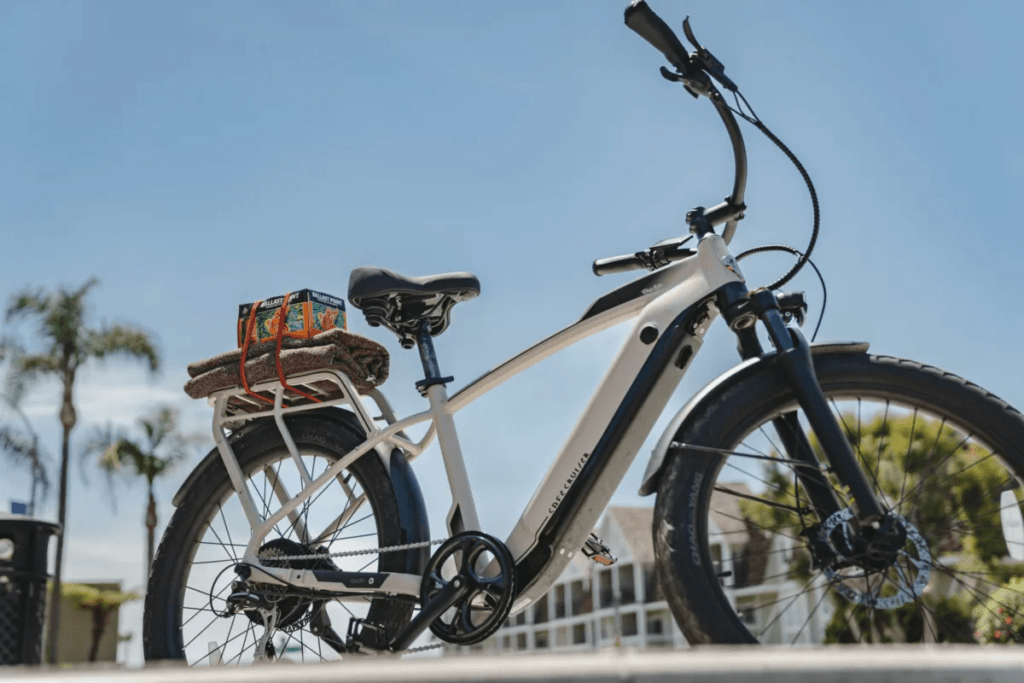
A mid-drive ebike has the motor mounted near the bottom bracket, around the crank area. Instead of spinning the wheel directly, the motor sends power through the drivetrain.
This makes mid-drive motors feel more connected to your pedaling. When you shift gears, the motor benefits too. That is why mid-drives are so common on electric mountain bikes, cargo ebikes, and higher-end commuter models.
The result is usually stronger climbing, better balance, and a ride that feels closer to a traditional bike, just with a much more helpful set of legs involved.
The trade-off is that a mid-drive asks more of you as a rider, which is the part most articles skip. We will get into that next, because it is the single most important thing to understand before you buy one.
Mid-Drive Pros
- Stronger hill climbing: The motor can use the bike’s gears.
- More natural ride feel: Power comes through the pedals instead of directly from the wheel.
- Better weight balance: The motor sits low and centered on the frame.
- More efficient on varied terrain: Mid-drives tend to manage climbs and changing conditions well.
- Great for cargo and trails: The extra control helps when the bike is loaded or the terrain gets technical.
Mid-Drive Cons
- Higher price: Mid-drive ebikes usually cost more.
- A real learning curve: You have to shift properly to get the most out of it, which takes a little practice.
- More drivetrain wear: The motor adds force through the chain, cassette, and chainring.
- Shifting mistakes have consequences: Shifting under heavy load can damage the drivetrain, and in the worst case snap a chain.
- Less common on budget ebikes: You usually have to spend more to get a quality mid-drive system.
A mid-drive is not automatically the “serious rider” choice, but it does become more valuable when terrain, weight, and ride feel matter.
The Mid-Drive Learning Curve Nobody Warns You About
Here is the thing most mid-drive reviews gloss over: a mid-drive rewards good shifting technique and punishes bad shifting technique. With a hub motor, gears are almost optional. With a mid-drive, they are the whole game.
Unless you buy one of the more advanced and usually pricier systems with automatic shifting, it is on you to pick the right gear at the right moment. Auto-shifting exists, and it is growing fast on premium commuter and cargo ebikes, but it is mostly limited to high-end setups that pair the motor with an internal gear hub, like the Enviolo Automatiq or Shimano’s electronic Di2 (Show Daily). On those, you set your preferred pedaling cadence and the bike handles the gears in the background, even downshifting to an easy gear for you when you stop. On a typical mid-drive, none of that happens. You are the one doing the shifting.
The good news is that the technique is not hard to learn. The bad news is that learning it the wrong way can get expensive.
Why Shifting Under Load Can Snap Your Chain
This is the big one, and it is a genuine, well-documented problem, not a scare tactic. A mid-drive motor pushes serious torque through the same chain your legs use. If you shift gears at the exact moment that torque is peaking, like grinding up a hill or launching from a dead stop with the motor pulling hard, you are asking the chain to jump between gears while it is under enormous strain.
Do that often enough and you wear out chains and cassettes fast. Do it at the wrong moment, like starting from a dead stop in a hard gear, and the motor slams its full torque into a stationary chain, which can snap the chain, bend a derailleur hanger, or strip teeth off the gears. It is common enough that experienced mid-drive riders treat it as a basic rule, not a rare fluke.
There is a quieter version of the same problem, too. Leave a mid-drive in too hard a gear on a climb and the motor is forced to lug along at low RPM, which makes it draw a lot of current, drain the battery faster, and run hot. So bad gear habits do not just risk snapping things, they make the bike work harder and go less far.
The fix is simple once it becomes a habit, and it comes down to two moves. First, anticipate stops by shifting down into an easy gear before you come to a halt, so you can pull away smoothly. Second, ease off the pedals for a split second as you shift, so the drivetrain is not under full power when the chain moves. Many modern mid-drives even include electronic shift sensors that briefly cut motor power the instant you click the shifter, specifically to protect the drivetrain. On a hub motor, you never have to think about any of this, because the motor is not pushing through the chain at all. On a mid-drive, it becomes second nature within your first week or two, and then you stop thinking about it. But it is absolutely something to know going in.
Hub Motor vs Mid-Drive: Key Differences
Feature | Hub Motor | Mid-Drive | Winner |
Price | Usually more affordable | Usually more expensive | Hub motor |
Hill climbing | Good for mild to moderate hills | Better for steep or frequent climbs | Mid-drive |
Ride feel | More push-from-the-wheel feeling | More natural pedaling feel | Mid-drive |
Maintenance | Less drivetrain stress | More chain and cassette wear possible | Hub motor |
Weight balance | Weight sits in the wheel | Weight sits low and centered | Mid-drive |
Range efficiency | Strong on flat routes | Better on hills and varied terrain | Mid-drive |
Throttle compatibility | Very common | Less common, depending on model | Hub motor |
Best use case | Budget commuting, casual riding, flatter routes | Hills, cargo, trails, premium commuting | Depends on the rider |
The table makes the pattern pretty clear. Hub motors win on value, simplicity, and ease of use. Mid-drives win when the ride asks more from the bike, as long as you are willing to put a little more into riding it.
Hills: Where Mid-Drives Pull Ahead
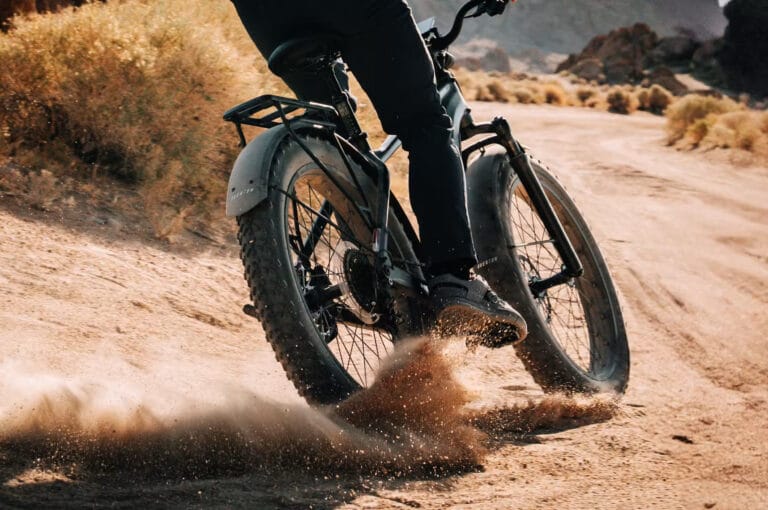
Mid-drive motors usually win on hills because they can use the bike’s gears.
Think about riding a regular bike uphill. You shift into an easier gear because grinding up a hill in the hardest gear is a great way to meet your regrets. A mid-drive motor gets that same advantage. Shift down, and both you and the motor can climb more efficiently.
A hub motor does not get that gearing advantage. It can still climb, especially if it has enough torque, but it has to do more of the work from the wheel itself. The upside is that a strong hub motor will haul you up a moderate hill without you ever touching a shifter, which is exactly why so many casual riders never bother.
For mild hills, a strong hub motor can be perfectly fine. For steep or repeated climbs, a mid-drive ebike is usually the better tool, provided you shift smartly on the way up rather than under full load.
Commuting: Where Hub Motors Still Make Sense
For most flat or moderately hilly commutes, a hub motor is enough.
That is why so many commuter ebikes use rear hub motors. They are affordable, easy to ride, and often pair well with throttle control. There is also no technique tax: you do not have to learn anything to get the most out of them. For a rider who just wants to get to work without managing gears, that simplicity is the whole selling point.
A mid-drive makes more sense if your commute has hills, longer distances, or mixed terrain. It can also feel better if you want the bike to respond closely to your pedaling instead of feeling like the motor is doing its own separate thing. Just know you are signing up to shift well in exchange.
In commuter terms, hub motors are the easy daily driver. Mid-drives are the upgrade when the route starts asking for more, and when you are happy to ride a little more deliberately.
Range: Why Terrain Changes the Answer
Range is not just about motor type. Battery size, rider weight, assist level, speed, tire pressure, wind, terrain, and riding style all matter.
That said, mid-drive motors can be more efficient on hills and varied terrain because they use the bike’s gears. The motor does not have to fight the hill in one fixed way. It can work through the drivetrain more efficiently.
There is a catch worth repeating, though: that efficiency only shows up if you shift well. A mid-drive left in too hard a gear on a climb lugs the motor at low RPM and actually burns through battery faster, so a careless mid-drive rider can lose the very range advantage they paid for.
On flat routes, the difference may be less dramatic. A good hub motor ebike with a decent battery can deliver excellent commuter range, especially if the rider uses moderate assist levels.
So if your rides are mostly flat, do not buy a mid-drive only because you think every hub motor is secretly wasting battery. It is not that simple. Ebikes rarely let one spec do all the work. Very inconsiderate of them.
Maintenance and Reliability
Hub motors are usually simpler to own. Since the motor drives the wheel directly, it does not put extra motor force through the chain, cassette, and chainring.
That can make hub motor ebikes easier on drivetrain parts. The trade-off is that rear wheel service can be more involved because the motor is built into the wheel.
Mid-drive motors can be extremely reliable, but they ask more from the drivetrain. Chains and cassettes wear faster, especially if the rider shifts poorly under load or leans on high assist all the time. This is the same issue as the chain-snap risk, just playing out slowly instead of all at once: bad shifting habits quietly grind down your parts even when nothing dramatic happens.
The honest answer is that quality and riding habits matter more than motor placement alone. A well-built hub motor ebike can outlast a cheap mid-drive. A premium mid-drive can run beautifully for years with proper maintenance and a rider who shifts with a little care.
If you want the least complicated ownership experience, hub motor wins. If you are willing to maintain the drivetrain and learn to shift well in exchange for better climbing and a more connected feel, mid-drive makes sense.
Final Verdict: Hub Motor or Mid-Drive?
By this point, I think you know the answer should be less about the motor label and more about your route, and how involved you want to be in the ride.
Choose a hub motor if your rides are mostly flat, your budget matters, you want the simplest ownership experience, or you simply do not want to think about shifting. It is the easy, low-effort option, and for the average rider that is not a compromise, it is the point.
Choose a mid-drive if you deal with steep hills, carry heavier loads, ride trails, or care most about a natural pedal feel, and you are willing to learn to shift properly to protect the drivetrain.
So no, hub motor ebikes are not bad. And no, mid-drives are not automatically worth the extra money for every rider.
Choose the motor that fits your actual route, not the one that wins the loudest internet argument. The bike does not care who sounded smartest in the comments section when you are halfway up a hill.
See you out there.
FAQ: Hub Motor vs Mid-Drive Ebikes
Is a mid-drive ebike better than a hub motor?
A mid-drive ebike is better for hills, cargo, trails, and riders who want a more natural pedal feel. A hub motor is usually better for lower cost, simpler maintenance, easier operation, and casual commuting. Neither is automatically better for everyone.
Are hub motor ebikes bad?
No, hub motor ebikes are not bad. They are popular because they are affordable, simple, and easy to operate, and they work well for many everyday riders. You can often leave the bike in one gear and let the motor handle the work. They may not climb as efficiently as mid-drives, but they are excellent for flat routes, commuting, and casual riding.
Do I have to shift gears on a mid-drive ebike?
Usually yes. Unless you buy an advanced system with automatic shifting, which is mostly limited to higher-end mid-drives, you choose the gears yourself. Learning to shift well is not hard, but it matters more on a mid-drive than on a hub motor, where shifting is close to optional.
Can shifting damage a mid-drive ebike?
It can. Because a mid-drive sends high torque through the chain, shifting gears while the motor is pulling hard, such as climbing or starting from a stop, strains the drivetrain and can wear parts quickly or even snap a chain. Easing off the pedals for a moment as you shift prevents it, and it quickly becomes a habit.
Do mid-drive ebikes last longer?
Not automatically. A high-quality mid-drive system can last a long time, but mid-drives create more drivetrain wear because the motor power runs through the chain and gears. Overall reliability depends on motor quality, bike build, maintenance, and shifting habits.
Which ebike motor is better for hills?
Mid-drive motors are usually better for hills because they can use the bike’s gears, which helps the motor climb more efficiently on steep or sustained climbs. Powerful hub motors can still handle moderate hills without any shifting at all.
Is a mid-drive worth the extra cost?
A mid-drive is worth the extra cost if you ride hills often, carry cargo, ride trails, or want a more natural cycling feel, and you do not mind learning to shift well. If you mostly ride flat streets and want a simple, budget-friendly commuter, a hub motor may be the smarter buy.
Do hub motors use more battery?
Hub motors can use more battery on hills because they cannot use the bike’s gears the same way a mid-drive can. On flatter routes, the difference may be less noticeable.
Can a hub motor ebike climb hills?
Yes, many hub motor ebikes can climb hills, especially if the motor has enough torque and the hill is not too steep or long. For frequent steep climbs, a mid-drive ebike is usually the better choice.