You can spend weeks comparing ebike motors, batteries, and components, only to accidentally give the lock about 30 seconds of thought. For a bike that might cost a few thousand dollars, that’s a pretty big detail to leave until checkout.
Also, choosing a good lock isn’t quite as simple as buying the thickest one you can find. Some are designed to withstand angle grinders, while others prioritize flexibility, portability, or price. Ebikes also tend to have bulkier frames than traditional bicycles, meaning a perfectly good U-lock might not even fit around your frame and the nearest bike rack.
We’ve rounded up six of the best locks for electric bikes, from affordable everyday options to heavy-duty security. We’ll look at where each one makes sense, what you’re paying for, and the compromises worth knowing before you buy.
These recommendations are based on manufacturer specifications, independent testing, and security certifications, rather than hands-on testing by Top5eBikes.
Best Ebike Locks at a Glance
|
Lock |
Best for |
Listed weight |
Security rating |
|
Budget-friendly security |
3.65 lb |
Pedal Cycle Gold |
|
|
Compact locking setups |
3.55 lb |
Pedal Cycle Gold |
|
|
Awkward racks and frames |
6.10 lb |
Pedal Cycle Gold |
|
|
Convenient everyday carrying |
3.88 lb |
ART 3-star, Pedal Cycle Gold |
|
|
Higher-risk daily parking |
3.7 lb |
Powered Cycle Diamond |
|
|
Bulky frames and high security |
5.7–5.9 lb |
Powered Cycle Diamond |
Prices reflect U.S. listings checked October 22, 2026, and may change. Weights are published figures rather than standardized measurements. Kryptonite’s U-lock weights refer to the specified packages with cables. The DX1000 weight varies slightly between its published specifications and independent testing.
What makes a lock suitable for an electric bike?
Ebike security comes down to three things: how difficult the lock is to defeat, whether it fits your bike, and whether it’s practical enough to use every day.
The first consideration is where you’re parking. Locking up outside a coffee shop for a quick stop is different from leaving your ebike outside an office for eight hours. Neither is risk-free, but longer periods of unattended public parking generally make stronger security worth considering.
Another major difference is the type of attack a lock is built to withstand. Conventional hardened-steel locks can provide solid protection against hand tools like bolt cutters, but a battery-powered angle grinder is another story. More expensive, grinder-resistant locks use specialized materials designed to wear down cutting discs and make getting through the lock a much bigger job.
This is where independent security ratings become useful.
Sold Secure, an independent security testing organization, evaluates locks against different methods of attack. Its Pedal Cycle Gold rating indicates resistance to a range of theft tools, while Powered Cycle Diamond includes testing against angle grinders.
Of course, thieves aren’t exactly generous enough to announce which tools they’ll be bringing. That’s why it’s worth considering the extra protection if your bike regularly spends hours unattended in public.
No lock is indestructible, though. Even the toughest option won’t help much if it’s attached to a flimsy fence or if its opening is too small to secure the frame properly.
With that in mind, here’s how our six picks compare.
Kryptonite KryptoLok Standard: Best budget ebike lock
The KryptoLok Standard is a good starting point if you’re working with a smaller budget and don’t regularly leave your ebike unattended in high-risk areas.
At around $80, you get a hardened-steel U-lock with double-deadbolt construction, a carrying bracket, and a four-foot accessory cable. The main lock carries a Sold Secure Pedal Cycle Gold rating, giving it credible security credentials without a premium price tag.
One of its biggest advantages is the 4 × 9-inch opening, which provides more room to work around bulky ebike frames and bike racks than smaller U-locks. The included cable can also secure an additional wheel, although it’s considerably easier to defeat than the main lock. Sold Secure’s certification applies only to the U-lock, not the cable.
The tradeoff is its conventional steel construction, which lacks the specialized grinder resistance of more expensive options. For a valuable ebike left outside all day, we’d want something tougher.
Bottom line: A solid budget choice for lower-exposure parking, or a useful second lock alongside a stronger primary option.
Kryptonite Evolution Mini-7: Best compact U-lock
There’s a tradeoff hiding in the name: the Kryptonite Evolution Mini-7 takes up less space, but it also gives you less space to work with.
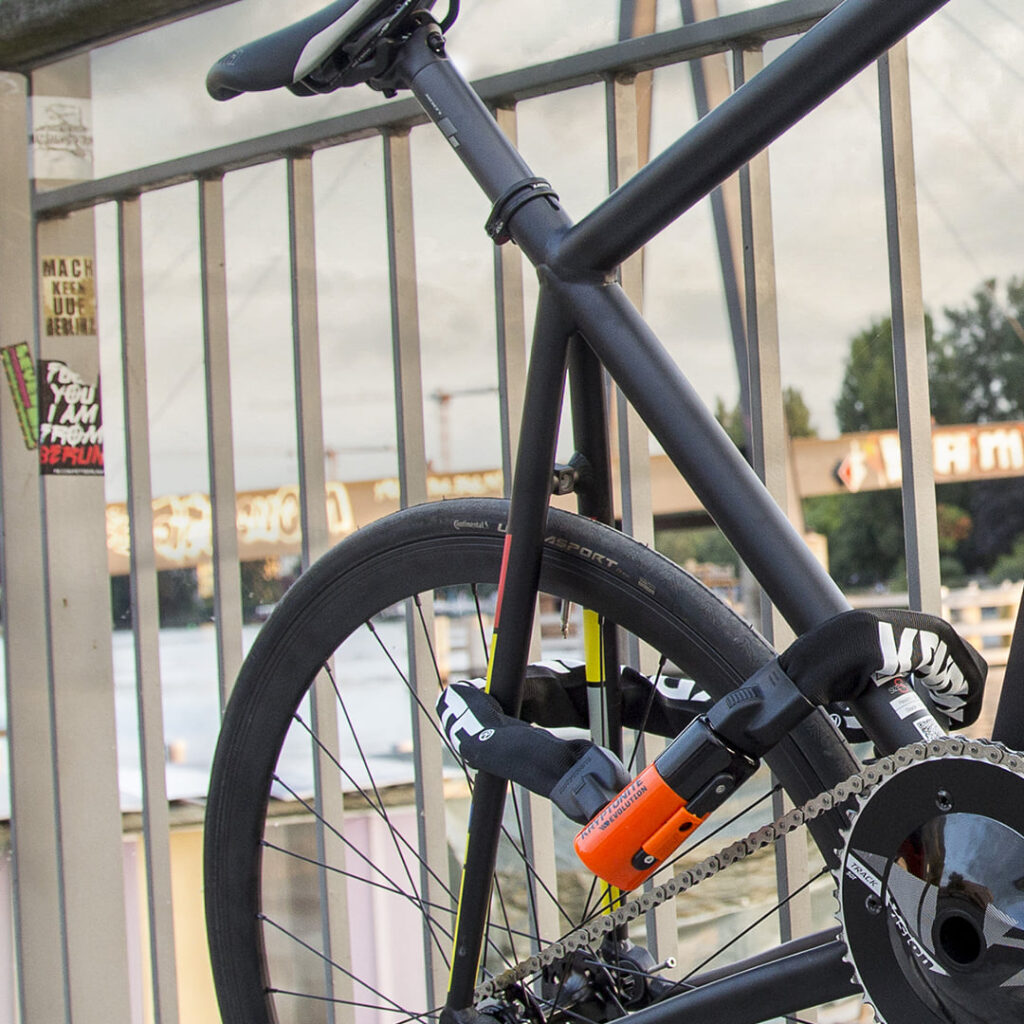
Its 3.25 × 7-inch opening is smaller than the KryptoLok Standard’s, making it easier to store but potentially trickier to fit around a thick frame and bike rack. And despite the Mini name, it isn’t dramatically lighter. The package weighs 3.55 pounds and includes a hardened 13 mm shackle, double-deadbolt construction, a mounting bracket, and a four-foot cable, all for around $110.
The Mini-7 carries a Sold Secure Pedal Cycle Gold rating. OutdoorGearLab also found that it resisted several hand-tool attacks in independent testing, although an angle grinder eventually defeated it.
The biggest consideration here is simply whether it fits. A compact lock that only works when you’ve positioned your bike at precisely the right angle can get old pretty quickly.
Bottom line: A practical compact U-lock for riders with compatible frames and regular parking spots. Measure first, particularly if you ride a fat-tire or cargo ebike.
Kryptonite Evolution 1090: Best chain lock for awkward parking spots
Some bike racks have an amazing talent for being exactly the wrong shape for a U-lock. The Kryptonite Evolution 1090 Integrated Chain is a little more forgiving.
Instead of a rigid opening, you get 35.5 inches of flexible chain that can wrap around awkward racks, wider posts, and unusual frame designs. It uses 10 mm hardened manganese-steel links, an integrated locking head, and a protective nylon sleeve to help prevent scratches. It also carries a Sold Secure Pedal Cycle Gold rating.
At around $125, the price is reasonable, but the weight deserves consideration. The Evolution 1090 tips the scales at 6.1 pounds, which is a fair bit of extra baggage if you’re carrying it every day. A pannier or cargo rack is probably a better home for it than an already crowded backpack.
And while the chain is sturdy, its conventional steel construction doesn’t offer the same tested grinder resistance as the armored U-locks in this roundup.
Bottom line: A flexible solution for awkward frame-and-rack combinations, provided you don’t mind bringing six pounds of chain along for the ride.
Seatylock Foldylock Forever: Best folding ebike lock
For riders who lock up several times a day, the Seatylock Foldylock Forever has a particularly appealing feature: when you’re done using it, it folds neatly into its own frame-mounted carrier.
Its hardened-steel plates create a locking loop with approximately 35.4 inches of circumference, allowing it to work around various attachment points. At approximately $135 and 3.88 pounds, the Forever offers a useful balance of convenience and security. It carries ART 3-star and Sold Secure Pedal Cycle Gold certifications, and Bikerumor found that it resisted drilling and leverage attempts during testing, although an angle grinder eventually cut through it.
You’ll also want to check that the carrier fits alongside your battery hardware and other frame accessories. Ebikes aren’t always blessed with spare mounting space.
Bottom line: A convenient, well-built option for everyday riders who appreciate a tidy carrying setup, without the specialized grinder resistance of the more expensive armored models.
Litelok X1: Best overall for higher-risk parking
If your ebike spends hours locked up in public, the Litelok X1 is where spending more on security starts to make a lot of sense.
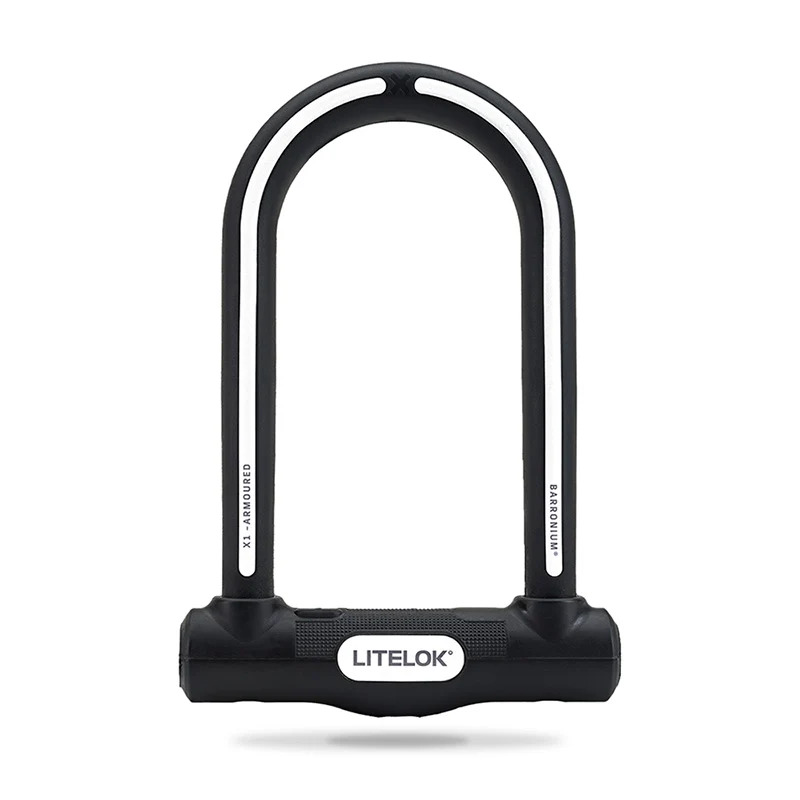
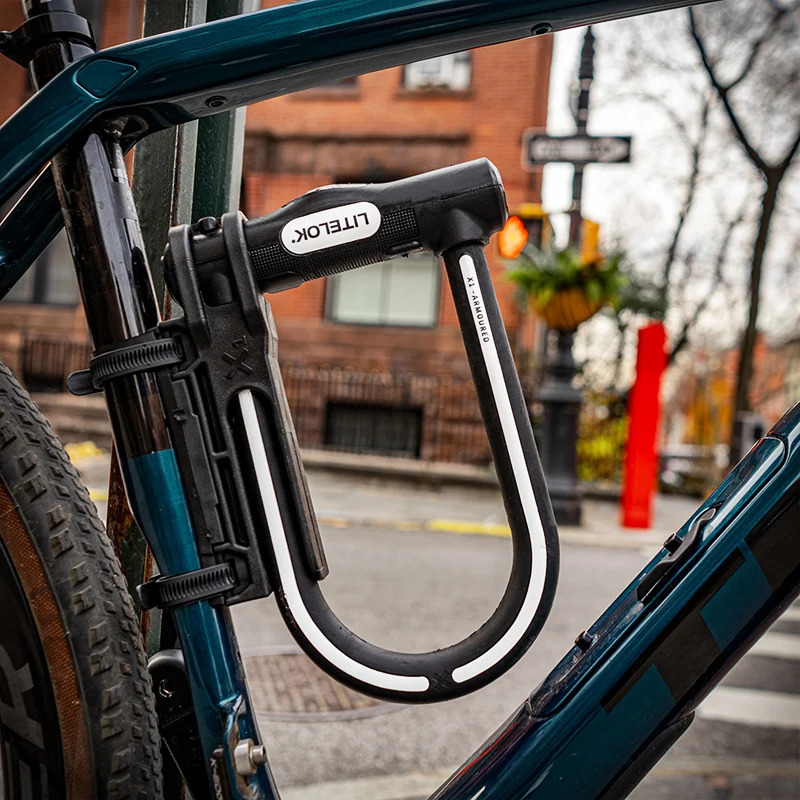
Unlike conventional steel U-locks, the X1 combines hardened steel with a specialized Barronium composite layer designed to resist angle grinders. It carries both Sold Secure Powered Cycle Diamond and Pedal Cycle Diamond certifications.
In GearJunkie’s independent testing, the X1 wore down multiple grinder cutoff wheels. The reviewer also needed a second cut because the shackle’s anti-rotation design prevented it from twisting open after the first. It’s not indestructible, but it makes getting through the lock a much more involved (and loud) project for the thieves.
What’s particularly impressive is that the X1 weighs only about 3.7 pounds, roughly the same as the much cheaper KryptoLok Standard package. Its 4 × 7.7-inch opening accommodates many locking setups, although especially bulky frames may need more room.
At around $260, it is a significant investment, and a frame mount costs extra. Availability and dispatch times can also vary.
Bottom line: Our favorite balance of serious grinder resistance, reasonable carrying weight, and everyday practicality for riders who regularly park in public.
Hiplok DX1000: Best for bulky ebikes and maximum security
The Hiplok DX1000 has some impressive independent testing behind it. During Cycling Weekly’s angle-grinder trial, the tester stopped after five minutes and two spent cutting discs without getting through the lock. That’s a pretty frustrating afternoon for anyone attempting to steal a bike.
Of course, those results aren’t a guarantee of how long it would resist a real-world heist, but they help explain its Sold Secure Powered Cycle Diamond certification.
The DX1000 also offers a generous 4.4 × 8.1-inch internal opening, giving it a little more room than the Litelok X1. For riders with bulky frames, that extra space could be the difference between an easy lock-up and a daily struggle.
The drawbacks are price and weight. At approximately $380 and 5.7 to 5.9 pounds, it’s a substantial investment in both money and carrying capacity. You’ll also need to budget separately for a mount if you want one.
Bottom line: Serious grinder-resistant security with extra room for larger ebikes, assuming you’re comfortable with the price and additional weight.
How to choose the right ebike lock
A lock can look excellent in testing and still be a poor fit for your daily routine. Before buying, here’s what matters beyond the security rating.
1. Match your lock to your parking routine
If your ebike spends the entire workday outside or overnight, paying extra for grinder resistance is a pretty sensible investment. That’s where options like the X1 and DX1000 start to justify their higher prices.
If you’re mostly locking up while running errands or grabbing coffee, a certified conventional lock may be all you want to spend on. Just remember that a quick stop isn’t automatically a safe stop. Location, visibility, and the quality of the attachment point still matter.
2. Measure your frame and the rack
A security rating doesn’t tell you whether the lock will fit.
Before purchasing, look at the actual space the lock needs to cover: the frame tubing, the fixed rack or anchor, and ideally a wheel where the arrangement allows.
Pay particular attention to step-through frames, cargo bikes, and fat-tire ebikes. A lock that’s easy to use on a slim commuter bicycle may be awkward or completely impractical on a heavier electric model.
For U-locks, compare the internal opening dimensions. For chains, consider their usable reach around the actual objects. And with folding locks, remember that a stated circumference describes the complete loop.
A quick measurement at your usual parking spot could save you a lot of frustration.
3. Make sure you’ll actually carry it
Security equipment isn’t very useful if it’s so inconvenient that you regularly leave it at home.
The KryptoLok Standard and Mini-7 include carrying brackets, while the Foldylock Forever has its own frame carrier. The Litelok X1 and Hiplok DX1000 require additional mounting hardware if you want a dedicated bike-mounted solution.
With the Evolution 1090, you’ll need to find a comfortable place for a six-pound chain.
It’s worth checking how a mount will fit alongside your battery, water bottle, frame bag, and other accessories. There’s only so much usable space on a bike frame, no matter how many accessories manufacturers would like you to attach to it.
For more advice on useful riding accessories, see our guide to whether REI bike accessories are worth it.
How to lock your electric bike properly
Even an expensive lock can be undermined by a poor locking setup. A few habits can make your ebike a less convenient target.
- Choose a secure attachment point. Use a firmly installed rack or anchor that can’t easily be dismantled or lifted over. A lightweight signpost or loose railing may be the weakest part of the entire arrangement.
- Secure the main frame first. Run your primary lock through the frame and around the fixed object. Include the rear wheel if the lock fits, and protect the remaining wheel separately.
- Avoid unnecessary space inside the lock. A snug arrangement limits room for certain tools and leverage attacks. Keep the lock off the ground when practical, and follow the manufacturer’s locking instructions.
- Use additional security for vulnerable parts. A second substantial lock can secure another part of the bike and create more work for a thief. A thin accessory cable offers much less protection and shouldn’t be treated as equivalent.
- Take removable valuables with you. Displays, lights, and other easily detached accessories can magically disappear even when the bike itself stays put. Remove the battery when appropriate and practical, following your bike manufacturer’s guidance.
Visible, well-lit parking areas are of course preferable, but good location choices work alongside physical security, not in place of it.
Finally, if you have ebike theft insurance, check your policy’s requirements. Some insurers specify particular lock ratings or parking conditions. A manufacturer’s warranty or conditional anti-theft protection offer isn’t necessarily the same thing as insurance coverage.
Final thoughts
Nobody buys an ebike for the thrill of choosing a lock, but it’s worth getting this part right. Find one that works with your parking routine, make sure it fits, and get into the habit of using it properly.
The best outcome is a completely uneventful return to the bike rack. We’ll take that!
See you and your brand new lock in the bike lane!Â
Frequently asked questions
Do electric bikes need special locks?
Not necessarily, but they need locks suited to their value, frame size, and parking conditions. An ordinary bicycle lock can work on an ebike if it fits correctly and provides appropriate protection.
The main complications are often thicker frame tubing, more expensive components, and the amount of time an ebike spends parked in public.
Is Sold Secure Gold good enough for an ebike?
A Sold Secure Pedal Cycle Gold rating is meaningful evidence of resistance to the attacks included in that certification. However, it doesn’t establish the same grinder resistance as Powered Cycle Diamond.
For higher-risk public parking, consider the exact category and approval rather than relying on the word “Gold” or “Diamond” alone.
Can an angle-grinder-resistant lock still be cut?
Yes. Grinder-resistant locks are designed to make cutting more difficult, often by consuming additional time, cutting discs, or equipment.
They aren’t impossible to defeat, and no independent test can guarantee how long a lock will withstand every real-world attack.
Should I use two locks on my ebike?
For valuable bikes or extended unattended parking, a second lock can be worthwhile.
Two independent locks can help secure additional components and require a thief to defeat more than one locking mechanism. Ideally, each should provide meaningful protection rather than relying on a thin accessory cable as the second line of defense.