We have all seen the price tags. You walk into a bike shop in 2026 expecting to find a solid electric commuter for the price of a decent laptop, only to find out that “entry-level” now starts at two grand. The dream of the high-quality $500 ebike hasn’t necessarily died, but it has certainly become a mechanical minefield of uncertified batteries and proprietary parts that most local shops refuse to service.
If you have a strict $1,000 limit, you are at a crossroads. You can either buy the absolute cheapest ebike on the market, which usually involves making massive sacrifices in safety and braking power, or you can pivot.
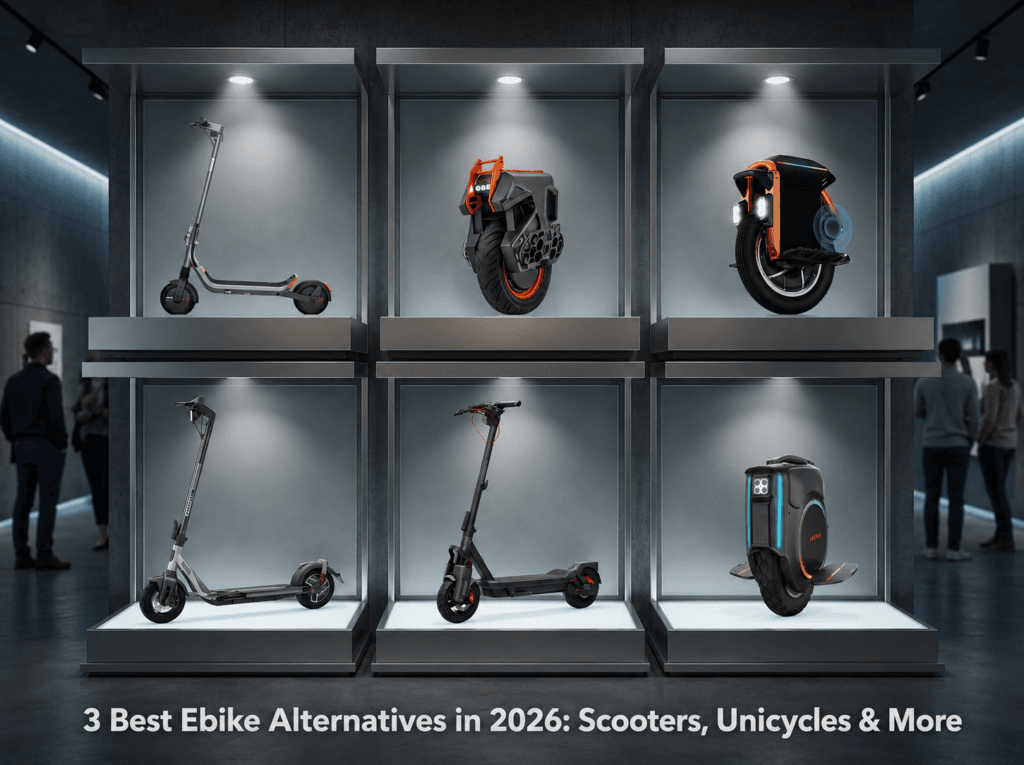
The smartest riders are realizing that a “premium” alternative like a high-end scooter or a nimble electric unicycle is often a much better vehicle than a “budget” ebike. You are trading the seat for portability and a much higher build quality. Here is what is actually worth your money in the sub-$1,000 bracket this year.
Why Reliable $1,000 Electric Bikes Are Disappearing in 2026
It is getting harder to find a reliable ebike for under a grand, and it isn’t just inflation. In 2026, UL Certification became the legal “permission to play.” Manufacturers can no longer cut corners with cheap, uncertified battery cells if they want to sell in major urban markets.
When you add in the 2026 import surcharges and the shift toward more reliable hydraulic brakes and mid-drive motors, the “sweet spot” for a dependable ebike has moved to $1,800. For riders with a strict $1,000 limit, the choice has shifted: do you want a bad bike, or a great scooter?
|
|
|
|
|
|
|
|
Best Electric Scooter Alternatives to Ebikes (Under $1,000)
Below are the best electric scooters and compact vehicles that deliver more value than budget ebikes in the sub-$1,000 range this year.
Top Electric Scooters Under $1,000 (Key Specs)
Specs | Segway Ninebot Max G2 | NIU KQi Air | NIU KQi 100P | Gotrax GXL V2 |
Top Speed | ~22 mph | ~20 mph | ~15–17 mph | ~15.5 mph |
Real-World Range | ~25–40 miles | ~25–31 miles | ~15–18 miles | ~12–15 miles |
Motor Power | Up to ~1000W peak | ~350–500W | ~300W | ~250W |
Weight | ~53–54 lbs | ~26 lbs | ~37 lbs | ~27 lbs |
Suspension | Dual suspension | Minimal / none | Basic | None |
Tire Type | 10″ pneumatic (self-healing) | Air-filled | Air-filled | Solid / air-filled |
Best For | Long-range commuting | Portability + daily use | Budget entry | Ultra-budget short trips |
1. Segway Ninebot Max G2 Electric Scooter: The 54-Pound Daily Driver
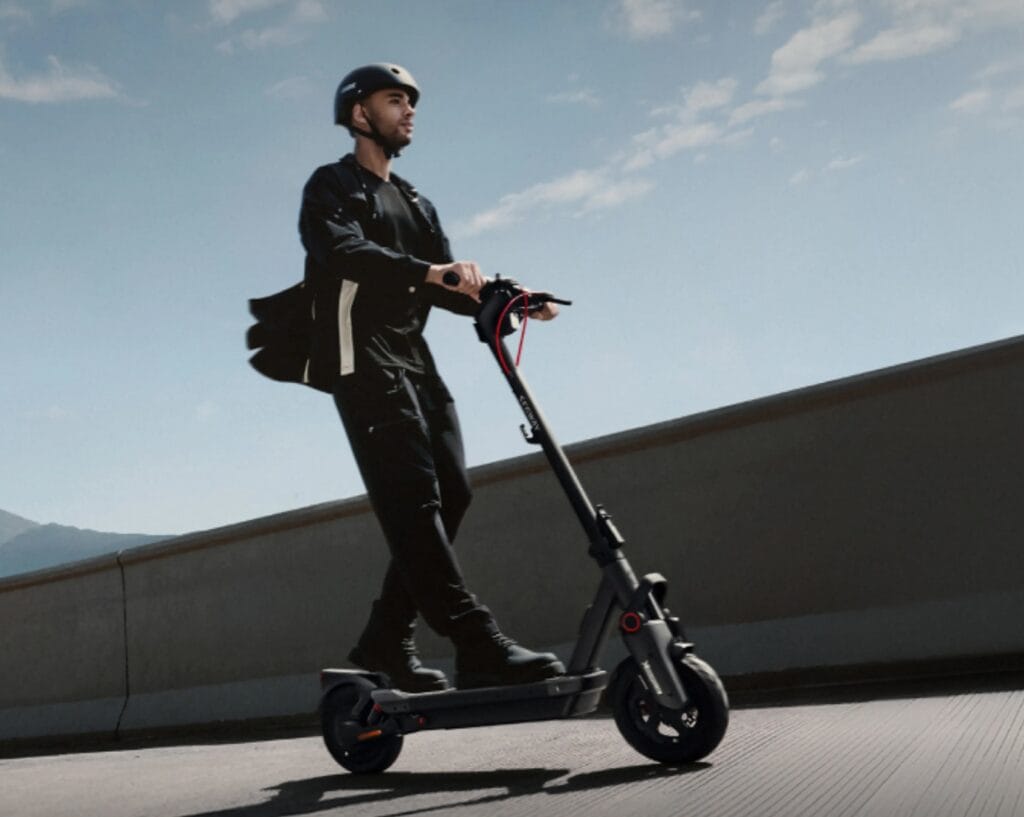
If you want a scooter that feels like a legitimate vehicle rather than a weekend toy, the Max G2 is the gold standard for under $700. It is the closest you will get to an “ebike feel” without the pedals, mostly due to a motor that peaks at 1,000W. That power is what allows a full-sized adult to hit 22 mph and actually maintain it while climbing a bridge.
- The Vital Specs: 1,000W Peak Motor | 22 mph | 40-mile range (claimed) | ~54 lbs.
- The Hardware: It features 10-inch self-healing pneumatic tires and a dual-suspension system (hydraulic front and spring rear).
- The Real-World Reality: At 54 lbs, this is a tank. You aren’t “tucking this under your arm” to run up three flights of stairs unless you’re training for a Spartan race. It also has a famous quirk known as the “Segway Squeak.” The suspension is excellent, but it’s a mechanical system that needs a shot of silicone spray every few hundred miles or it will start chirping like a haunted bed frame. If you have ground-floor storage, the G2 is the most reliable “car replacement” in this price bracket.
2. NIU KQi Air Electric Scooter: The 26-Pound Carbon Fiber “Feather”
The KQi Air is the polar opposite of the Segway. It uses a carbon fiber frame to stay at a mind-blowing 26 lbs, making it one of the lightest electric vehicles ever built. You can fold this with one hand and carry it onto a crowded train as easily as a briefcase.
- The Vital Specs: 350W Rated (500W Peak) | 20 mph | 31-mile range | 26 lbs.
- The Hardware: 9.5-inch tubeless tires and a 48V system that provides surprisingly punchy acceleration despite the lower wattage.
- The Real-World Reality: Carbon fiber is light, but it is incredibly stiff. Since this scooter has zero mechanical suspension, your legs become the shock absorbers. On pristine pavement, it is a dream; on neglected city asphalt, you will feel every vibration in your shins. It is the ultimate tool for the commuter who has to solve the “last-mile” problem between a parking garage or a train station and the office.
3. NIU KQi 100P Electric Scooter: The Entry-Level Standard
For those who need to cover a few miles and refuse to spend more than $350, the 100P is the most logical choice. It is simple, sturdy, and significantly better built than the “mystery brand” scooters you see on clearance.
- The Vital Specs: 300W Motor (600W Peak) | 17.4 mph | 17-mile range | 37 lbs.
- The Hardware: It features a 36mm front spring suspension, which is almost unheard of at this price point, and 8.5-inch air-filled tires.
- The Real-World Reality: This model has a legitimate allergy to hills. It is designed for flat ground and short errands. If your route involves a 10% grade, you will find yourself manually kicking to help the motor. However, for a flat college campus or a quick run to the store, that front suspension makes a massive difference when you hit a lip in the sidewalk that would wipe out a cheaper, rigid scooter.
4. Gotrax GXL V2 Electric Scooter: The Ultra-Budget Legend
The GXL V2 is the “old reliable” of the budget world. It has been around for years because it is the most affordable way to stop walking. It is basic, lightweight, and it gets the job done without any unnecessary fluff.
- The Vital Specs: 250W Motor | 15.5 mph | 12-mile range | 27 lbs.
- The Hardware: 8.5-inch pneumatic tires and a simple rear disc brake. No suspension.
- The Real-World Reality: You get exactly what you pay for. The range is limited (expect a realistic 10 miles) and the ride is stiff. But at this price, you aren’t paying for luxury; you’re paying for the freedom to cut a 20-minute walk down to five minutes. For short, flat urban hops where you just need something lightweight to throw in your trunk, it remains the champion of the “ultra-budget” tier.
The Portable Niche: Electric Unicycles (Best EUCs Under $1,000)
Electric unicycles (EUCs) are the dark horse of urban travel. Because they have a single wheel, they are the most portable vehicles in existence. You can fit them in a gym locker or under a bar stool, but they come with a unique set of challenges. This is not “grab-and-go” technology; it is a skill you have to learn.
If you are willing to put in a few days of looking like a wobbling toddler, the reward is a “hands-free” ride that feels like you’re hovering over the pavement.
Top Electric Unicycles Under $1,000 (Key Specs)
Specs | InMotion E20 | King Song 14D Pro | Begode A2 |
Top Speed | ~12.4 mph | ~18–19 mph | ~23-25 mph |
Real-World Range | ~15–18 miles | 25 miles | 30 miles |
Motor Power | 450W (900W peak) | 800W | 1000W |
Weight | ~30 lbs | ~32 lbs | ~42 lbs |
Wheel Size | Dual-tire (14”) | 14” | ~14” |
Battery | ~240Wh | ~420Wh | ~750Wh |
Learning Curve | Very easy (dual wheel) | Moderate | Moderate–hard |
Portability | High | High | Mid |
Best For | Beginners / first-time riders | Everyday commuting | Top-tier performance |
1. InMotion E20 Electric Unicycle: The EUC with Training Wheels
The E20 is the industry’s answer to the brutal learning curve of traditional unicycles. It features a unique dual-tire design where two wheels sit side-by-side on a single rim. This allows the unit to stand upright on its own, effectively removing the lateral balance struggle that usually leads to bruised shins.
- The Vital Specs: 450W Motor (900W Peak) | 12.4 mph | 18-mile range | 30 lbs.
- The Hardware: It includes a 240Wh battery and an integrated Bluetooth speaker so you can stream music while you ride.
- The Real-World Reality: Think of this as the “Adult Tricycle” of the electric world. You can learn to ride it in about 15 minutes, which is a miracle in the EUC world. However, the 12 mph top speed means you will likely outgrow it within a month. It is a fantastic tool for short, flat trips or as a “gateway” to see if you actually like the feel of a self-balancing wheel before investing thousands in a pro-grade unit.
2. King Song 14D Pro Electric Unicycle: The Pocket Commuter
If you want a “real” unicycle that can actually keep up with city traffic, the 14D is the sweet spot. It is a 14-inch wheel that strikes a near-perfect balance between power and portability. It is small enough to disappear under a desk but has enough grunt to handle the inclines that would stall a budget scooter.
- The Vital Specs: 800W Motor | 19 mph | 15 to 20-mile real-world range | 32 lbs.
- The Hardware: It features a 420Wh battery and a high-quality retractable trolley handle, allowing you to roll it next to you like a piece of luggage when you aren’t riding.
- The Real-World Reality: This is a “proper” one-wheeler, which means the learning curve is real. Most people require about 3 to 5 days of practice before they feel confident enough to hit a bike lane. The 800W motor is the hero here: it provides the “headroom” you need to stay upright when hitting a bump at speed. It is a reliable, nimble choice for anyone who wants a vehicle they won’t outgrow in a week.
3. Begode A2 Electric Unicycle: The Mini Powerhouse
The Begode A1 is designed for the rider who wants a responsive, “torquy” feel in the smallest possible package. It is aggressively compact but uses higher-output components that give it a punchier acceleration than the King Song or InMotion.
- The Vital Specs: 800W Motor (Up to 1,000W Output) | 23-25 mph | 30-mile range | 42 lbs.
- The Hardware: It uses high-discharge Samsung 50S battery cells and a tubeless street tire for better traction and lower maintenance.
- The Real-World Reality: This is the “Performance Learner.” It is incredibly nimble, but that agility comes with a steeper learning curve than the stabilized E20. It is a more responsive ride, but it requires a lot of “finesse” from your ankles to control. If you are tech-focused and want a wheel that feels “dynamic” and responsive, the A2 is a great entry point into the performance side of the market.
The Unicycle Learning Curve Reality
If you choose a unicycle over a scooter, you need to prepare for the “Shin-Guard Era.” For the first few sessions, you will be holding onto a fence or a friend’s shoulder.
- The Hardware Tip: Buy a pair of cheap mountain bike shin guards. When you lose your balance, the pedals on these units are made of metal, and they will find your shins.
- The “Click” Moment: Almost every rider says the same thing: for two days, it feels impossible, and on the third day, your brain just “clicks.” Once that happens, you’ll never want to go back to a handlebar again.
Real-World Expectations for Budget Electric Scooters and EUCs
If you are shopping in the sub-$1,000 lane, you have to be honest about the trade-offs. You are paying for a practical city tool, not a long-distance cruiser. Manufacturers love to use “perfect condition” testing to sell these units, but here is what actually happens once you hit the pavement:
- Real Range: If the box says 40 miles, plan for 20. Real-world range usually lands between 10 and 25 miles once you factor in actual hills and a rider who weighs more than a middle-schooler.
- Real Speed: You will cruise comfortably between 15 and 20 mph. While that sounds slow compared to a car, remember that you are standing on a piece of aluminum four inches off the ground. It feels plenty fast when you are dodging a delivery van.
- The Durability Wall: Budget models typically use smaller batteries and basic (or non-existent) suspension. Over time, this means the battery will “fade” sooner and the frame might feel a bit more “chattery” on rough roads than a premium ebike would.
Final Verdict: Which Budget Electric Scooter or EUC Should You Buy?
If your daily trip is between one and five miles, an electric scooter is the most practical move you can make. They have zero learning curve and offer the best “smiles-per-dollar” ratio. If your lifestyle involves stairs, elevators, or public transit, the lightweight NIU KQi Air is your winner because it will not destroy your lower back.
If you are looking for a challenge and want the most portable vehicle in existence, the electric unicycle is worth the bruised shins. Just know that you are signing up for a week or so of practice before it finally clicks. It is the ultimate choice for someone who wants to move hands-free and does not mind the “learning curve” stares from neighbors.
Ultimately, under $1,000, you are not finding a “car killer.” You are choosing a different category of travel entirely. These tools are built for efficiency and the daily urban grind. As long as you do not expect them to haul a week of groceries up a mountain, they are the smartest way to stop being the person stuck in a 4,000 lb metal box.
You have officially hacked the urban commute for under a grand. Just try to look humble when you are the only person in the building who can fold their car and slide it under a desk.
Happy riding!
FAQ: Budget Ebike Alternatives
Are cheap ebikes under $1,000 still worth buying?
In 2026, most reliable, UL-certified ebikes with safe batteries and good brakes start closer to $1,800, which makes many sub-$1,000 ebikes a compromise in safety, components, or support. If you have a hard $1,000 cap, a quality electric scooter or electric unicycle is often a better value than a “no-name” budget ebike.
Is an electric scooter better than a budget ebike for commuting?
For daily trips of about 1–5 miles, a good commuter scooter like the Segway Ninebot Max G2 or NIU KQi Air gives you similar speed and range with less maintenance and a lower upfront cost than most ebikes in 2026. Scooters also fold and store more easily in apartments, offices, and public transit.
How far can budget electric scooters really go on one charge?
Manufacturers often quote “ideal” ranges (flat ground, light rider, low speed), such as up to 43 miles on the Max G2 or 31 miles on the NIU KQi Air. In real city riding with hills and stop‑and‑go traffic, plan for roughly 50–60% of the advertised range.
How long does it take to learn an electric unicycle?
Beginner-friendly models like the InMotion E20 can be rideable in under an hour for some people because of their more stable designs. Traditional one‑wheelers like the King Song 14D usually require 3–5 days of short practice sessions before most riders feel confident in bike lanes.
Are electric unicycles safe for city commuting?
Safety comes down to practicing in a safe area first, wearing proper gear (helmet, wrist guards, shin guards), and respecting the top speed of the wheel. A mid‑power EUC around 800W with a 15–20 mph cruising speed offers a good balance of responsiveness and stability for urban use.
What should I look for in a budget electric scooter under $1,000?
Prioritize a reputable brand, a motor of at least 300–500W, pneumatic tires, a tested real‑world range of 10–20 miles, and UL‑listed or equivalent battery safety credentials. Suspension is a bonus but not essential if most of your route is smooth pavement.
Which model is best if I have to carry it up stairs or on the metro?
If portability is critical, the NIU KQi Air stands out because it weighs around 26 lbs while still delivering 20 mph speeds and solid real‑world range. That makes it much easier to haul through buildings than heavier scooters around 50+ lbs, such as the Max G2.