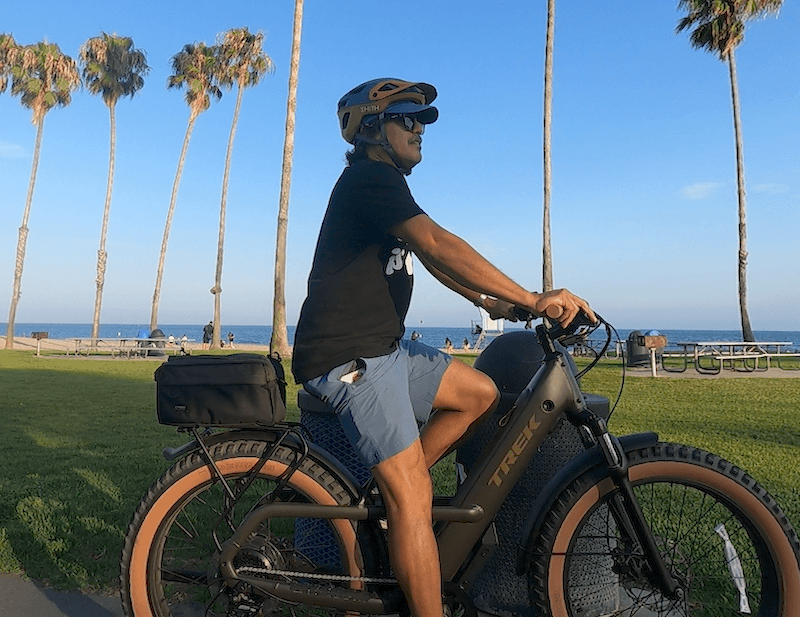
An ebike can feel perfectly comfortable for the first ten minutes, then become a completely different story by the time you’re heading home. Your wrists start aching, you keep shifting around on the saddle, and suddenly that scenic route doesn’t seem quite so appealing.
Your first instinct might be to order a cushier seat or start shopping for suspension upgrades. But before you throw money at the problem, it’s worth taking a closer look at how your bike fits you.
From saddle adjustments and handlebar positioning to tire pressure and a few worthwhile accessories, here’s how to make your ebike more comfortable without turning it into an expensive DIY project.
First, Figure Out What’s Making You Uncomfortable
Saying your ebike is uncomfortable doesn’t give you much to work with. Noticing that your hands start aching after 20 minutes, or that you slide forward on the saddle whenever you pedal, is much more useful.
Different symptoms give you different places to start looking, so pay attention to what hurts and when it happens.
What you’re feeling | What to check first |
Saddle pressure or rubbing | Saddle height, angle, shape, and width |
Too much weight on your hands | Handlebar reach and saddle angle |
Awkward wrists or trouble reaching brakes | Grip angle and brake-lever position |
Feeling stretched toward the handlebars | Frame fit and handlebar reach |
Every bump going straight up your backside | Tire pressure and suspension |
Before adjusting anything, we suggest taking a quick photo of your setup so you can always return to where you started. Then change one thing at a time and test it on a familiar route. Otherwise, you could end up making five adjustments and having absolutely no idea which one helped.
Make Your Ebike Seat More Comfortable
Let’s start with the saddle, since it’s often the first thing riders blame when a bike feels uncomfortable.
And sometimes they’re right. But before you replace yours with something that looks like it belongs on a living room recliner, it’s worth checking how it’s positioned.
Even a cloud can feel terrible when it’s sitting at the wrong height or angle.
Get Your Saddle Height Right
A saddle that’s too high can leave you rocking your hips from side to side or reaching for the pedals at the bottom of each stroke. Set it too low, and your knees stay excessively bent while pedaling. Neither is particularly pleasant after a few miles.
For a basic starting point, sit on your securely supported bike in your usual riding position. With your foot positioned normally on the pedal, your knee should retain a slight bend at the bottom of the pedal stroke.
If you’re reaching for the pedal or rocking your hips, try lowering the saddle slightly. If your knees feel cramped, try raising it a little. Make small adjustments, then take a short ride to see whether pedaling feels smoother and more natural.
Keep the seatpost’s minimum-insertion mark inside the frame, and make sure the clamp is properly secured before riding. REI’s bike-fitting guide is a useful reference if you’re unfamiliar with the process.
And while your ebike’s motor might make a poor pedaling position easier to tolerate, your knees would probably appreciate you fixing it anyway.
Check Your Saddle Angle and Position
Next, take a look at whether your saddle is level. That’s a good starting point for most designs, unless the manufacturer recommends otherwise.
If you’re constantly sliding toward the handlebars, the saddle nose might be tilted too far downward. If you’re feeling uncomfortable pressure toward the front, an upward tilt could be contributing.
A small angle adjustment can help you sit more securely without having to brace yourself against the handlebars. Ideally, you shouldn’t spend half the ride slowly migrating toward the front of your bike.
You can also move many saddles slightly forward or backward along their rails. This changes how you sit over the pedals and how far you reach toward the handlebars. If you’re feeling stretched out, for example, it’s worth checking whether your saddle is sitting farther back than it needs to be.
Just stay within the permitted adjustment range and avoid making several changes at once. We know the temptation to keep fiddling with every available bolt is strong, especially when you’ve already got the tools out, but give each adjustment a proper test ride first.
Find a Saddle That Supports Your Sit Bones
If you’ve adjusted your saddle and still can’t get comfortable, a replacement might be in order. But there’s more to choosing one than finding the thickest layer of gel padding.
Start with saddle width. Your weight should be supported primarily by your sit bones, the two bony points at the bottom of your pelvis. A saddle that’s too narrow may not provide enough support, while one that’s too wide can rub against your thighs as you pedal.
A bike shop can measure your sit-bone width and help you narrow down the options. You can also measure it yourself using corrugated cardboard, although a professional measurement is more reliable.
Next, consider how upright you sit. Cruiser riders generally benefit from wider saddles because more of their weight rests directly on the seat. If you ride in a more forward-leaning position, a narrower saddle often gives your legs more room to move.
Then you can think about cushioning. Gel padding feels wonderfully soft when you first sit down, but it can compress during longer rides, allowing pressure to build in uncomfortable areas. Supportive foam often holds its shape better. A center cutout or pressure-relief channel may also be worth trying if you experience pressure in sensitive areas.
If possible, test a few saddles on an actual bike rather than judging them with a quick showroom sit. Pay attention to whether your sit bones feel supported, your thighs can move freely, and you’re constantly shifting around to find a comfortable spot.
A saddle that feels luxurious for 30 seconds isn’t much of a bargain if you’re regretting the purchase by mile five.
For more guidance, REI’s saddle-buying guide explains the differences between saddle shapes, widths, and cushioning materials.

Bring Your Handlebars Within Comfortable Reach
If you’re riding with your arms stretched straight out, your shoulders hunched forward, or most of your upper-body weight resting on your hands, there’s a good chance your handlebars aren’t positioned comfortably.
Your arms shouldn’t look like you’re desperately reaching for something on the top shelf.
Try sitting on your ebike in your normal riding position and resting your hands on the grips. Your shoulders should feel relaxed, your elbows should have a slight bend, and you should be able to reach the brake levers without stretching your fingers or changing your grip.
If you have to lean forward excessively to reach the bars, bringing them closer can help. If you’re bent low over the bike and putting a lot of pressure on your palms, a slightly higher handlebar position may feel better.
Start by checking whether your existing handlebars and brake levers can be adjusted. Sometimes a small change in angle is enough to make your hands and wrists feel more natural.
If you need a bigger change, a bike shop may suggest replacing the stem, which is the component connecting your handlebars to the bike’s steering assembly. An adjustable stem, such as the Ritchey 4-Axis Adjustable Stem, can alter both handlebar height and reach. A stem riser adds height through an extension, although it isn’t suitable for every bike.
Thankfully, you don’t need to develop a sudden interest in stem geometry to get comfortable. Tell a mechanic where you’re feeling the strain and have them check what your bike can safely accommodate.
This is especially important for ebikes with folding handlebars, integrated controls, or cables that may not have enough slack for a different setup. The goal is to improve your riding position, not introduce a whole new problem involving your steering.

Give Your Hands a Break With Ergonomic Grips
If you find yourself loosening your grip, moving your palms around, and then repeating the same little hand shuffle a few blocks later, your grips deserve a closer look.
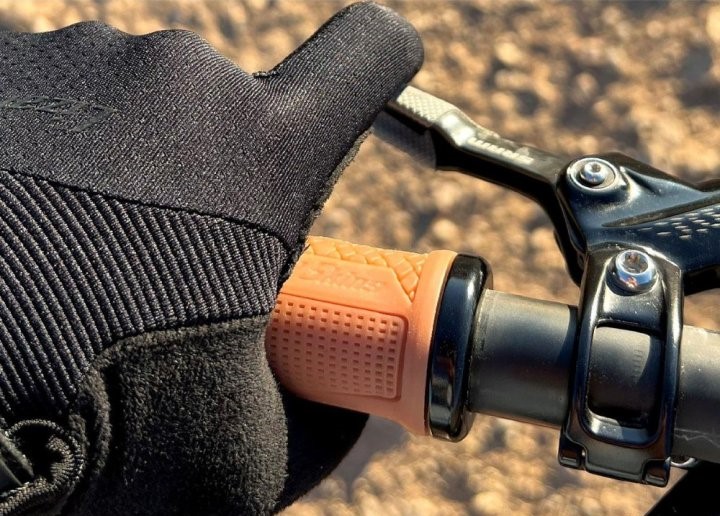
Basic round grips don’t provide much of a resting surface for your palms. Ergonomic grips have a wider, shaped area that distributes pressure more evenly, giving your hands somewhere comfortable to settle instead of constantly searching for a better position.
The Ergon GP1 Evo is a good example, with a wing-shaped palm rest and different sizes for different hands. It’s particularly suited to the steady hand position you’d use on a commuter or recreational ebike.
When choosing grips, look for a size that fits your hand comfortably and a shape that supports your palm without forcing your wrist to bend. Many ergonomic models also let you fine-tune the angle, so you can adjust them until your hands rest naturally.
And before ordering, check how much space your throttle, shifter, and other handlebar controls take up. Some ebikes need a shorter grip on one side, which is the sort of detail that’s considerably more useful to discover before you’ve taken your old grips off.
For more options, take a look at our guide to bicycle handlebar grips.

Check Your Tire Pressure Before Buying Suspension
Here’s one of the easiest comfort fixes to overlook: tire pressure.
Your tires absorb some of the bumps and vibrations coming up from the road. If they’re inflated harder than necessary, more of that impact can make its way through the bike and into you.
Some riders inflate their tires to the maximum PSI printed on the sidewall and assume that’s where they’re supposed to stay. But that number is a limit, not a target. It’s not a challenge to see how close you can get.
As Schwalbe explains, lower pressure can improve shock absorption, provided the tire still has enough air to safely support the rider and bike.
Start by checking your tire pressure with a gauge. Look at the permitted range for your particular tires, along with any requirements from the rim or bike manufacturer. If you’re near the upper end and your rides feel harsh, a small reduction within the approved range may help.
Just don’t go overboard. Too little pressure can make handling feel sloppy and increase the risk of tire damage, especially on a heavier ebike or one carrying cargo. If you’re unsure where to start, a bike shop can suggest a suitable pressure for your tire size and typical load.
The whole process takes a few minutes, costs nothing if you’ve already got a pump, and might save you from buying a suspension upgrade you didn’t need. Not a bad return on five minutes of effort.
Take the Edge Off Rough Roads With a Suspension Seatpost
If your regular route is a collection of potholes loosely connected by patches of asphalt, even a well-adjusted ebike can give you a pretty rough ride.
And while you probably can’t do much about your city’s questionable road-maintenance priorities, you can make those bumps a little less punishing.
A suspension seatpost replaces your regular seatpost and allows the saddle to move slightly when you hit a bump. That movement helps cushion the jolt before it reaches you, which can make a noticeable difference on rough roads, particularly if you spend most of your ride seated.
The Redshift ShockStop City is one example designed for commuting and recreational riding. It offers 35mm of suspension movement, with adjustable spring stiffness for different riders.
It’s an appealing upgrade if your commute involves cracked pavement, rough bike paths, or that one pothole you’ve somehow managed to hit every morning despite knowing exactly where it is. You get some extra cushioning without having to replace your entire bike.
Before buying, check that the seatpost fits your ebike. You’ll need the correct diameter and enough room for the suspension to move while keeping your saddle at a comfortable height. Racks, batteries, and other accessories can sometimes get in the way, too.
You can usually find your current seatpost size printed on the post itself or in your bike’s specifications. Compare that with the replacement’s requirements, including rider-weight and saddle compatibility, or have a shop check everything for you.
A good suspension seatpost won’t repair the road, unfortunately. But it can make you considerably less interested in cataloging every crack along your route.

Don’t Overlook Clothing and Riding Habits
You can have a perfectly adjusted ebike and still feel a little sore after spending much longer in the saddle than you’re used to.
For longer rides, padded cycling shorts or liners can help reduce friction and provide some extra cushioning. You can wear a padded liner under regular clothes, too, so there’s no need to commit to the full cycling-kit look just to ride to brunch.
A comfortable pair of cycling gloves may also help with grip and provide a bit of cushioning for your palms.
And don’t underestimate the value of taking an occasional break. Getting off the saddle for a few minutes or changing your hand position when it’s safe can relieve some of the pressure that builds up during a longer ride.
You don’t have to turn every leisurely ebike outing into an endurance event. Stop for a coffee. Stretch your legs. Enjoy the fact that you’re not in a hurry. One of the nicer things about recreational riding is that nobody’s standing at the finish line with a stopwatch.
When to Get a Professional Bike Fit
If you’ve worked through these adjustments and still can’t find a comfortable position, it may be time for a professional bike fitting.
A bike fitter can look at how you sit, pedal, and reach the handlebars to identify adjustments you might have missed. They can also help determine whether your bike’s size or geometry is making it difficult to get comfortable.
This can be particularly useful if every adjustment seems to create a new complaint. You raise the saddle, your reach feels different. You change the handlebars, your wrists still ache. At some point, it’s worth letting someone look at the whole setup rather than continuing to play musical chairs with your bike components.
And no, professional fittings aren’t exclusively for people training for the Tour de France. Commuters and recreational riders can benefit from them, too.
One important distinction: ongoing pain, tingling, or numbness shouldn’t be treated as something you simply need to get used to. A qualified healthcare professional can help assess those symptoms, while a bike fitter can address the mechanical side of your riding position.
Final Thoughts
Making your ebike more comfortable doesn’t have to involve replacing half the bike. Start with your saddle height and position, check how comfortably you can reach the handlebars, and make sure your tire pressure suits the way you ride. If those adjustments aren’t enough, you’ll know whether it’s time for a different saddle, a more supportive set of grips, or some extra cushioning for rough roads.
Remember, if you’ve started looking forward to red lights just so you can get off the saddle for a moment, we need to be doing some investigating.
See you in the bike lane!
FAQ
Do I Need a Special Saddle for an Ebike?
No. You can use a compatible conventional bike saddle as long as it supports your sit bones and suits your riding position. Focus on width, shape, and cushioning rather than whether the product has an “ebike” label.
Will a Gel Seat Cover Make My Ebike Seat More Comfortable?
A gel cover can add cushioning, particularly for shorter recreational rides. However, if the underlying saddle is the wrong width or position, extra padding won’t correct the fit. Covers can also shift or create unwanted pressure during longer rides.
Should I Raise My Handlebars to Make My Ebike More Comfortable?
If you’re leaning forward excessively or putting too much weight on your hands, a higher or closer handlebar position may help. Start by checking your reach and current adjustments, then ask a mechanic about compatible options if you need a bigger change.
Are Fat Tires Always More Comfortable?
Not necessarily. Fat tires can provide good cushioning at appropriate pressures, but width alone doesn’t guarantee a smooth ride. Tire construction, pressure, rider weight, and road conditions all affect comfort.
Is Saddle Soreness Normal When You’re New to Cycling?
Some mild soreness can happen when you start riding again, particularly as you get used to spending more time in the saddle. Persistent pain, numbness, or tingling isn’t something to push through. Check your bike fit and seek professional advice if symptoms continue.