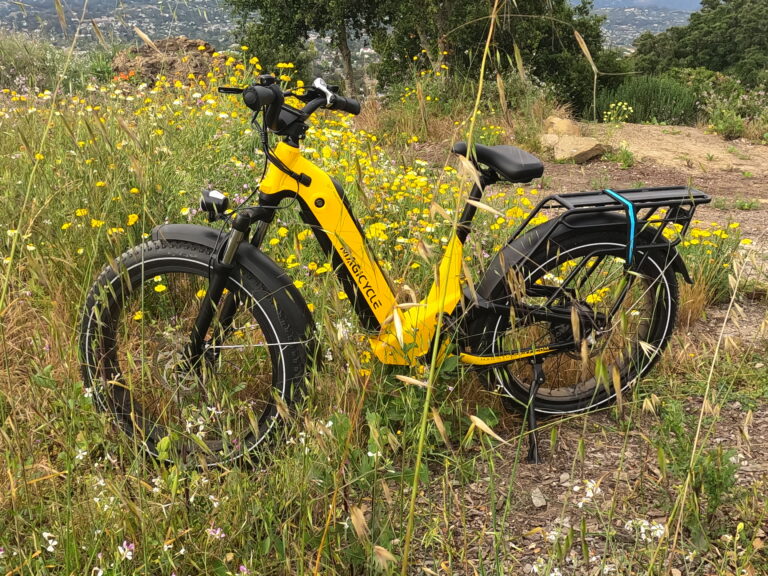
An ebike is a bicycle with an electric motor and battery that help you ride.
That is the short version. The slightly more useful version is that an ebike still works like a regular bike, but it gives you extra assistance when you pedal. Some ebikes also have a throttle, which can move the bike forward without pedaling, depending on the model and local rules.
So yes, ebikes are still bikes. You can pedal them, shift them, brake them, lock them up, and complain about headwinds on them like cyclists have been doing proudly for generations.
The difference is that an ebike makes riding easier. Hills feel less dramatic. Longer trips feel more reasonable. Commuting can involve less sweat. And for a lot of people, short car trips suddenly start looking very unnecessary.
This guide explains what an ebike is, how electric bikes work, what the main parts do, how fast they go, whether electric bikes are street legal, and how to know if one makes sense for you.
What Is an Ebike?
An ebike, or electric bike, is a bicycle with three main additions: a motor, a battery, and a control system.
The motor provides assistance. The battery stores the energy that powers the motor. The control system decides how and when that power is delivered.
Most ebikes are designed to be pedaled. The motor does not replace the rider completely. It adds help on top of your own effort, which is why ebikes can feel surprisingly natural once you get used to them.
Some ebikes are pedal-assist only. Others include a throttle. That difference matters because it affects how the bike rides, how it is classified, and where it may be allowed.
What Is an Ebike and How Does It Work?
An ebike works by combining your pedaling with electric assistance.
Here is the basic system:
- The battery stores energy.
- The motor uses that energy to help move the bike.
- The controller manages how much power goes to the motor.
- A sensor detects pedaling or pedal pressure.
- The display or control unit lets you choose the assist level.
When you start riding, the sensor tells the controller that you are pedaling. The controller then sends power from the battery to the motor. The motor adds assistance based on the assist level you selected.
In plain English: you pedal, the bike notices, and the motor helps. Very polite, honestly.
Pedal Assist in One Sentence
Pedal assist means the motor helps while you pedal.
Most ebikes let you choose different assist levels. A lower level gives you a little help and saves battery. A higher level gives you more power and uses battery faster.
This is one of the biggest reasons people like ebikes. You can still ride actively, but you control how much help you want.
Main Parts of an Ebike
You do not need to become an ebike mechanic to understand the basics. But knowing the main parts makes shopping much easier, especially when product pages start throwing around words like torque sensor, watt-hours, hub motor, controller, and drivetrain like everyone agreed to study before arriving.
Motor
The motor is what provides electric assistance.
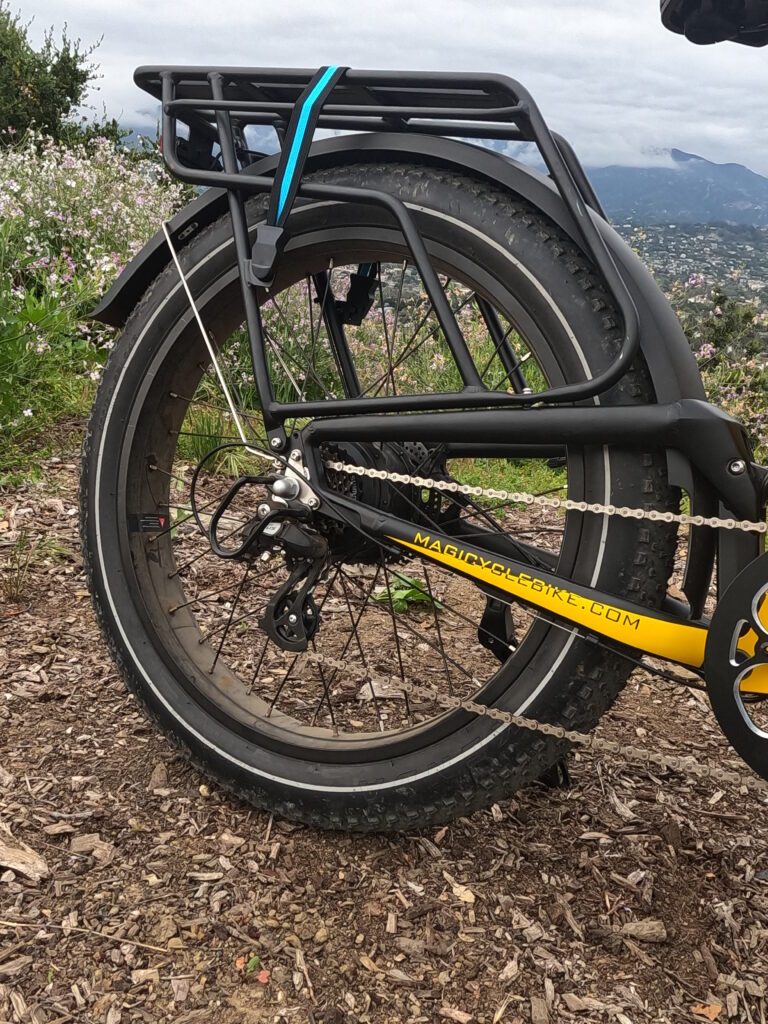
Most ebikes use either a hub motor or a mid-drive motor. A hub motor sits in the wheel, usually the rear wheel. A mid-drive motor sits near the pedals and sends power through the bike’s drivetrain.
Hub motors are common on commuter, folding, fat tire, and budget-friendly ebikes. Mid-drive motors are common on premium commuter bikes, cargo bikes, and electric mountain bikes.
Battery
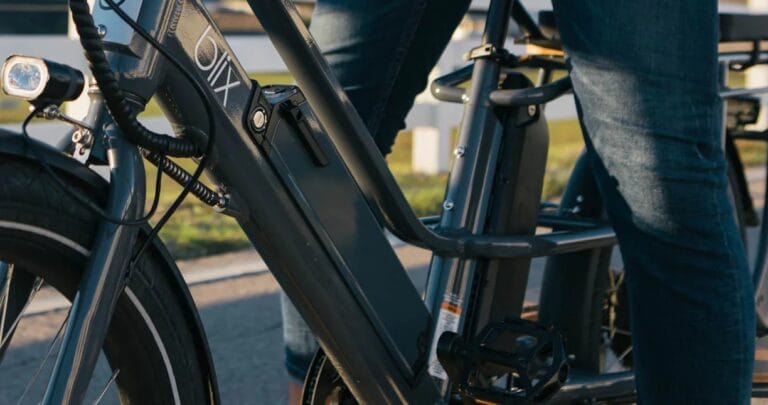
The battery stores the energy your ebike uses.
Battery size is usually measured in watt-hours, often written as Wh. A larger battery can usually provide more range, but range also depends on rider weight, assist level, terrain, speed, wind, tire pressure, and how the bike is used.
Most ebike batteries are removable, frame-integrated, or semi-integrated. Removable batteries are convenient because you can bring them indoors to charge, which is especially useful if your bike storage area does not have an outlet.
Controller
The controller is the part that manages power between the battery and motor.
It helps decide how much assistance the motor provides based on the assist level, sensor input, speed, and system settings. You do not usually interact with the controller directly, but it plays a major role in how smooth or jumpy the ebike feels.
Basically, the controller is the person quietly doing all the work in the group project.
Pedal Assist Sensor
The pedal assist sensor tells the bike when and how you are pedaling.
There are two common types: cadence sensors and torque sensors. A cadence sensor detects that the pedals are moving. A torque sensor measures how hard you are pressing on the pedals.
Torque sensors usually feel more natural because the motor responds to your effort. Cadence sensors are often more affordable and can still work well for casual riding.
This is one of those details that sounds technical at first, but it matters a lot once you start test riding bikes.
Throttle
A throttle lets the motor move the bike without pedaling, depending on the ebike class and local regulations.
Throttles are common on many Class 2 ebikes. They can be useful for starting from a stop, getting a quick boost, or riding when you want a break from pedaling.
Not every ebike has one, and not every riding area treats throttle-equipped bikes the same way. This is where ebike classes start to matter, because even something as fun as riding a bike eventually comes with a rulebook.

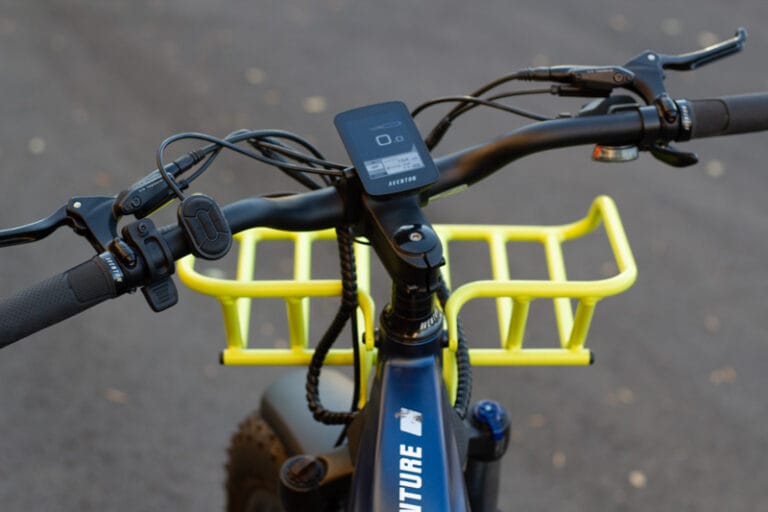
Display and Controls
The display shows information like speed, battery level, assist level, mileage, and sometimes range estimates.
Controls are usually mounted near the handlebar grip so you can change assist levels while riding. Some ebikes have simple displays. Others connect to apps, GPS features, lock settings, lights, and ride data.
For beginners, a clear display is more useful than a fancy one. If you cannot understand it while riding, it is not helping.
Brakes and Drivetrain
Ebikes are heavier than regular bikes and can carry more speed, so brakes matter.
Many ebikes use disc brakes, which means the brake grabs a metal rotor near the wheel hub instead of squeezing the outer rim of the wheel. Disc brakes usually provide stronger, more consistent stopping power than basic rim brakes, especially in wet weather or on heavier bikes.
You may also see mechanical disc brakes and hydraulic disc brakes. Mechanical brakes use cables, while hydraulic brakes use fluid pressure. For a beginner, the main thing to know is that hydraulic disc brakes usually feel smoother and stronger, which is why they are common on heavier ebikes, cargo ebikes, and faster models.
The drivetrain is the group of parts that helps transfer your pedaling power to the wheel. That includes the chain, pedals, gears, and related components. On a mid-drive ebike, the motor helps through that same system, so the chain and gears may wear faster over time. On a hub motor ebike, the motor sits in the wheel and drives the wheel more directly, so the drivetrain usually has less motor-related stress.
Pedal Assist vs Throttle
Pedal assist and throttle control are two different ways an ebike can deliver power.
Pedal assist helps only when you pedal. You choose an assist level, start pedaling, and the motor adds support.
Throttle control lets the motor move the bike when you press or twist the throttle, depending on the bike’s design. You may not need to pedal while using it.
Pedal assist feels more like regular cycling. Throttles feel more convenient in stop-and-go riding or when starting from a full stop.
Neither option is automatically better. Pedal assist is great if you want a more bike-like feel. A throttle is helpful if you want easier starts, quick boosts, or a backup when your legs are currently not accepting new requests.
Different Types of Ebikes
Not all ebikes are built for the same job. The right style depends on where you ride, what you carry, and how much space you have for storage.
Commuter Ebikes
Commuter ebikes are built for daily transportation.
They often include lights, fenders, racks, upright geometry, and tires designed for pavement. They are a good fit for work commutes, errands, and riders who want a practical car alternative for shorter trips.
Folding Ebikes
Folding ebikes are designed to save space.
They can be useful for apartments, RVs, offices, and mixed transportation. The catch is that folding does not always mean lightweight. Some folding ebikes still require a very honest look at your stairs.
Fat Tire Ebikes
Fat tire ebikes use wider tires for extra stability, comfort, and traction.
They are popular for mixed surfaces, gravel, sand, snow, and casual adventure riding. They can feel very stable, but the wider tires and heavier frames may reduce efficiency.
Cargo Ebikes
Cargo ebikes are built to carry more weight.
They may have long rear racks, front cargo areas, passenger accessories, baskets, panniers, or child-seat compatibility. These are the ebikes for people who want the bike to carry more of the chaos.
Mountain Ebikes
Electric mountain bikes are built for trails.
They usually use stronger frames, suspension, grippy tires, hydraulic brakes, and mid-drive motors. They are designed for control, climbing, and off-road handling rather than simple city cruising.
Lightweight Ebikes
Lightweight ebikes focus on lower weight and a more natural ride feel.
They may use smaller batteries or more compact motors to keep the bike easier to carry, store, and pedal without assistance. They are a good fit for riders who want help without feeling like they bought a small electric vehicle with pedals attached.
Are Ebikes Hard to Ride?
Most ebikes are not hard to ride if you already know how to ride a regular bike.
The basic controls are familiar: pedals, brakes, handlebars, gears, and a saddle. The main difference is that the motor adds assistance, and that assistance can feel surprising the first time you use a higher power level.
Ebikes are also heavier than regular bikes. That matters when turning at low speeds, parking, lifting the bike, loading it onto a rack, or walking it through tight spaces.
For beginners, the best advice is simple:
- Start in a low assist level
- Practice braking before riding in traffic
- Get used to the bike’s weight
- Learn how quickly the motor engages
- Avoid using the highest assist mode until you feel comfortable
After a few rides, most people adjust quickly. The bike does not become complicated. It just becomes more helpful.
How Fast Do Electric Bikes Go?
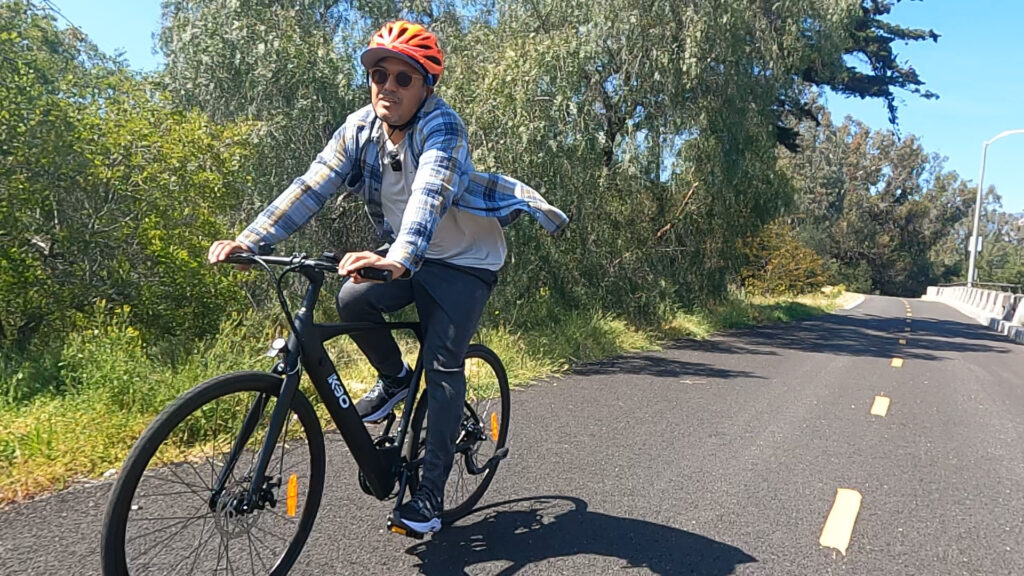
Most standard ebikes assist up to 20 mph or 28 mph, depending on the class and model.
In the common U.S. class system, Class 1 and Class 2 ebikes usually provide motor assistance up to 20 mph. Class 3 ebikes usually provide pedal assist up to 28 mph.
That does not mean every ebike rider is constantly going 28 mph. Speed depends on the bike, assist level, terrain, rider effort, local rules, and whether the route makes sense for higher speeds.
You can usually pedal faster than the assist limit, but the motor stops helping once it reaches its cutoff speed. After that, it is just you, the bike, and whatever optimism you brought with you.
How Much Do Electric Bikes Cost?
Electric bikes vary widely in price.
Budget ebikes can start under $1,000, while many solid commuter ebikes fall somewhere around $1,000 to $2,500. Premium commuter, cargo, mountain, and specialty ebikes can cost much more.
Price usually depends on:
- Motor type and quality
- Battery size
- Frame design
- Brakes and drivetrain
- Suspension
- Accessories
- Brand support and warranty
Cheaper ebikes can still be useful, especially for casual riding. But if you plan to ride often, commute regularly, carry cargo, or rely on the bike as transportation, support and parts availability matter more.
Are Electric Bikes Street Legal?
In many areas, electric bikes are street legal as long as they fit local ebike rules.
The common U.S. system separates ebikes into Class 1, Class 2, and Class 3 based on pedal assist, throttle use, and assisted speed. Many places allow ebikes on roads and bike lanes, but rules can vary by state, city, park, trail system, and land manager.
That means you should avoid assuming every ebike is allowed everywhere. Class 3 ebikes may face more restrictions on shared paths because of their higher assisted speed. Throttle-equipped ebikes may also be treated differently in some areas.
The safest answer is to check local regulations before buying or riding in a new area. Slightly boring, yes. Better than learning the rules from a sign you only notice after the ride has already become awkward.
Who Should Consider an Ebike?
Ebikes can make sense for a lot of riders, but they are especially useful when a regular bike feels almost practical, just not quite practical enough.
Commuters
Ebikes can make commuting easier by reducing sweat, helping with hills, and making longer rides feel more manageable.
Older Riders
Ebikes can help riders stay active while reducing strain on hills, longer routes, or windy days.
People in Hilly Areas
If hills are the main reason you avoid biking, an ebike can change that quickly. Hills do not disappear, but they do become much less rude.
Delivery Riders
Ebikes can help delivery riders cover more ground with less fatigue, especially in cities where parking a car is half the battle.
Recreational Riders
Ebikes are great for people who want longer, easier, or more flexible rides without turning every outing into a fitness test.
People Replacing Short Car Trips
For errands, school drop-offs, quick grocery runs, or neighborhood trips, an ebike can sometimes replace the car without making the day more complicated.
Pros and Cons of Ebikes
Ebikes are useful, but they are not perfect. Here is the balanced version.
Ebike Pros
- Easier hills: Motor assistance makes climbing much more manageable.
- Longer rides: Ebikes help riders cover more distance with less fatigue.
- Less sweat while commuting: You can still pedal, just without arriving like you raced the weather.
- Car replacement potential: Many short car trips can become bike trips.
- More accessible cycling: Ebikes can help people ride who might otherwise avoid biking because of fitness, age, terrain, or distance.
Ebike Cons
- Higher cost: Ebikes usually cost more than regular bikes.
- Heavier weight: The motor and battery add weight.
- Battery maintenance: Batteries need charging, proper storage, and eventual replacement.
- Theft risk: Ebikes are valuable, so locks and secure storage matter.
- Legal and class confusion: Rules can vary depending on where you ride.
The pros are strong, but the cons are worth taking seriously. An ebike is still a bike, but it is a bike with a battery, motor, and a higher need for a good lock.
Is an Ebike Worth It?
An ebike is worth it if it helps you ride more often, drive less, or enjoy cycling in situations where a regular bike would sit unused.
For some people, that means commuting without arriving sweaty. For others, it means getting back into riding, handling hills, keeping up with faster riders, or replacing short car trips.
An ebike may not be worth it if you only ride a few times a year, do not have safe storage, or do not want to deal with charging and battery care.
The best ebike is not the one with the biggest motor or flashiest display. It is the one you will use often enough to justify the space, cost, and charging cable living somewhere in your home.
Now that you’re an expert, we can’t wait to see you in the bike lane!
FAQ: What Is an Ebike?
Do you still have to pedal an ebike?
Most ebikes are designed to be pedaled. Pedal-assist ebikes only provide motor help when you pedal. Some ebikes also have throttles, which can move the bike without pedaling depending on the model and local rules.
Can an ebike work without pedaling?
Some ebikes can move without pedaling if they have a throttle. These are commonly Class 2 ebikes in the U.S. Not all ebikes have throttles, and throttle rules can vary by location.
How fast does an ebike go?
Many ebikes assist up to 20 mph, while Class 3 ebikes commonly assist up to 28 mph. The motor stops assisting after its cutoff speed, though you may be able to pedal faster under your own power.
Are ebikes good for beginners?
Yes, ebikes can be good for beginners because they make hills, longer rides, and stop-and-go riding easier. New riders should start with low assist, practice braking, and get comfortable with the bike’s added weight.
Is an ebike the same as an electric motorcycle?
No, an ebike is not the same as an electric motorcycle. Most ebikes have pedals, lower assisted speed limits, and are designed to ride more like bicycles. Electric motorcycles are usually faster, heavier, and regulated differently.
Are electric bikes street legal?
In many areas, electric bikes are street legal if they meet local ebike rules. Laws vary by state, city, and trail system, so riders should check local regulations, especially for Class 3 or throttle-equipped ebikes.