Most ebikes can go somewhere around 20 to 60 miles on one charge. Some compact city bikes land below that, some long range ebikes can go well beyond it, and a few specialty models advertise numbers that sound more like a road trip than a bike ride.
The tricky part is that ebike range is not one fixed number. It changes with the battery, motor, rider, terrain, speed, weather, cargo, tire setup, and how much help you ask from the motor.
So when a brand says an ebike can go “up to 60 miles,” it does not mean every rider gets 60 miles every time. It usually means the bike reached that number in favorable conditions. Helpful? Yes. Something to plan your entire Tuesday around? Not quite.
This guide explains what ebike range means, why advertised estimates can be optimistic, how battery size affects mileage, and how to figure out how much range you need before you buy.
How Far Can an Ebike Go on One Charge?
For most riders, 20 to 60 miles per charge is a realistic planning range. The exact number depends on the bike and how it is used, but this gives you a useful starting point.
Ebike Setup | Practical Range Expectation |
Compact city ebike | 15-30 miles |
Standard commuter ebike | 25-50 miles |
Larger battery commuter or fat tire ebike | 35-60 miles |
Dual-battery or long range ebike | 60-100+ miles |
Specialty ultra-range ebike | 100+ miles, usually with extra weight and cost |
That table is not meant to replace the brand’s specs. It is meant to make the specs easier to read without getting hypnotized by the biggest number on the page.
A smaller ebike with a compact battery may be perfect for short errands or light commuting. A standard commuter ebike usually gives enough range for daily riding. A long range ebike makes more sense if you ride farther, carry heavier loads, deal with hills, or simply do not want to charge as often.
Why Ebike Range Estimates Vary So Much
Advertised range is usually tested in favorable conditions. That often means a lighter rider, flat terrain, low assist, moderate speed, proper tire pressure, mild weather, and little or no extra cargo.
That is not necessarily dishonest. Brands need a consistent way to test bikes. The problem is that most riders are not riding inside a perfect test loop with no wind, no hills, no backpack, and no reason to use extra assist because they are late.
If an ebike is rated for up to 60 miles, a more practical everyday estimate might be closer to 35 to 50 miles. If you ride fast, climb hills, carry cargo, use high assist, or rely heavily on the throttle, the number can drop from there.
The better way to read an advertised range claim is to treat it as the upper end of what the bike can do, not the exact number you should expect every ride.
What Affects Ebike Range?
Battery size matters the most, but it is not the only thing deciding how far your ebike can go. Range is more like a group project, which is annoying because those are rarely peaceful.
The biggest range factors are:
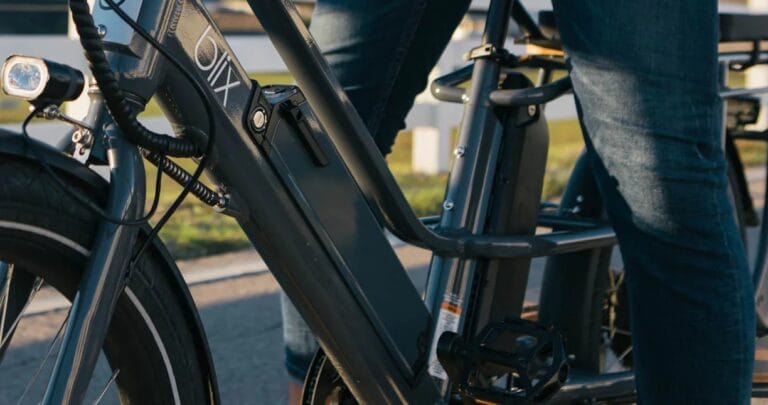
- Battery capacity: A larger battery stores more energy, so it usually gives you more potential range. A 720Wh battery will generally outlast a 500Wh battery on a similar bike in similar conditions.
- Motor power: A stronger motor can feel great on hills and during acceleration, but it can also use energy faster if you ride aggressively. Bigger is not automatically more efficient.
- Rider and cargo weight: The more weight the motor has to move, the more energy it uses. This includes the rider, bags, child seats, groceries, tools, delivery gear, and anything else coming along for the ride.
- Terrain: Hills drain batteries faster because climbing takes more power. A route with repeated climbs will use more energy than the same distance on flat roads.
- Assist level: Low assist uses less battery because you are doing more of the work. High assist feels easier, but the motor is contributing more power.
- Throttle use: Throttle-heavy riding usually reduces range because the motor may be doing most of the work without much help from pedaling.
- Tires and pressure: Underinflated tires create more rolling resistance, which makes the motor work harder. Fat tires, knobby tires, and very wide tires can also use more energy than smoother commuter tires, especially on pavement.
- Wind and temperature: A headwind makes the motor and rider work harder. Cold weather can also reduce range because lithium-ion batteries do not deliver energy as efficiently when they are cold, so the battery may drain faster or feel less powerful until it warms back up.
None of these factors ruin an ebike on their own. They just explain why two people can ride the same model and get different mileage.
Battery Size and Range: What Wh Means
Ebike batteries are often listed in watt-hours, or Wh. Watt-hours measure how much energy the battery stores.
If a battery lists voltage and amp-hours separately, you can estimate watt-hours with this formula:
Volts x amp-hours = watt-hours
For example, a 48V 10Ah battery has about 480Wh of capacity.
You do not need to do battery math every time you shop, but Wh is one of the most useful numbers to compare. Think of it as the size of the fuel tank. A bigger tank usually helps, but it still matters how you drive.
Battery Size | What to Expect |
360Wh | Better for shorter city rides and lighter use |
500Wh | Common on commuter ebikes and often enough for daily riding |
720Wh | Better for longer commutes, hills, heavier riders, or higher assist |
1,000Wh | Long-range territory, especially useful for cargo, touring, or fewer charges |
These numbers help you compare bikes, but they do not guarantee a specific mileage. A 720Wh battery usually has more range potential than a 500Wh battery, assuming the bikes and riding conditions are similar. Add hills, wind, throttle use, and heavy cargo, and the math starts getting… well we don’t know.
Pedal Assist vs Throttle Range
Pedal assist usually gives better range than throttle-heavy riding.
With pedal assist, you pedal and the motor adds help. With the throttle, the motor can move the bike with little or no pedaling. That is convenient, especially when starting from a stop, but it uses more battery because the motor is doing more of the work.
This does not mean throttles are bad. A throttle can be useful for quick starts, short hills, intersections, or moments when you need a little help. Just do not expect maximum range if the throttle is doing the whole shift.
If range matters, use pedal assist for most of the ride and save the throttle for moments when it makes the ride easier.
How to Get More Range From Your Ebike
You do not need to turn every ride into a battery-saving mission. A few habits can make a noticeable difference:
- Use lower assist when you can: You do not have to live in Eco mode, but saving high assist for hills, headwinds, or tired legs can stretch the battery.
- Start smoothly: Full-throttle starts use a lot of energy. Pedaling along with the motor is easier on the battery, especially in stop-and-go riding.
- Keep tires properly inflated: Soft tires make the bike harder to roll, which means the motor has to work harder too.
- Shift before hills: If your ebike has gears, shift into an easier gear before the climb. This helps you and the motor work more efficiently, especially on mid-drive ebikes.
- Avoid carrying extra weight you do not need: You do not need to remove every snack and water bottle. Just know that unnecessary cargo adds work for the motor.
- Maintain the drivetrain: A clean chain, properly adjusted brakes, and healthy drivetrain help the bike run more efficiently. Small mechanical issues can quietly steal range.
- Store the battery properly: Extreme heat and cold are hard on batteries. When possible, store and charge the battery indoors in a dry, moderate environment.
The goal is not to ride like you are being graded. It is just to stop wasting battery in ways you do not even notice.
How Much Range Do You Need?
Most riders need less range than they think. That does not mean range is unimportant. It means you should match the battery to your riding instead of chasing the largest number because it looks good on a product page.
Rider Type | Range That Usually Makes Sense |
Short errands | 20-30 miles may be plenty |
Daily commuting | Round-trip distance plus a comfortable buffer |
Long recreational rides | Larger battery or dual-battery setup |
Cargo riding | Extra range buffer for weight and frequent stops |
Hilly routes | Extra range buffer, even if the distance is short |
If your commute is 10 miles round trip, a bike with 30 to 40 miles of practical range gives you breathing room. If your commute is 25 miles round trip, you may want a larger battery or charging access at work.
For longer weekend rides, a long range ebike can give you more freedom to explore without planning the entire ride around battery percentage. Very peaceful. Very unlike watching the last bar disappear five miles from home.
For cargo riding, hilly routes, or passenger setups, buy more range than the map distance suggests. The distance may look simple, but weight and elevation have a way of making the battery disagree.
What Counts as a Long Range Ebike?
A long range ebike usually has a larger battery, efficient motor system, or dual-battery setup. Many long range models use batteries around 720Wh or higher, while some cargo, touring, and specialty ebikes go much bigger.
You may also see long range ebikes with:
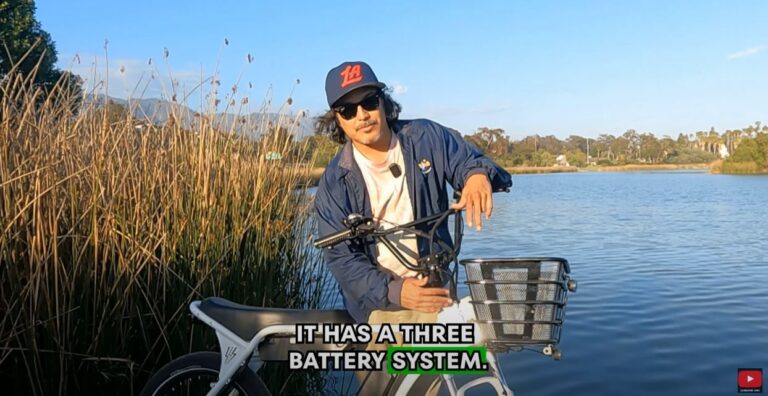
- Dual-battery systems
- Efficient mid-drive motors
- Conservative assist modes
- Tires designed for efficient rolling
- Optional range extender batteries
Fat tire ebikes can also have large batteries, but range depends heavily on tire size, bike weight, terrain, and riding style. A big battery helps, but wide tires and heavy frames still ask more from the motor.
If range is your top priority, look at battery capacity first. Then check the motor type, bike weight, tire style, and whether the brand explains how the range estimate was tested.
What Ebike Has the Longest Range?
The longest-range ebikes are usually specialty models with very large batteries or dual-battery setups. Some advertise 100+ miles, and a few high-end touring models claim far more.
For most buyers, though, the better question is not “what ebike has the longest range?” It is “what ebike has enough range for my riding without adding unnecessary cost and weight?”
A 100-mile ebike sounds great if you need it. If your regular ride is eight miles, no one needs a touring battery just to go three neighborhoods over.
FAQ: Ebike Range
Can an ebike go 50 miles on one charge?
Yes, many ebikes can go 50 miles on one charge under the right conditions. A larger battery, lower assist level, moderate speed, flat terrain, and steady pedaling all help. Heavy throttle use, hills, wind, and cargo can reduce that number.
How far can a 500Wh ebike battery go?
A 500Wh ebike battery might provide roughly 25 to 50 miles of range depending on the bike and riding conditions. Lower assist and flatter terrain push the number higher. High assist, hills, throttle use, and heavier loads bring it down.
Does throttle use reduce range?
Yes, throttle use usually reduces range because the motor is doing more of the work without as much help from pedaling. Occasional throttle use is fine, but throttle-heavy riding drains the battery faster.
Do hills drain ebike batteries faster?
Yes, hills drain ebike batteries faster because climbing requires more power. Long or steep hills can reduce range significantly compared with flat riding.
What happens when an ebike battery dies?
If an ebike battery dies, you can usually still pedal the bike like a regular bicycle. The motor assistance stops, and the bike will feel heavier than a normal bike because of the motor and battery weight.
Is a long range ebike worth it?
A long range ebike is worth it if you ride longer distances, commute without easy charging, carry cargo, live in a hilly area, or want more battery buffer. If you only ride short distances, a standard battery may be enough.