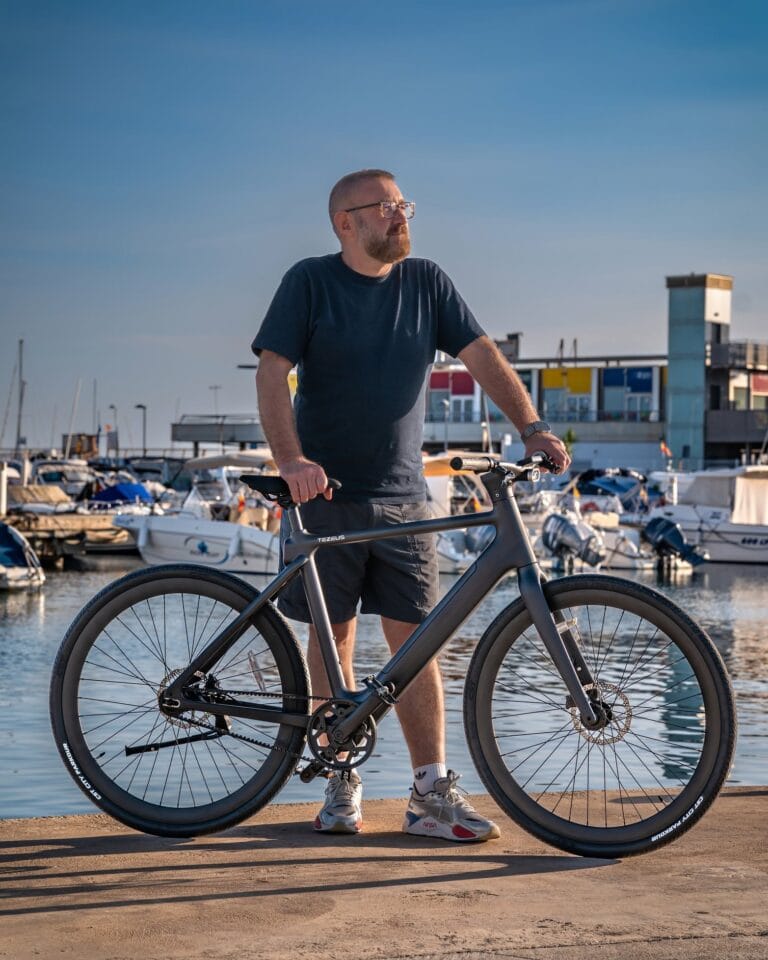
Most ebike brands make their pitch with bigger batteries, more motor power, or enough cargo capacity to make your grocery list feel doable. Tezeus is going in a different direction.
Its three-bike U.S. lineup puts low weight, clean design, and built-in technology much closer to the center of the experience. Rather than asking how much bike it can pile on, Tezeus seems more interested in how neatly an ebike can fit into city life, whether that means carrying it upstairs, cutting down on maintenance, or building more everyday functions directly into the bike.
We do have to judge the lineup with some restraint. Top5ebikes has not ridden any of these models, so we are leaning on independent ride reports where they exist. There is useful firsthand coverage of the Swift and C8, but much less for the C6T, and all three U.S. listings showed “future” shipping dates when we checked on September 24, 2026.
The Tezeus lineup at a glance
Model | What it’s for | Listed weight* | Motor and battery | Drivetrain | Tezeus’s claimed range | U.S. price shown |
Folding, carrying, and compact storage | 36.2 lb | 250W rear hub; 252 Wh | Seven-speed chain | Up to 37 miles | $1,299 | |
Lightweight city commuting with the most integrated tech | 36.4 lb | 250W mid-drive; 360 Wh | Belt and automatic three-speed hub | Up to 62 miles | $2,299 | |
Step-through access and a larger battery | 50.7 lb | 250W mid-drive; 540 Wh | Nine-speed chain | Up to 75 miles | $2,199 |
*These are Tezeus’s listed bike weights, not weights measured by Top5ebikes. The Swift figure includes its battery but excludes accessories; the C6T figure excludes its rack and fenders. All ranges are manufacturer claims, and the displayed prices are sale prices that may change.
Choosing between the three gets easier once you decide which part of city-bike ownership you most want to simplify:
Swift: Keep the bike light, foldable, and much easier to carry.
C8: Keep the weight low while adding the most automation and connected tech.
C6T: Trade some portability for step-through access, a larger battery, and more everyday commuter equipment.
What makes Tezeus different?
Tezeus is not really trying to win the usual ebike numbers contest. You will not find enormous batteries or headline-grabbing motor figures running the show here. The more interesting idea is how much city-bike convenience the brand can build in without making the bike enormous.
The C8 is the clearest example. Its five-inch display brings bike controls and information into one large interface, fingerprint unlock skips the usual key routine, rear radar can warn you about traffic approaching from behind, and the three-speed hub handles gear changes automatically. App-connected features add another layer on top of that.
The C8 gets most of the flashy stuff, but Tezeus did not save all of its clever ideas for one bike. The C6T keeps the large display, fingerprint unlock, radar, and connected features while moving toward a more traditional step-through commuter. The Swift strips things back further, but still manages torque-sensing assist, hydraulic brakes, rear suspension, and a throttle while staying at a claimed 36.2 pounds.
So the common thread is not one particular feature. It is a city-bike convenience approach that puts low weight ahead of the usual “bigger number must be better” sales pitch. Whether that approach makes ownership easier is something we will get into below.
|
|
|
|
|
|
|
|
|
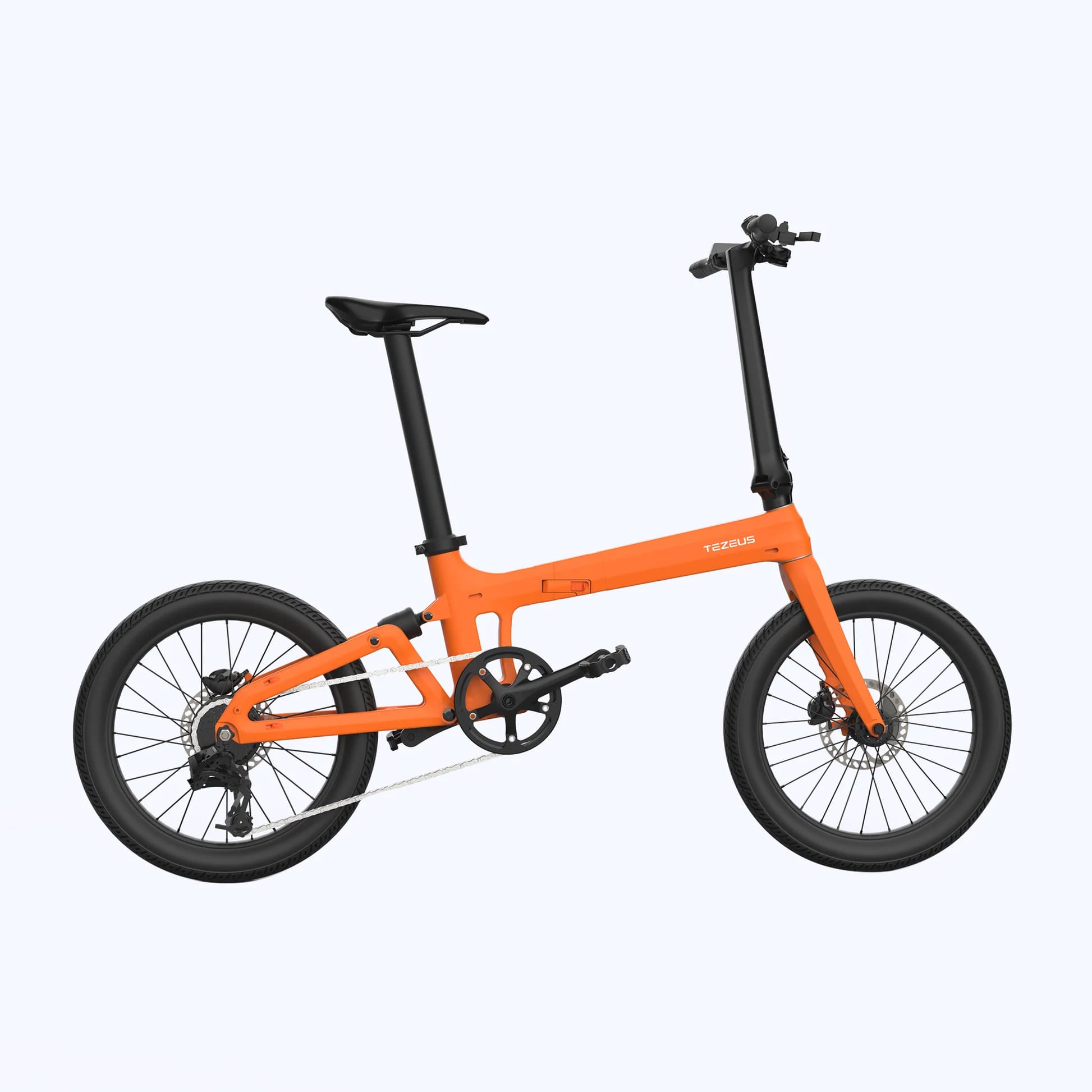
Tezeus Swift: The folding bike for riders who need to lift it
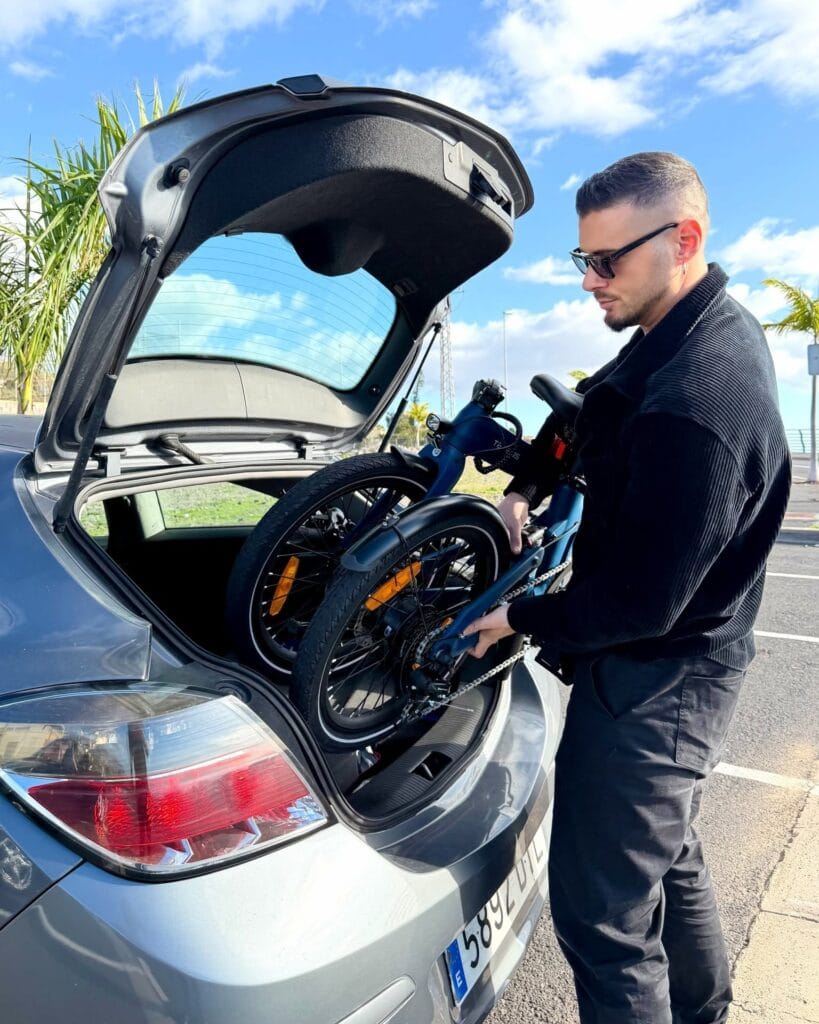
The Swift fixes one of the more annoying contradictions in folding ebikes: folding a bike in half does not help much if picking it up still feels like moving furniture.
At a claimed 36.2 pounds, the Swift at least gives your arms a fighting chance.
It also manages that weight without reducing the bike to wheels, pedals, and good intentions. You still get 20-inch wheels, rear suspension, hydraulic disc brakes, a seven-speed drivetrain, torque-sensing pedal assist, and a thumb throttle.
In Electrek’s hands-on review, Micah Toll found the Swift manageable to carry and predictable around the city. He also liked the smooth assistance and handling, although the rear suspension had its limits once the pavement got rough.
That gives you a better sense of what the Swift’s portability does and does not buy you. The low weight can make stairs, storage, and train transfers easier, while the small wheels and modest suspension are still dealing with the same potholes everyone else is.
The battery is the other half of the tradeoff.
Tezeus advertises up to 37 miles from the 252 Wh pack, while Toll reported roughly 17–25 miles in mixed city use. Hills, temperature, rider weight, assist level, and throttle use can all move that number around.
For a shorter commute where charging indoors is easy, losing some range to keep the bike light may be a very reasonable deal. If you spend long days riding away from an outlet, 252 Wh starts looking less charming.
The Swift also combines carbon construction with a folding frame from a brand that is still relatively unfamiliar in the U.S. Before ordering, we would check whether there is a realistic service option nearby and, if possible, get our hands on the bike in person first.
Start here if: Carrying the bike is part of your routine and you would rather plug in a little more often than haul another 15 or 20 pounds up the stairs.
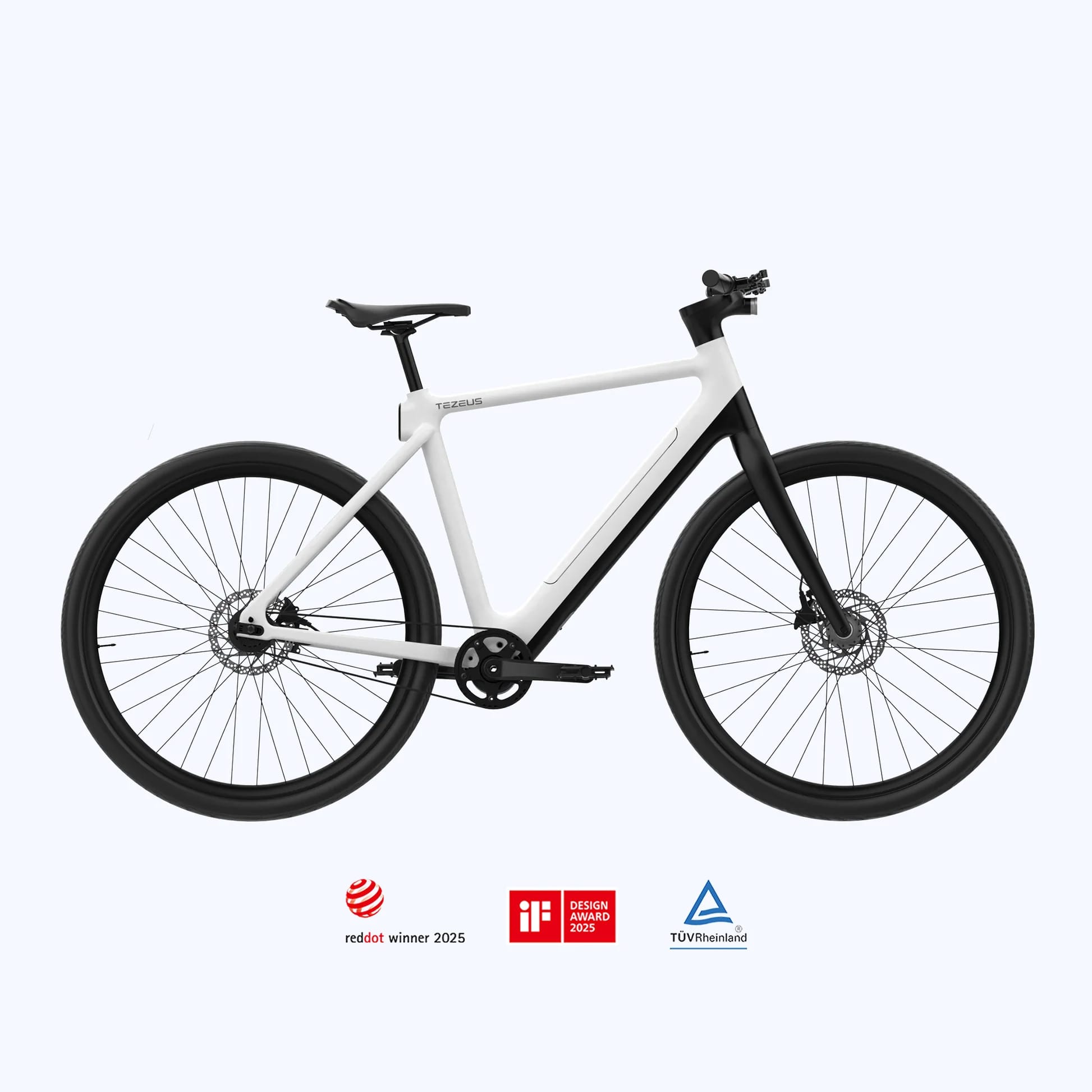
Tezeus C8: The tech-forward city commuter
The C8 is where Tezeus fully commits to the smart-bike idea.
It weighs a claimed 36.4 pounds, just a hair more than the Swift, but uses that platform very differently: carbon frame, mid-drive motor, removable 360 Wh battery, belt drive, and a three-speed internal hub that handles shifting automatically. Then there is the five-inch screen, fingerprint unlock, integrated lighting, and rear-facing radar.
There is plenty of technology to talk about, but some of the C8’s most useful features are decidedly less flashy.
The belt means no routine chain lubrication, and the internal hub keeps the gearing enclosed rather than hanging a derailleur off the back of the bike. Automatic shifting means you do not manually pick each gear as you ride; the system changes gears for you.
That could be very nice in stop-and-go traffic. It of course also means the bike may choose to shift at a moment when you would have waited or picked something different yourself. That is where the independent reviews get useful.
An Electrek review based on a European-spec test bike praised C8’s quiet ride and low weight but found some of those automatic shifts unexpected while climbing.
Forbes contributor William Roberson also spent time adjusting the hub’s shift behavior during his test. On one substantial hill, he found himself relying frequently on the bike’s boost function to keep moving comfortably.
Neither experience says the C8 cannot handle a hill. They do suggest that the three-speed automatic setup is easier to appreciate on flatter or rolling city routes, where you are less likely to wish for more gears or direct control over every shift.
Electrek also estimated about 53 miles of range from its European test bike, but we would not carry that number straight over to the U.S. model because the European version operates with a lower assist-speed limit.
Tezeus rates the U.S. C8 for up to 62 miles, which remains a manufacturer claim rather than a range result Top5ebikes has verified.
The C8 is probably the best example of why someone would choose Tezeus in the first place. It stays unusually light for a full-size commuter while combining a low-maintenance belt drive with features you rarely see gathered on one bike.
The automatic three-speed hub is also the part we would pay the most attention to before buying. If your commute is mostly flatter city streets, its hands-off approach may be part of the appeal. If you climb serious hills or like choosing your own gear every time, this is one worth test-riding first.
Start here if: You want a lightweight city bike with a belt drive and built-in tech, and your route does not demand a huge gear range.
Tezeus C6T: More commuter equipment, with less ride evidence
The C6T spends less effort chasing an ultra-low number on the scale and more on the things you might want from a bike you ride every day.
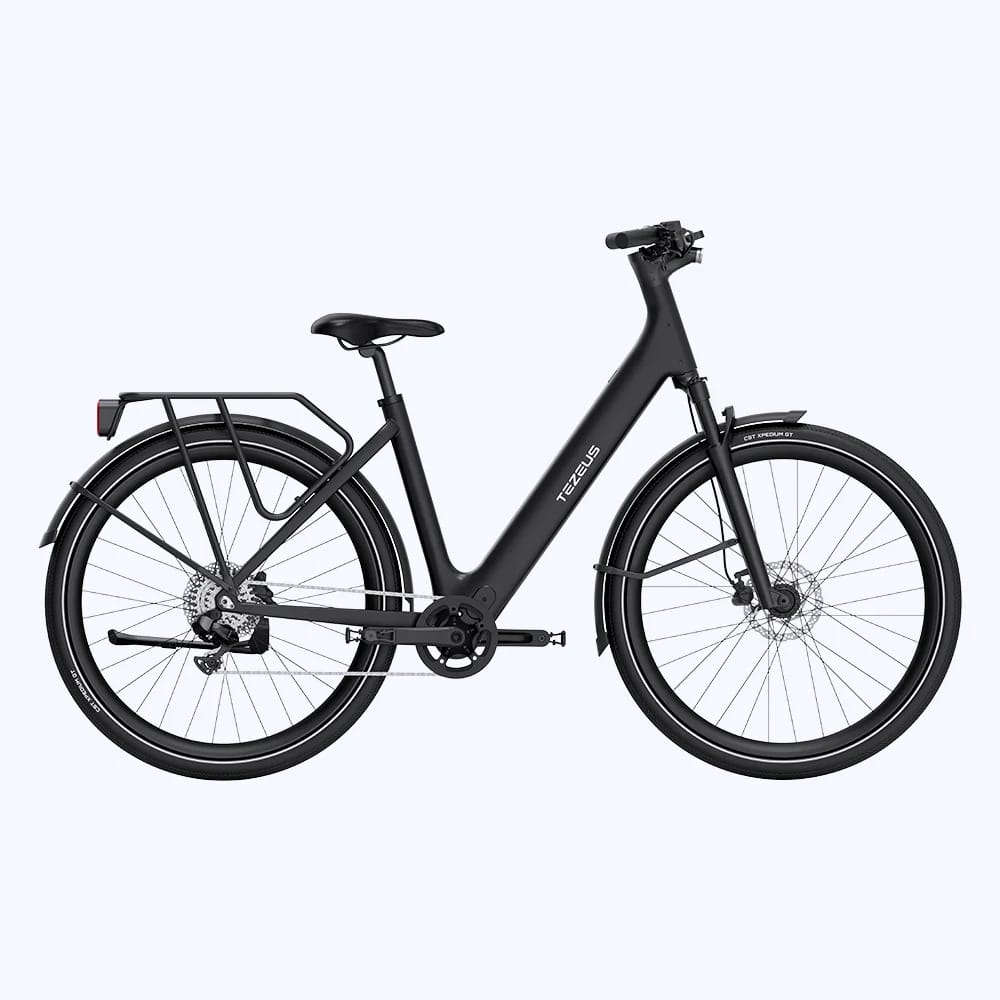
Tezeus lists it at 50.7 pounds before the rack and fenders, roughly ~14 pounds heavier than the C8 and Swift. In return, you get an aluminum step-through frame, suspension fork, 700 × 47C tires, hydraulic disc brakes, a nine-speed Shimano drivetrain, and the largest battery of the three at 540 Wh.
It does not abandon the brand’s techier side, either. There is still a five-inch display and fingerprint unlock, plus USB-C power output from the battery. That last one sounds like a footnote until your phone hits 8% halfway through the day.
A current U.S. offer also includes a rack, mudguards, rear radar, and one year of Smart Connect. That turns the C6T into a much more ready-made commuter package, although we would still confirm exactly what is included when ordering since promotional bundles can change.
The extra weight starts to make more sense in that context. The C6T is not trying to compete with the Swift for a spot under your arm; it is giving you more battery, easier step-through access, larger wheels, more gears, and commuter equipment you might otherwise add later.
Its 540 Wh battery is the largest in the Tezeus lineup. Tezeus claims up to 75 miles while specifying low-assist testing, so we would treat 75 as the favorable-end estimate rather than the number to build your charging schedule around.
The bigger unknown is how all of this feels once the bike is moving.
We have not found the same depth of independent riding coverage for the C6T that exists for the Swift and C8. Until more people spend real time on one, its ride quality, comfort, and day-to-day range are still harder to judge from outside the spec sheet.
Start here if: You want the easiest step-through access, biggest battery, and most conventional commuter setup in the Tezeus lineup, and carrying 50-plus pounds is not part of the daily plan.
What to check before ordering a Tezeus
Tezeus is selling more than three sets of bike specifications. You are also buying into its shipping schedule, service network, return terms, and connected features, and a few of those details deserve sorting out before the box shows up.
Confirm the shipping date
As of September 24, 2026, Tezeus’s U.S. listings said the Swift and C6T would ship in mid-November 2026, while the C8 listed March 2027.
Those are future estimates, not dates we would carve into a calendar in permanent marker. Check the current product page again before paying.
Find out who can service it near you
Tezeus provides a service-center locator and says its partner network is growing.
Put your location into it before you order and see whether the nearest option is somewhere you would realistically take the bike. A service center that technically exists but requires a road trip is less comforting when something stops working.
This is especially worth checking on a bike like the C8, where the display and other integrated electronics are a major part of the package. Tezeus also says warranty repairs require its authorization, so do not assume a nearby shop can simply begin covered work and sort out the paperwork afterward.
The warranty lists five years of coverage for the frame and fork, two years for the motor and battery, and different periods for other components. Read the full terms for the exact bike you are considering so you know both what is covered and how a repair is supposed to happen.
Read the return policy, then clarify it in writing
This is the ownership detail we would be least inclined to skim.
Tezeus product pages advertise “14-day returns,” but its U.S. refund policy describes substantial shipping and processing deductions for change-of-mind ebike returns. More importantly, that same policy says sale or discounted items are not returnable, while the bikes were currently displaying sale prices when we checked.
That apparent conflict deserves an answer before your credit card gets involved.
Ask Tezeus exactly which return terms apply to the model, price, and promotion you are ordering, and get that answer in writing. The policy separately describes free returns for qualifying quality issues reported within 14 days.
Ask which connected features work after the first year
Tezeus lists a separate one-year Smart Connect subscription at $59 at the time of this review.
The service is associated with features including remote status, motion alerts, and GPS tracking. The C8 listing includes one year, and the current C6T offer does too.
If those connected features are part of the reason you want the bike, find out exactly what happens when that first year ends. Confirm which display, navigation, tracking, and alert functions continue without renewal rather than assuming everything except one optional extra carries on unchanged.
Ask exactly what “Safety Certified” covers
Tezeus shows a general “Safety Certified” badge on its listings, but the badge does not identify a specific U.S. safety standard or tell you whether the certification applies to the complete ebike, its electrical system, or a particular component.
That distinction is useful if you are checking for a specific electrical-safety certification before bringing an ebike and its battery into an apartment building, workplace, or other property with its own requirements.
Rather than relying on the badge alone, ask Tezeus which standard the exact model meets, which organization certified it, and for documentation covering the configuration you plan to buy.
Specific paperwork beats a reassuring badge every time.
Conclusion: Is Tezeus worth considering?
Tezeus has a much clearer identity than a lot of young ebike brands. It is not simply throwing bigger motors, fatter tires, and larger batteries at the page. Its better ideas revolve around making city ebikes lighter, cleaner-looking, and more technologically integrated.
The Swift is probably the easiest model to recommend investigating. A folding ebike around 36 pounds addresses a very real problem for riders dealing with apartments, stairs, trains, and small storage spaces, even if the smaller battery asks you to be realistic about range.
The C8 is the model that best shows what Tezeus is trying to do differently. At roughly 36 pounds, it combines a belt drive, automatic shifting, and a connected cockpit without turning into a heavyweight city bike. That combination is unusual, but it also makes the C8 more dependent on whether you like the way Tezeus has chosen to handle shifting, controls, and connected features.
The C6T is the practical one of the group. You get easier step-through access, a larger battery, and more conventional commuter equipment, but at roughly 51 pounds before the rack and fenders, you lose much of the portability advantage that makes the brand interesting in the first place.
None of that adds up to a blanket endorsement.
The Swift has a small battery. The C8’s shifting may be a poor match for steep routes. The C6T still needs more independent riding evidence. And across the lineup, future U.S. shipping dates, local service, subscription features, and return terms all deserve a little homework before ordering.
That homework matters more here because Tezeus is asking you to buy into an ecosystem, not just a motor and two wheels.
If its approach fits the way you commute, there is a lot to like. Just make sure the smart bike is also the smart choice for the boring parts of ownership.
Anyways, see you out there!
FAQ
Are Tezeus ebikes available in the U.S.?
Tezeus lists the Swift, C8, and C6T on its U.S. store. As of September 24, 2026, their product pages showed future shipping estimates: mid-November 2026 for the Swift and C6T, and March 2027 for the C8.
Check the current listing before ordering, since those dates may change.
Does the Tezeus Swift have a throttle?
Yes. Tezeus lists a thumb throttle on the U.S. Swift alongside pedal assist and a seven-speed drivetrain.
Which Tezeus ebike has the largest battery?
The C6T has the largest listed battery at 540 Wh, followed by the C8 at 360 Wh and the Swift at 252 Wh.
That makes the C6T the battery-capacity winner on paper, but battery size is only one factor in real-world range.
Do you have to keep paying to ride the C8?
Electrek reports that the C8 can be ridden without connecting the app.
Tezeus sells Smart Connect separately for remote features, but buyers should confirm exactly which display, navigation, tracking, and alert functions remain available after the included year expires.