Actbest sells the kind of ebikes that can stop a budget-conscious shopper mid-scroll: folding bikes, commuters, and full-size fat-tire models with plenty of equipment, often for less than $1,000. The harder part is figuring out which features will actually improve your rides and which headline numbers deserve a second look.
For most budget-conscious riders, we would start with the Core ST 2.0 for paved commuting, the Mars for folding storage, or the Ranger 2.0 for a larger fat-tire bike. The Blazer ST Ultra adds hydraulic brakes and rear suspension, but its weight and advertised speed are both worth looking at closely before you buy.
We’re focusing on four of Actbest’s more practical two-wheel models here, not trying to work through every bike in the catalog. Top5ebikes has not test-ridden these models, so our assessment is based on current listings and published ride reports.
TOP5EBIKES 3% Off Promocode: TOPBIKES
Actbest ebikes at a glance
Model | Best reason to consider it | Battery listed by Actbest | Listed bike weight | Sale price shown Sept. 28, 2026 |
Low-step commuter for paved routes | 48V, 10.4Ah (about 499Wh) | 62.4 lb | $599 | |
Folding storage and everyday errands | 48V, 13.5Ah (648Wh) | 69.4 lb | $569 | |
Full-size fat tires for mixed surfaces | 48V, 15.6Ah (about 749Wh) | 77.2 lb | $829 | |
Low-step access, rear suspension, and hydraulic brakes | 48V, 20Ah (960Wh) | 84.2 lb | $959 |
Weights and batteries are Actbest’s published specifications, not Top5ebikes measurements. Prices are displayed sale prices for selected standard configurations and can change. Actbest’s maximum range figures are claims under favorable conditions, not distances we verified.
One nice thing about Actbest is that you can jump from a commuter to a folder or fat-tire bike without the price suddenly doubling. Just don’t let that turn your search into a game of “which listing has the biggest number?” A huge motor or ambitious range claim does not matter much if the bike is uncomfortable, too heavy to move, or a pain to stop. Fit, handling, brakes, and storage are the better places to start.
Core ST 2.0: The straightforward commuter
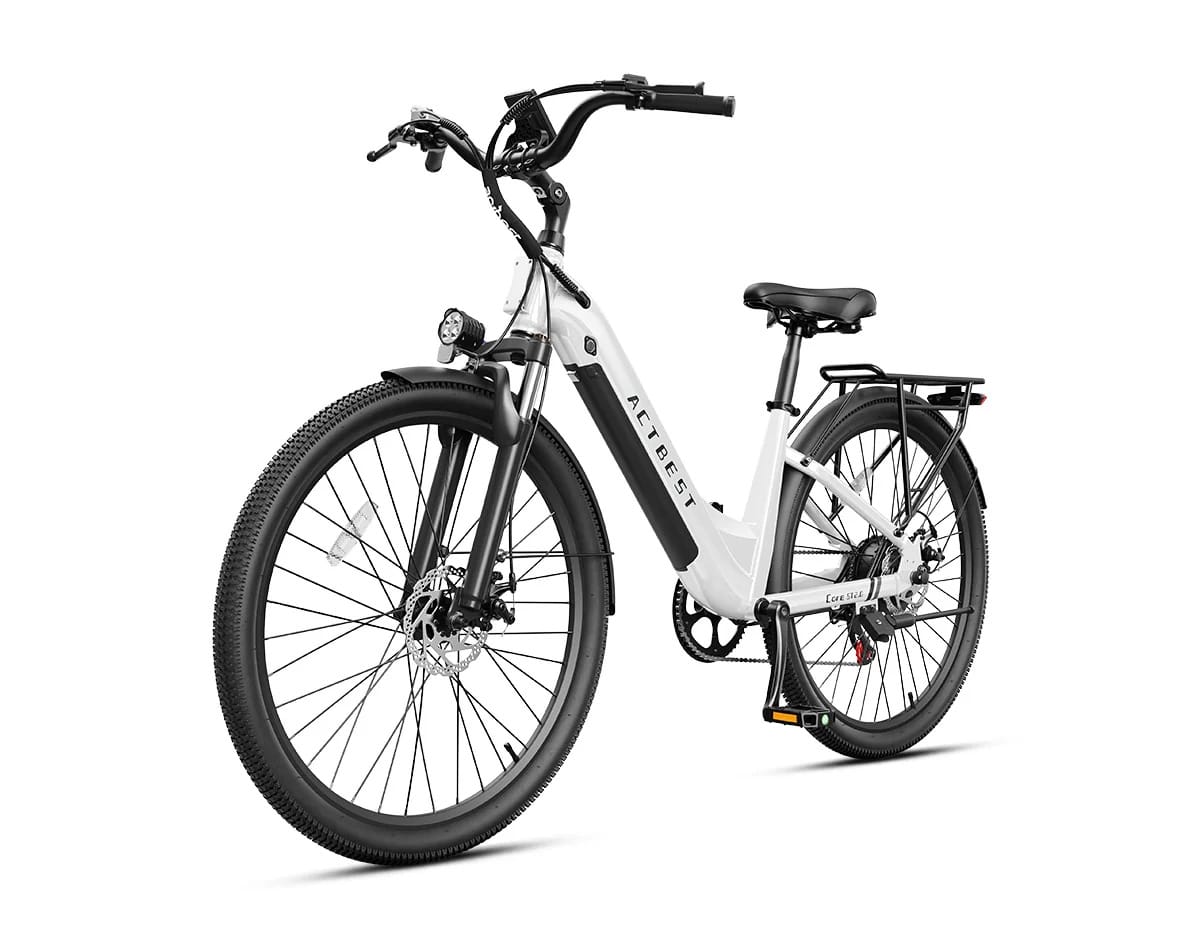
The Core ST 2.0 is probably the easiest place to start if you’re shopping for your first Actbest. It has a step-through frame, 26 × 2.1-inch tires, front suspension, a seven-speed drivetrain, lights, and a rear rack. Its roughly 500Wh battery is smaller than the packs on the bigger bikes in this guide, but for paved errands and regular trips across town, the overall setup makes sense on paper. The step-over Core 2.0 offers the same basic commuter formula if you prefer a more traditional frame.
The more interesting choice may be the Core ST 2.0 Plus. The standard Core uses cadence-based pedal assist, while the Plus gets a torque sensor that responds to how hard you’re actually pushing on the pedals. It also moves to 27.5-inch wheels and a larger 576Wh battery.
When we checked pricing, stepping up to the Plus added $100. That extra money makes more sense if you care about a smoother, more connected pedal feel, especially if your commute involves a lot of stopping and starting. Actbest also claims up to 100 miles of range for the Plus, but we definitely wouldn’t map out a 99-mile Sunday ride based on that number alone. It’s a best-case manufacturer claim, not a range result we’ve verified.
The Core does come with a few things to watch. BikeRide’s synthesis of Core 2.0 ride reports includes complaints about braking, fit guidance, heel strikes, and performance on steep hills. On the positive side, reviewers also liked the price and city handling.
That doesn’t mean every version of the Core will behave exactly the same way, but it does give you a useful checklist before buying. If you can, ask a local shop about fit and the brake setup before making it your everyday commuter.
Start here if: You want an affordable, straightforward commuter for paved riding. If you have another $100 in the budget and care about more natural-feeling pedal assist, the Plus is the one we’d look at first.
Mars: A folding bike for storage and errands
The Mars makes the most sense for riders whose first question is not “How fast is it?” but “Where am I going to put this thing?”
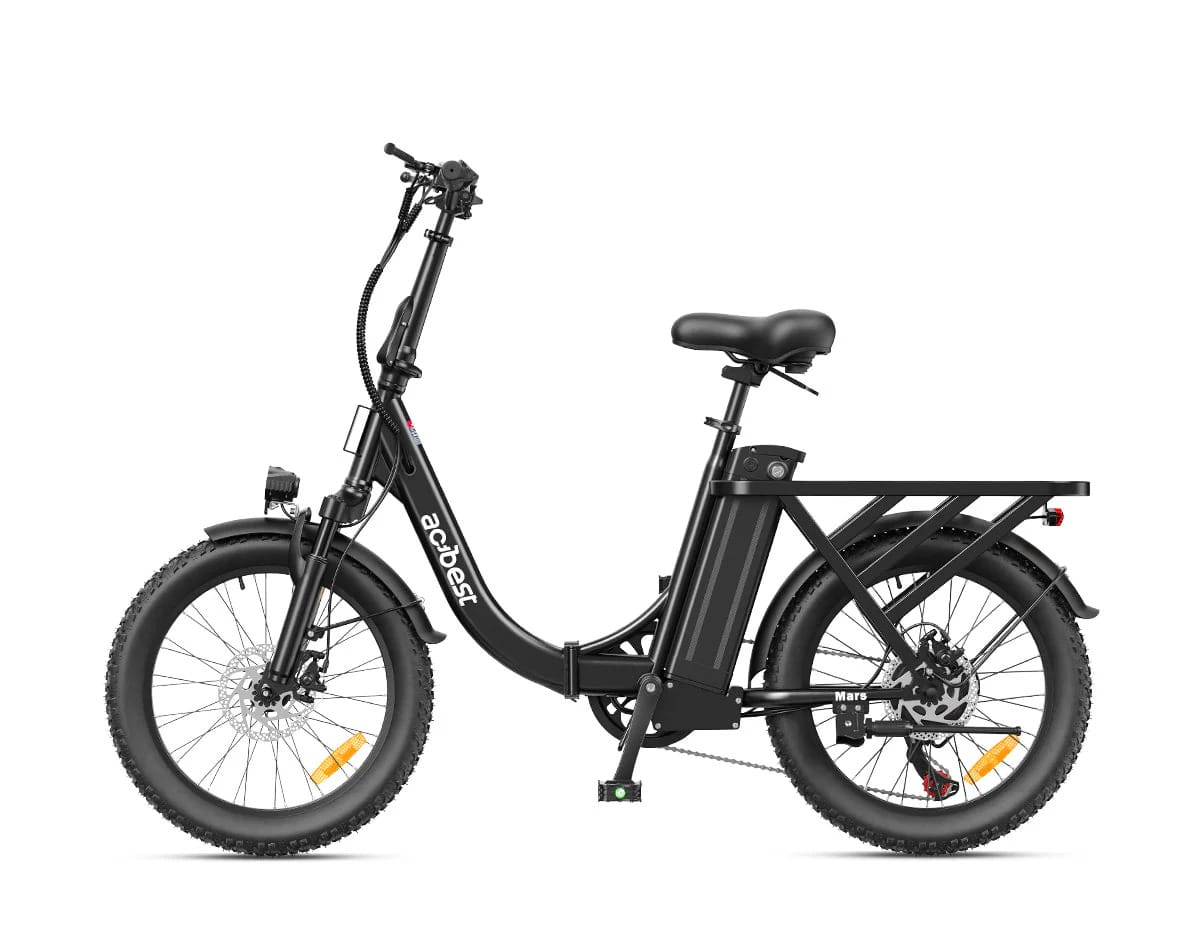
The Mars uses a low-step folding frame with 20 × 3-inch tires, front suspension, a removable 648Wh battery, and a rear rack. Folded up, it can be much easier to work into an apartment, RV, garage corner, or other tight storage setup than a full-size bike. Actbest claims up to 65 miles of pedal-assist range, although actual range will depend on how and where you ride.
There is one important catch: folding and portable are not the same thing. Folding solves a space problem. It does not make 69.4 pounds disappear.
So while the Mars may fit neatly in the corner or squeeze into a vehicle more easily, this is not the kind of folder you casually tuck under one arm and carry up three flights of stairs. If regular lifting is part of the plan, that 69.4-pound listed weight deserves just as much attention as the folded dimensions.
Actbest also sells a Mars Plus ST with a larger 960Wh battery and wider 20 × 4-inch tires. That sounds tempting until you get to the next number: 79.4 pounds. Its advertised speed also exceeds the usual Class 3 assisted-speed limit.
For most riders who mainly want something that folds for storage and handles local trips, the standard Mars is the simpler place to start. The Plus gives you more bike, but it also gives you more to lift and a few more questions to answer about where you can legally use its full speed.
Start here if: Storage space is tight and folding solves a problem for you. Just make sure your definition of “portable” can handle nearly 70 pounds.
Ranger 2.0: Fat tires at a budget price, with important checks
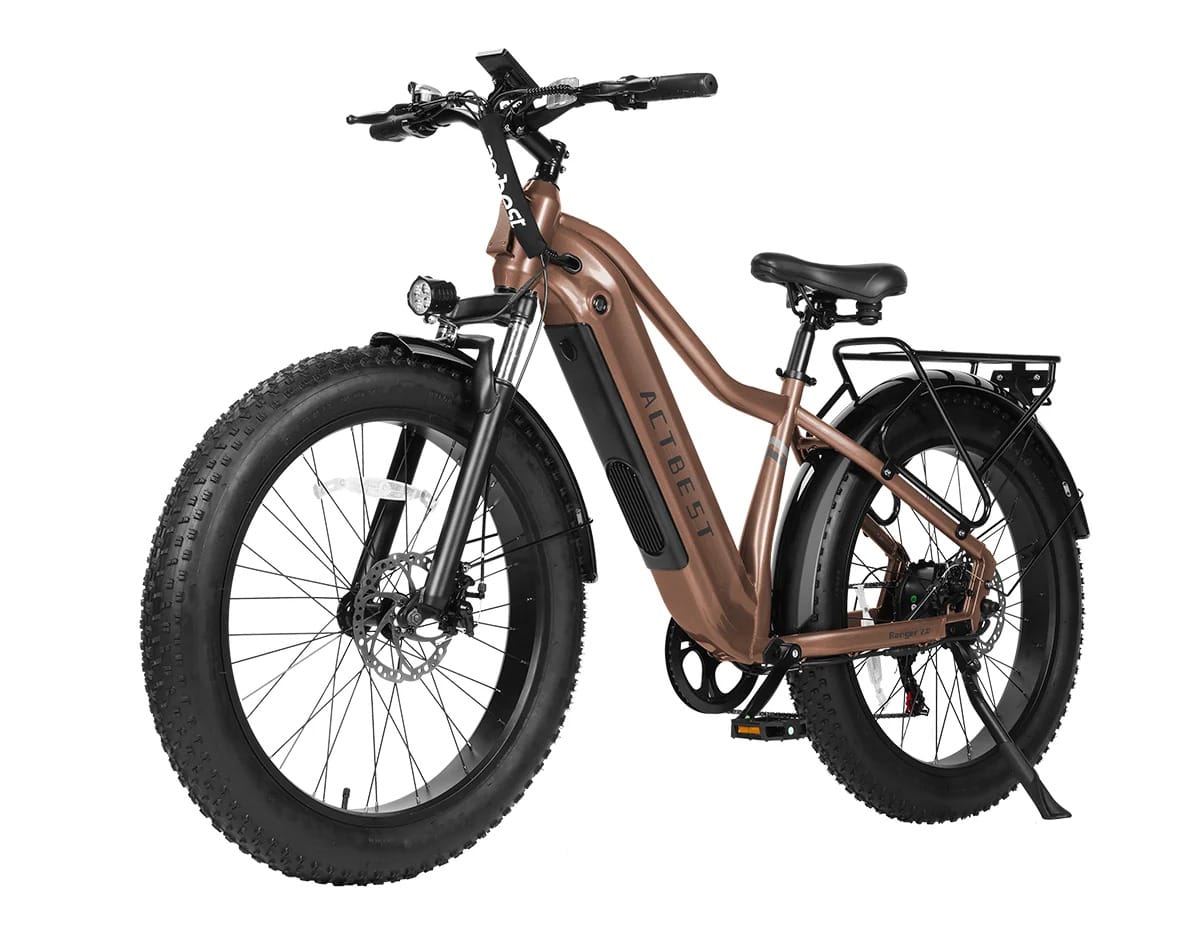
The Ranger 2.0 is where Actbest starts leaning fully into the big-bike experience. You get a full-size frame, 26 × 4-inch fat tires, a suspension fork, seven gears, fenders, lights, and a rear rack.
Those 4-inch tires are the main attraction if your usual route includes broken pavement, maintained dirt roads, or surfaces that make skinny commuter tires feel a little too optimistic. If swinging a leg over the standard frame sounds less appealing, Actbest also offers a lower step-through Ranger ST 2.0.
The bigger issue with the Ranger is that some of its published numbers do not line up neatly.
Actbest advertises the Ranger 2.0 at 36+ mph while also calling it a Class 3 ebike. The product page lists a 500-pound payload, but BikeRide found conflicting figures between an owner’s manual and Actbest’s listing. Reviewers also raised concerns about the mechanical brakes.
Weight is another example. Actbest lists the bike at 77.2 pounds, while one reviewer weighed a test bike at 85 pounds. Eight pounds is not exactly pocket change when you’re trying to load an ebike onto a rack.
None of this automatically makes the Ranger a bad buy. It just means we would want the exact numbers for the exact version being shipped before ordering one. Ask Actbest to confirm the bike’s assisted and throttle speeds, brake setup, actual weight, rack limit, and total payload rating rather than assuming every number on the listing belongs to the same configuration.
Start here if: You want a big, fat-tire ebike without spending big-bike money. We like the format for rougher everyday surfaces, but we would get those conflicting specs cleared up before getting too attached to the 36+ mph or 500-pound numbers.
Blazer ST Ultra: More equipment, more bike to manage
If the Ranger is the simpler budget fat-tire option, the Blazer ST Ultra starts piling on the extras.
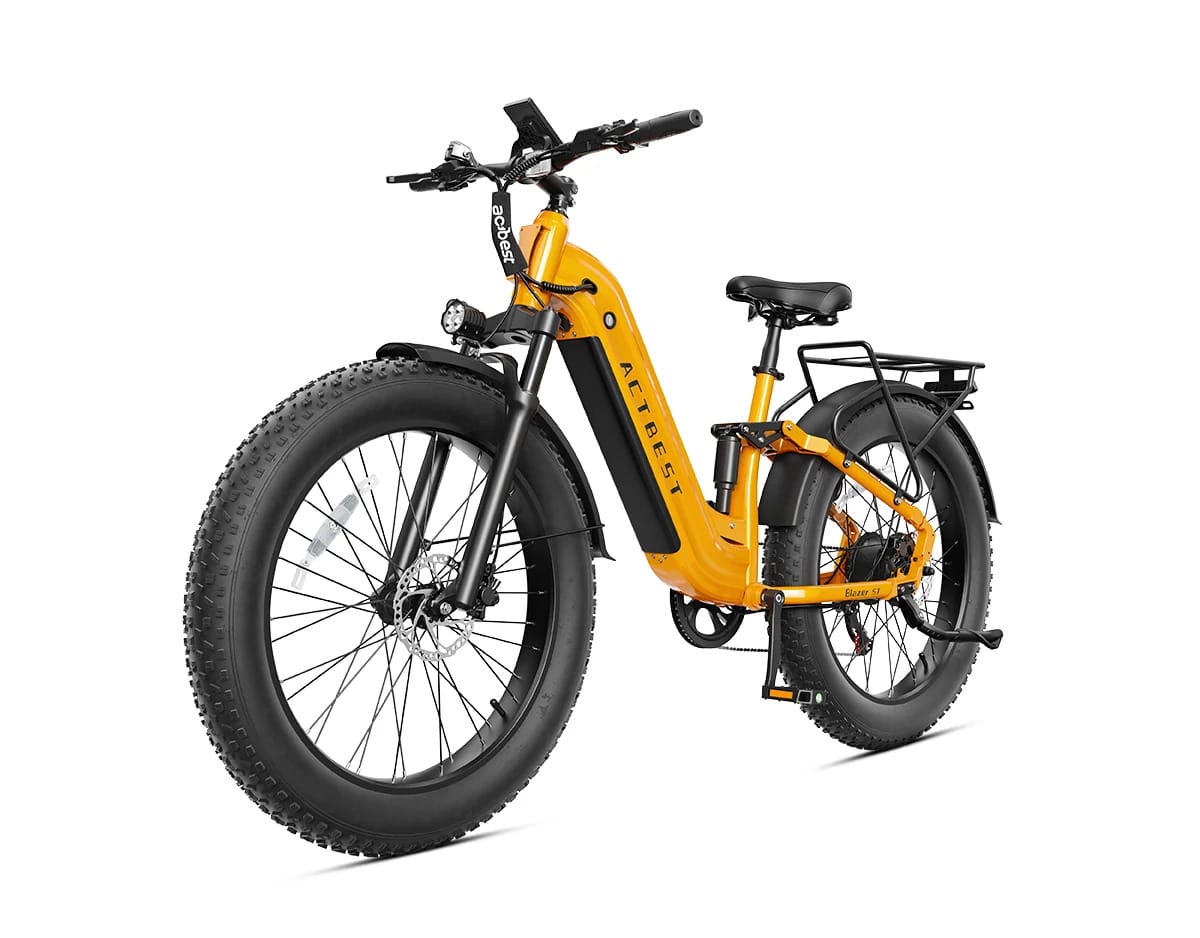
Actbest lists 26 × 4-inch tires, suspension at both ends, hydraulic disc brakes, and a large 960Wh battery. Compared with the Ranger, the hydraulic brakes and rear suspension are the upgrades that stand out most. They make the Blazer more interesting for riders prioritizing comfort and stronger brake equipment rather than simply chasing a larger motor number.
Of course, all of that hardware has to weigh something. Actbest lists the Blazer ST Ultra at 84.2 pounds, so this is firmly in “know where you’re storing it before the delivery truck arrives” territory. If you prefer a traditional frame instead of the low-step ST, Actbest also sells a step-over Blazer Ultra.
The “mountain bike” name needs a little context too. We’d treat the Blazer as a hefty mixed-surface fat-tire bike first, rather than assume the “mountain bike” label means it’s built for demanding trails. Independent reports on Blazer bikes have described comfortable riding over light rough ground and good performance from the hydraulic brakes, but make sure any review you’re reading covers the same Ultra generation and frame version you’re considering.
Actbest’s own Blazer ST Ultra materials also show different peak-motor figures in different places. If motor output is a major reason you’re considering it, ask for the specifications for that exact model before buying.
Start here if: You like the Ranger idea but want hydraulic brakes, rear suspension, and a bigger battery enough to live with an 84.2-pound bike. This is the more loaded option, in both senses of the word.
What to check before buying an Actbest ebike
The prices are attractive, but this is one of those brands where spending another 10 minutes checking the fine print before ordering could save you a much longer headache later.
- Check how fast the bike is actually set up to go when it arrives.
The Ranger listing is the clearest example. Actbest calls it Class 3 but also advertises speeds above 28 mph.
In California, Class 3 pedal assistance is supposed to stop at 28 mph. Other states and riding areas can have their own rules. The important part is simple: do not assume the words “Class 3” on a product page automatically answer the legal question for your specific area.
Ask Actbest what the exact bike you’re ordering can do when it comes out of the box, including pedal-assist and throttle speeds, then check the rules where you actually plan to ride it. It’s not the fun part of ebike shopping, but neither is finding out after delivery that the bike is set up differently than you expected and you can’t legally ride it everywhere you planned to.
2. Figure out who will work on it before something breaks.
Actbest offers a one-year warranty for covered defects, but the fine print matters. Its policy describes replacement parts, documentation requirements, and situations where you may be asked to handle a repair yourself. Labor for a frame replacement is also excluded.
Before buying, call a bike shop near you and ask whether they’ll service an Actbest. It’s much nicer to learn that answer while the bike is still sitting in your shopping cart than when it’s sitting in your garage with a problem. You should also ask Actbest how warranty labor works if a shop has to get involved.
3. Know the return policy before you open the box.
This one is especially important because Actbest’s change-of-mind return policy is pretty restrictive.
You can request a return within 14 days of receiving the bike, but for a normal change-of-mind return, Actbest says it has to stay unused, unridden, and in its unopened original packaging. There is also a $200 return-shipping fee.
So if your plan is to assemble it, ride around the block, decide whether you like it, and return it if you don’t, that is not what this policy allows. Actbest has a separate process for bikes that arrive defective.
4. Double-check the exact bike in your cart.
Different colors and accessory packages can come with different prices or availability, so double-check the configuration you’re looking at is actually the one you think you’re ordering.
The same goes for electrical-system certification. If that matters to you, ask for documentation for the exact model and configuration rather than assuming a general certification badge applies across every Actbest bike.
Shipping is a little simpler: Actbest’s published policy says standard shipping is free to the 48 contiguous states, with Alaska, Hawaii, and U.S. territories excluded.
Ready to buy from Actbest? Use TOPBIKES at checkout for 3% off orders over $500, excluding selected clearance products.
Conclusion: Is an Actbest ebike worth considering?
Actbest makes a pretty convincing case if your budget is doing most of the talking. You can get a practical commuter, a folding ebike, or a full-size fat-tire model without immediately wandering into $2,000 territory.
For everyday paved riding, we’d start with the Core ST 2.0, or spend the extra $100 on the Core ST 2.0 Plus if the torque sensor and more natural pedal feel matter to you.
If storage is your biggest headache, the Mars is the obvious bike to look at. Just remember that “folding” does not magically turn a 69.4-pound ebike into carry-on luggage.
The Ranger 2.0 and Blazer ST Ultra make more sense if you specifically want the stability and presence of a full-size fat-tire bike. The Ranger keeps the upfront price lower, while the Blazer gives you clearer reasons to spend more with hydraulic brakes and rear suspension.
The catch across the lineup is that the attractive price sometimes comes with extra homework. We found specifications that deserve confirmation, speed claims that need to be squared with local riding rules, and a return policy that does not leave much room for a casual test ride after delivery.
That doesn’t mean Actbest is automatically a pass. It means the value equation depends on what kind of buyer you are.
If you’re comfortable buying direct, checking the details yourself, and sorting out local service ahead of time, there is a lot of bike here for the money. If you’d rather test ride first, roll into a nearby dealer whenever something feels off, and have an easier exit if the bike isn’t right for you, paying more for a brand with stronger local support may be money well spent.
Cheap is great. Cheap and right for the way you actually ride is better.
See you in the bike lane!
FAQs: Actbest Ebikes: Which Models Deserve a Closer Look
What is the difference between the Core ST 2.0 and Core ST 2.0 Plus?
The Plus adds a torque sensor, a larger listed battery, and 27.5-inch rather than 26-inch wheels. The big rider-facing difference is the torque sensor: assistance should respond more directly to how hard you’re pedaling instead of primarily detecting that the pedals are turning. Top5ebikes has not ridden the two versions back-to-back, so we can’t compare their actual tuning.
Is the Actbest Mars easy to carry because it folds?
Not necessarily. It folds smaller for storage, but the standard Mars still weighs a listed 69.4 pounds. That distinction matters if your version of “portable” includes stairs, a car trunk, or regularly picking the bike up off the ground.
Are Actbest’s advertised range figures tested results?
No. Figures such as “up to 55” or “up to 100” miles are manufacturer maximum pedal-assist claims, not Top5ebikes test results. Actual range changes with assist level, terrain, speed, load, weather, and how much work you’re doing at the pedals. In other words, treat the biggest number as a best-case scenario, not a promise carved into stone.
Can I return an Actbest after assembling and riding it?
Not as a normal change-of-mind return under Actbest’s posted policy. The company says those returns must be unused, unridden, and in unopened original packaging. If the bike arrives defective, Actbest has a separate process for that situation.