The Aventon Soltera has always been the brand’s signature budget ebike. It is lighter and simpler than models like the Level and Aventure, generally skipping many of the bells and whistles found on those more expensive bikes.
The new Aventon Soltera 3 ADV takes that simplicity in a different direction. Aventon removed the throttle and seven-speed drivetrain found on the Soltera 2.5, then replaced its conventional chain with the company’s first Gates Carbon Belt Drive. The result is not a conventional upgrade. It is more like a distillation of what the Soltera was always meant to be: a quick, lightweight city bike that rides much more like a traditional bicycle than a typical ebike.
On paper, some of these changes may look like downgrades. The Soltera 3 ADV has a smaller motor than its predecessor, no suspension and a non-removable battery. After riding it for approximately 50 miles, however, I found that its simplicity is exactly what makes it so interesting.
This is not an ebike for someone who wants a throttle, a massive motor or a fully loaded commuter. It is designed for riders who still enjoy pedaling—and who want electric assistance to complement the cycling experience rather than take it over.
Quick Verdict
The Aventon Soltera 3 ADV is a lightweight, single-speed Class 1 ebike built around a clean Gates Carbon Belt Drive, responsive torque sensor and highly customizable pedal assistance. It is quiet, nimble and exceptionally smooth, with the direct ride quality that makes single-speed bicycles so much fun in urban environments.
Its modest motor, lack of gears and narrow city tires limit its versatility, especially on long, steep hills or loose surfaces. The factory Ride Tune settings also felt too restrained for my riding style, although adjusting them through the Aventon app made a dramatic difference.
At $1,499, the Soltera 3 ADV is a strong value for fitness-oriented riders, traditional cyclists and first-time ebike buyers who prioritize low weight, minimal maintenance and natural handling over raw power.
Aventon Soltera 3 ADV Specifications
Specification | Aventon Soltera 3 ADV |
Price | |
Class | Class 1 |
Top assisted speed | 20 mph |
Weight | 37 lbs. |
Motor | 36V, 250W rear hub |
Peak motor output | 540W |
Torque | 40Nm |
Sensor | Double-sided bottom-bracket torque sensor |
Throttle | None |
Assist modes | Eco, Sport and Turbo |
Battery | 36.9V, 9.94Ah |
Battery capacity | 366.8Wh |
Manufacturer range claim | Up to 70 miles |
Charging time | 3–4 hours |
Drivetrain | Single-speed Gates Carbon Belt Drive |
Brakes | Tektro hydraulic disc brakes |
Rotors | 180mm front and rear |
Tires | Kenda 700x38C |
Frame | 6061 double-butted aluminum |
Fork | Rigid aluminum |
Maximum payload | 300 lbs. |
Frame sizes | Small, Medium, Large and XL |
Recommended rider height | Approximately 5’1″–6’4″ |
Lights | Integrated headlight and rear lights |
Turn signals | Integrated rear turn signals |
App connectivity | Bluetooth, Ride Tune and ride tracking |
Battery removable | No |
Warranty | Two years |
A Stripped-Down Ebike by Design
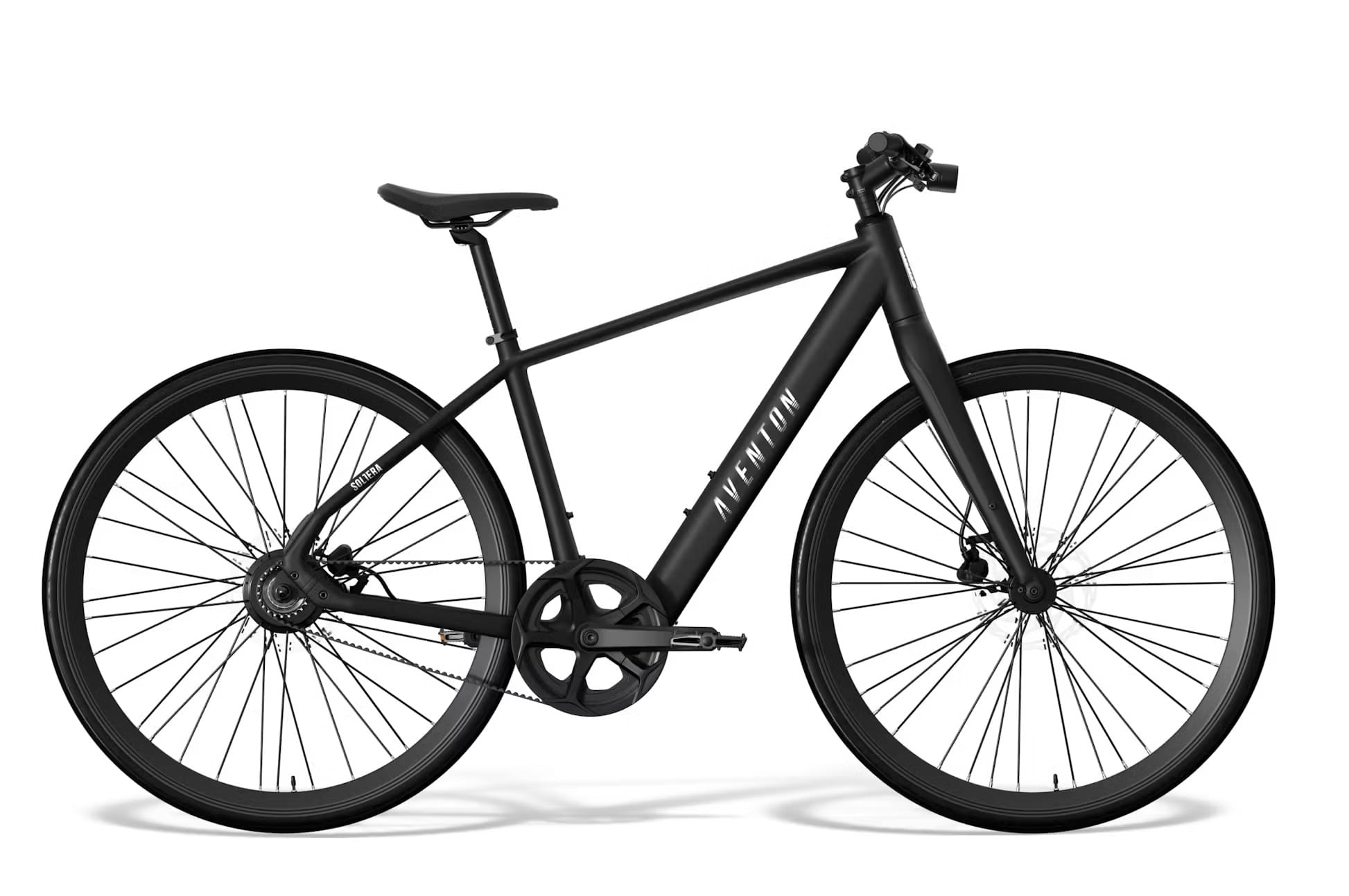
The Soltera 3 ADV is a genuinely minimalist ebike.
It does not have a throttle, derailleur, shifter, suspension fork, included fenders or rear rack. Its battery is integrated into the downtube and cannot be removed. It also lacks the Aventon Control Unit, or ACU, found on higher-tier models such as the Aventure and Level. That means there is no built-in GPS tracking, electronic wheel lock or alarm system.
Those omissions help Aventon keep the bike affordable and bring its total weight down to just 37 pounds. That is extremely light by ebike standards and roughly 20% lighter than the previous Soltera.
The difference is noticeable as soon as you start riding. There is less mass to steer, accelerate and slow down, giving the bike a much sharper and more responsive personality than the average commuter ebike. It is also far easier to carry up stairs, lift into a vehicle or move around an apartment.
Its frame has a clean, understated appearance that does not immediately announce that you are riding an ebike. The battery disappears into the downtube, and the hub motor is visually unobtrusive. Aventon also offers four frame sizes, covering riders from approximately 5-foot-1 to 6-foot-4. That broader sizing should make it easier to find an appropriate fit than it was with some earlier Soltera models.
The Gates Carbon Belt Drive Changes Everything
The centerpiece of the Soltera 3 ADV is its single-speed Gates Carbon Belt Drive. Instead of using a conventional metal chain, it runs a carbon-reinforced belt between a 60-tooth front ring and 22-tooth rear cog.
There is no chain to lubricate, no derailleur to adjust and no cassette or shifter to maintain. The belt will not rust, stays much cleaner than a traditional chain and, according to Aventon, should last two to three times longer.
Those ownership benefits are important, but they are not what I enjoyed most. What stands out is how the drivetrain feels.
The belt is quiet, clean and exceptionally smooth. Paired with the torque sensor, it responds naturally to the effort you put into the pedals. There is a direct connection between your legs and the rear wheel, without the motor ever seeming to take control of the ride.
That makes the Soltera 3 ADV especially appealing to single-speed enthusiasts and traditional cyclists. If you enjoy quick, human-powered bursts of speed and crisp maneuverability, the transition should feel very natural. It behaves like a lightweight analog single-speed bike with an extra push available whenever you need it.
The lack of gears is also its biggest drivetrain limitation. You cannot shift into an easier gear when climbing or select a taller gear for different conditions. Aventon has chosen a ratio intended to balance acceleration, climbing and the ability to reach 20 mph, but no single ratio can be ideal everywhere.
For relatively flat cities, rolling terrain and shorter hills, the simplicity works. If your daily route includes long or especially steep climbs, a geared ebike will require less effort.

Riding the Soltera 3 ADV
The Soltera 3 ADV is at its best in environments where low weight and maneuverability matter more than outright power.
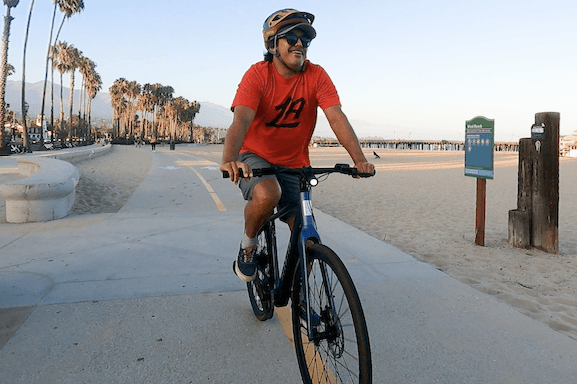
It feels perfectly suited to stop-and-go city riding, quickly changing course and navigating side streets. The narrow frame and responsive steering make it easy to move through tight spaces or take a quick detour around a pothole. Unlike a heavier fat-tire ebike, it never feels like you are wrestling with the bike’s weight when making those adjustments.
The combination of the belt drive and torque sensor creates a buttery-smooth pedaling motion. Assistance builds in response to how hard you pedal, so the motor feels like an extension of your effort rather than a separate force pushing the bike forward.
It also rides surprisingly well with the motor turned off. On flat, smooth terrain, the low weight and efficient belt drive allow you to use it much like an ordinary single-speed bicycle. That is a meaningful advantage if you want to conserve battery power—or simply feel like doing more of the work yourself.
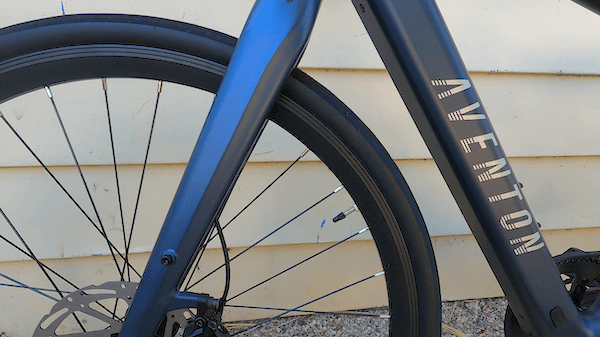
This is not the most comfortable or forgiving platform when the pavement deteriorates. The Soltera uses a rigid aluminum fork and 700x38C Kenda tires, with no suspension to absorb larger bumps. Its tires are best suited to dry, paved surfaces and are less confidence-inspiring when you encounter loose sand, wet roads or rough trails.
The ride is not harsh enough to undermine the bike’s urban purpose, but buyers should understand that agility and efficiency take priority over plush comfort.
The Motor Performs Better Than Its Specs Suggest
The Soltera 3 ADV uses a 250W rear-hub motor producing up to 540W at peak and 40Nm of torque. Those figures are modest compared with the 500W and 750W motors now common on consumer ebikes.
The Soltera 2.5 also has a more powerful 350W nominal motor, which may initially make the new model look like a step backward.
In practice, the 250W motor feels appropriate because it only has to move a 37-pound bike. The real-world performance is more useful than the specification sheet suggests, particularly once the pedal-assist behavior has been adjusted through the Aventon app.
The Soltera will not replace a high-powered commuter, but it is not trying to. The best way to think about it is as a traditional single-speed bicycle with an additional burst of power for accelerating, maintaining speed or getting through a short climb.
After adjusting the Ride Tune settings, the bike handled short, moderately steep hills on my test routes surprisingly well. In Sport or Turbo mode, the motor provided enough support to keep the bike moving without destroying that connected, human-powered feeling.
Long and severe climbs remain a different story. On one prolonged steep section, my quads were burning for several minutes. Fitness-oriented riders may consider that part of the appeal, but anyone hoping to float effortlessly up major hills should look for a larger motor and geared drivetrain.
Ride Tune Is Essential
The Soltera 3 ADV connects to Aventon’s mobile app through Bluetooth. The app can record rides, track activity, provide maintenance reminders and connect with services such as Apple Health and Strava.
Its most important feature is Ride Tune.
Ride Tune lets you adjust three characteristics within the bike’s pedal-assist modes:
- Maximum torque
- Assistance level
- Pedal response
I did not find the factory settings particularly fun or functional for the way I like to ride. The stock motor response felt overly restrained, and the assistance sometimes faded so abruptly that the bike seemed sluggish when I tried to ride aggressively.
For my riding style, the default configuration was almost unrideable—not because the bike could not move, but because its conservative power delivery worked against the fast, fitness-oriented experience that the frame and drivetrain seemed built to provide.
Increasing the torque and assistance settings transformed the bike. Acceleration became more useful, and the transition between my own effort and the electrical assistance felt much more energetic. It finally delivered the zippy bursts of speed I expected from a lightweight urban bike.
Ride Tune does not increase the motor beyond its rated output or raise the assisted speed above 20 mph. It changes how readily the bike gives you the performance that is already available.
I strongly recommend experimenting with these settings before judging the Soltera 3 ADV. They make a world of difference.
The tradeoff is range. More torque, assistance and responsiveness will consume energy faster than Aventon’s conservative factory configuration. For me, that is a worthwhile compromise because this bike makes the most sense for shorter city rides and fitness-oriented trips where maximizing range is not the main priority.
Battery, Charging and Range
Power comes from a 366.8Wh battery integrated into the downtube. Aventon claims up to 70 miles of range, but that estimate is based on favorable conditions: a 165-pound rider, flat pavement, Eco mode and the default Ride Tune settings.
Your actual range will depend on rider weight, terrain, weather, tire pressure, assist level and how aggressively you configure Ride Tune. Riders using higher assistance settings should not expect to approach the maximum claim.
The included 4-amp charger is relatively quick, with Aventon listing a charging time of approximately three to four hours.
The biggest limitation is that the battery cannot be removed. You must bring the entire bike to an electrical outlet instead of taking only the battery inside. Fortunately, moving a 37-pound bike is much easier than carrying a typical 60- or 70-pound ebike, but the arrangement could still be inconvenient for riders who park outside or lack an accessible indoor charging space.
The integrated battery contributes to the Soltera’s clean appearance and balanced handling, but buyers should consider their charging routine before purchasing.
Brakes, Tires and Everyday Equipment
Tektro hydraulic disc brakes with 180mm rotors come standard at both ends. Hydraulic brakes are a welcome inclusion at this price, especially on a bike designed for quick changes of speed in urban environments.
The Soltera also includes an integrated headlight, rear lighting and turn signals built into the seat stays. The rear lights do not function as brake lights, but the turn signals are still a useful feature that is not guaranteed on a $1,499 ebike.
Some of the smaller components reveal the bike’s budget positioning. The grips are basic, and the stock headlight is not especially bright. Adjusting the saddle height requires an Allen wrench because Aventon does not include a quick-release seatpost clamp.
A rack and fenders are also absent. Their omission keeps the weight down, but it reinforces the distinction between a nimble city bike and a fully equipped commuter. The Soltera can work for short commutes on good pavement, but it would not be my first choice for someone carrying cargo, riding through year-round weather or regularly encountering rough roads.
One major ownership advantage is Aventon’s dealer network. Unlike many affordable direct-to-consumer ebikes, the Soltera may be available for a local test ride, and many Aventon dealers can help with assembly, service and repairs. For a first-time ebike buyer, that support adds meaningful value beyond the component list.
Aventon Soltera 3 ADV vs. Soltera 2.5
The Soltera 2.5 is the more versatile model on paper. It has a 350W nominal motor, seven-speed drivetrain, conventional chain and a throttle. Those features provide more options for climbing and allow riders to use motor power without pedaling.
The Soltera 3 ADV goes in the opposite direction. Its motor is smaller, its drivetrain has one speed and the throttle is gone. In exchange, you get a quieter and lower-maintenance belt drive, reduced weight and a purer cycling experience.
Choose the Soltera 2.5 if you value gears, throttle access and broader versatility.
Choose the Soltera 3 ADV if you prefer low weight, simple ownership and the direct feel of a single-speed bicycle.
It is difficult to call one objectively better. They serve different riders, which is why describing the Soltera 3 ADV as a straightforward upgrade misses the point.
How It Compares With the Ride1Up Roadster
The Ride1Up Roadster line is another logical comparison for shoppers interested in lightweight urban ebikes.
The older Roadster V2 is the most direct conceptual alternative because it also uses a belt drive and weighs roughly the same as the Soltera 3 ADV. Ride1Up’s newer Roadster V3 moves toward a more versatile configuration, including a more powerful motor and geared drivetrain.
The Aventon distinguishes itself through Ride Tune customization, integrated turn signals, hydraulic disc brakes and access to Aventon’s established dealer network. Those benefits may matter more to a new buyer than winning a comparison based on motor size alone.
As with the Soltera 2.5, the decision comes down to priorities. Riders looking for more conventional commuting versatility may prefer a geared option. Riders drawn to the simplicity and feel of a true belt-driven single-speed will find the Soltera 3 ADV more distinctive.
Pros and Cons
Pros
- Exceptionally light for an ebike at 37 pounds
- Smooth, quiet Gates Carbon Belt Drive
- Natural-feeling torque-sensor assistance
- Agile and responsive urban handling
- Rides well without motor assistance
- Ride Tune meaningfully changes motor behavior
- Tektro hydraulic disc brakes
- Integrated lighting and turn signals
- Four frame sizes covering a broad range of riders
- Low-maintenance drivetrain
- Established Aventon dealer and service network
- Strong overall value at $1,499
Cons
- Single-speed drivetrain limits versatility on steep hills
- No throttle
- Non-removable battery
- No suspension
- No included rack or fenders
- Stock headlight and grips feel basic
- City tires are not ideal for loose or slippery surfaces
- No ACU security features, GPS tracking or electronic lock
- Rear lights do not function as brake lights
Who Should Buy the Aventon Soltera 3 ADV?
The Soltera 3 ADV is a great match for:
- Fitness-oriented riders who want meaningful exercise
- Single-speed enthusiasts
- Traditional cyclists buying their first ebike
- Urban riders who prioritize agility
- Apartment dwellers who need a lighter bike
- Riders who dislike chain maintenance
- Anyone who wants quiet, natural-feeling pedal assistance
- Buyers who value access to a local dealer network
It is less suitable for:
- Riders who rely heavily on a throttle
- Anyone facing long, severe hills every day
- Commuters who need a rack and fenders out of the box
- Riders who want plush suspension and wide tires
- People who cannot bring the bike near an outlet
- Buyers who prioritize GPS tracking and built-in theft protection
- Anyone seeking the biggest motor and battery available for the money

Is the Aventon Soltera 3 ADV Worth $1,499?
The Soltera 3 ADV is not inexpensive because Aventon chose to remove important components. Its value comes from focused design that prioritizes the most crucial characteristics that make the Soltera ebike what it is.
For $1,499, you get a genuine Gates Carbon Belt Drive, torque sensor, hydraulic disc brakes, integrated turn signals, app-based motor tuning and a remarkably light 37-pound frame. Those are meaningful features that directly affect how the bike rides and how much maintenance it requires.
You also receive the backing of one of the more established consumer ebike brands, including a two-year warranty and an extensive dealer network. That makes the Soltera more approachable for first-time owners who may not want to assemble, diagnose and service an ebike entirely on their own.
The missing throttle, gears and accessories will matter to some buyers. But adding them would also work against the bike’s focused design. Viewed as a lightweight, low-maintenance fitness and city bike—not as an all-purpose commuter—the price is easy to justify.
Final Verdict
The Aventon Soltera 3 ADV proves that an ebike does not need more power, more weight and more features to become more compelling.
Its 250W motor will not dominate a spec-sheet comparison, and its single-speed drivetrain will not suit every route. Yet the combination of low weight, crisp handling, a responsive torque sensor and an exceptionally smooth Gates belt drive creates something increasingly unusual: an ebike that still feels like a bicycle.
The Soltera 3 ADV is not a conventional upgrade over the Soltera 2.5. It is a more focused interpretation of the platform, stripping away nonessential components to emphasize performance, simplicity and rider input.
For people who want a throttle-powered experience or a fully equipped commuter, Aventon’s Level or Aventure models will probably be a better fit. For riders who love the direct feel of a single-speed bike and want just enough electric assistance to make urban riding faster and more approachable, the Soltera 3 ADV may be the most exciting Soltera Aventon has produced.
Its simplicity is not a compromise. It is the entire point.
Aventon Soltera 3 ADV FAQ
Does the Aventon Soltera 3 ADV have a throttle?
No. The Soltera 3 ADV is a Class 1 ebike that provides assistance only while you are pedaling. Motor assistance stops at 20 mph.
Can the Aventon Soltera 3 ADV battery be removed?
No. Its 366.8Wh battery is integrated into the downtube and is not removable, so the bike must be brought near an outlet for charging.
Is the Aventon Soltera 3 ADV good for hills?
It performs better on short and moderately steep hills than its 250W motor might suggest, especially after adjusting Ride Tune. However, the single-speed drivetrain makes long or severe climbs more physically demanding than they would be on a geared ebike with a larger motor.
What is the range of the Aventon Soltera 3 ADV?
Aventon claims up to 70 miles under favorable conditions, including a 165-pound rider, flat pavement, Eco mode and the default Ride Tune settings. Higher assistance levels, aggressive tuning, hills and heavier riders will reduce real-world range.
How much does the Aventon Soltera 3 ADV weigh?
It weighs 37 pounds, making it substantially lighter than most commuter and fat-tire ebikes.
Is the Aventon Soltera 3 ADV a good first ebike?
Yes, particularly for riders accustomed to traditional bicycles or single-speeds. It is lightweight, intuitive and supported by Aventon’s dealer network. Buyers who want a throttle, gears or a more powerful motor may find the Soltera 2.5 or another commuter model more suitable.