Standard ebikes are typically built for a 170-pound rider with zero cargo, an engineering choice that works great on paper, but starts to fall apart the moment a larger rider hits a real-world pothole. When you look at the spec sheet for a typical commuter, you will often see a weight limit of 275 or 300 lbs. On paper, that sounds fine. In reality, once you add the weight of the bike itself, a heavy lock, and a backpack, you are operating right at the edge of the bike’s structural limits before you even get moving.
For a heavier rider, choosing the wrong ebike isn’t just a comfort issue; it is a maintenance headache waiting to happen, which is why high weight capacity electric bikes matter so much long‑term. A bike that is constantly maxed out will suffer from broken spokes, “fading” brakes, and a motor that sounds like it is struggling on every minor incline.
In 2026, the industry has finally started to move past the 275–300 lb glass ceiling on electric bikes for heavy riders. We are seeing frames engineered for 450 lb payloads and braking systems that do not quit when things get difficult. Instead of settling for a bike that feels like it’s straining to keep up, we’ve pinpointed the models that treat high payload capacity as a primary design goal rather than an afterthought.
What to Look for in an Ebike for Heavy Riders
When we evaluate bikes for larger riders, we look past the marketing “fluff” and focus on the engineering that actually makes high payload ebikes feel safe and stable. Here are the three most important factors that determined which bikes made this list.
1. Motor Torque for Heavy Riders: Why It Matters More Than Peak Wattage
Manufacturers love to brag about 750W or 1,000W motors. However, for a heavier rider, the Newton Meters (Nm) of torque matter more than the peak wattage. Torque is the “grunt” that gets you moving from a dead stop at a red light. A motor with high torque will feel significantly more powerful and responsive than a “fast” motor that lacks the muscle to pull a load up a hill.
2. Hydraulic Brakes and Rotor Size for Heavy Rider Safety
Stopping a 350-lb combined load is a lot of work for a small set of brake pads. You should never settle for mechanical disc brakes. You want hydraulic disc brakes with large rotors (at least 180mm). These provide the fine-tuned control and stopping power needed to slow down smoothly without the brakes overheating and losing their “bite” on long descents.
3. Frame Strength, Spokes, and Wheel Durability for High Payload Ebikes
A cheap frame will “flex” when you pedal hard under a heavy load, creating a wobbly sensation. We prioritize bikes with reinforced welds and high-gauge spokes. If the wheels use thin, standard spokes, you will likely spend more time at the bike shop fixing “truing” issues than you will out on the road.
|
|
|
|
|
|
|
Best Ebikes for Heavy Riders in 2026
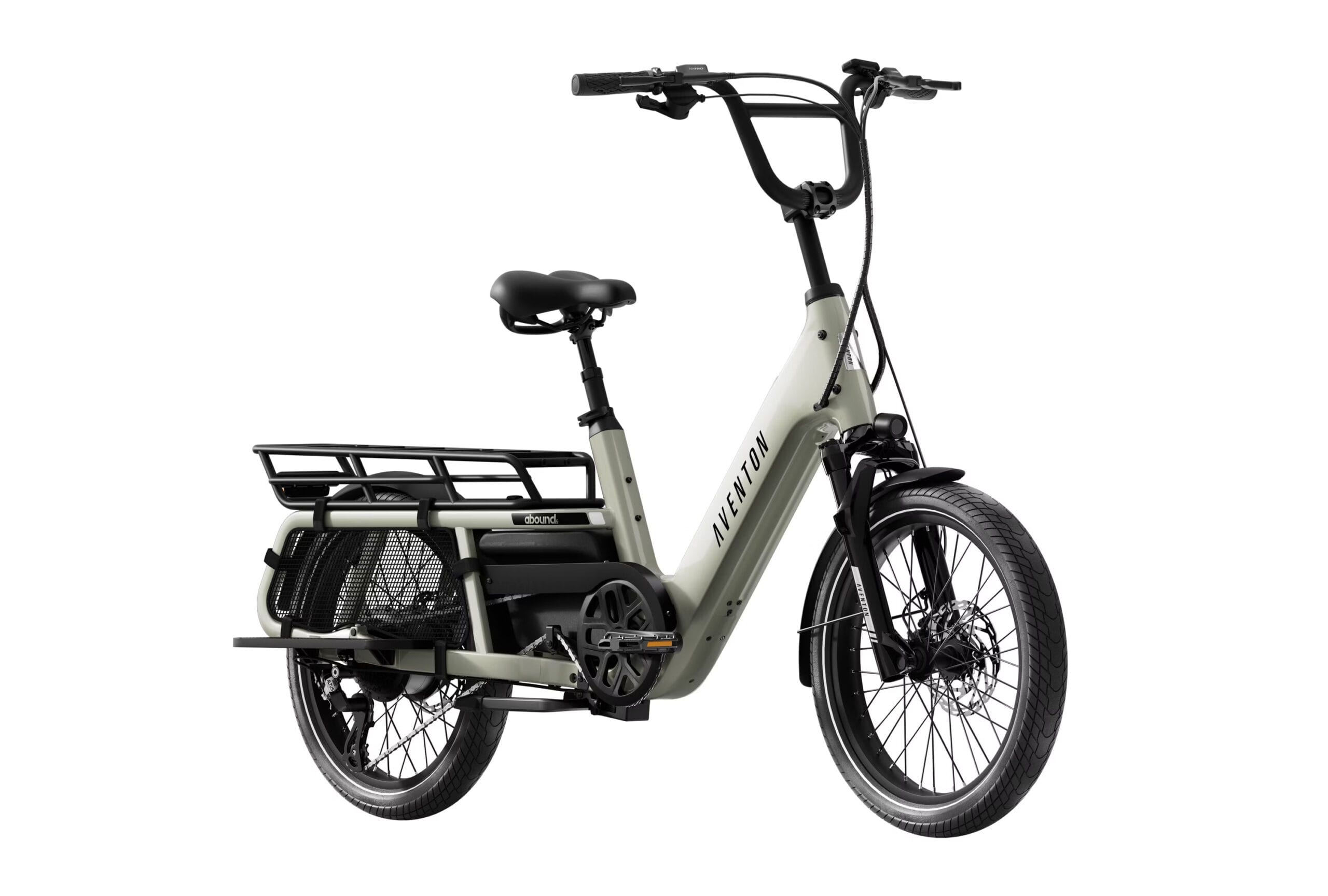
1. Aventon Abound LR: Best Cargo Ebike for Heavy Riders
If you have ever felt a budget ebike start to “speed wobble” at 20 mph, you know why the Abound LR is our top pick for heavy riders. Most ebikes in this price range use thin-walled aluminum to save weight: a disaster for larger riders. Aventon used a gravity-cast frame for the front triangle, which creates a level of stiffness that keeps the bike tracking straight, even when you are carrying 50 lbs of groceries on the rear rack.
The Heavyweight Reality: Most cargo bikes feel “tail-heavy” because the motor and the cargo are both sitting over the rear axle. The Abound LR fights this with 3-inch wide tires and a double-sided torque sensor. This sensor doesn’t just wait for the pedals to spin; it measures the actual pressure of your foot. It ensures that when you push down to start on a hill, the 80Nm of torque arrives in a smooth wave rather than a violent jerk that could snap a chain.
- The Vital Stats: ~$1,999 | 440 lb Payload | 750W Hub (80 Nm) | 733Wh Battery.
- What We Love: The frame rigidity is exceptional. There is zero “flex” when you stand up to pedal, and the 20-inch wheels keep your center of gravity so low that the bike feels light on its feet.
- The Trade-Off: At 88 lbs, this is a lot of bike to move if the battery dies. You will also need a heavy-duty, motorcycle-style hitch rack if you plan on transporting it by car.
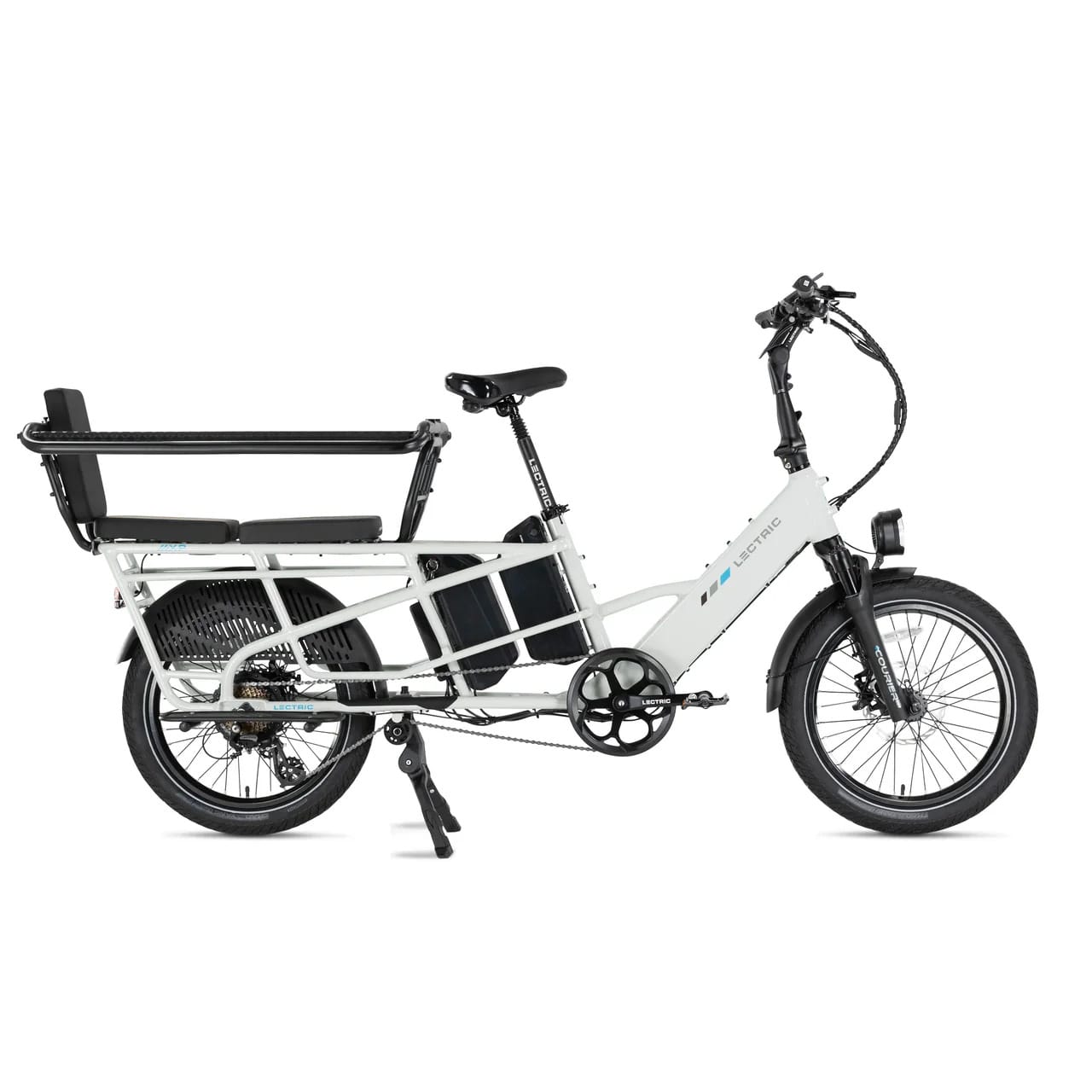
2. Lectric XPedition 2.0: Best Value High-Payload Ebike
Lectric has basically cornered the market for riders who want maximum payload without the premium price tag, especially heavy riders who need real hauling capacity. The XPedition 2.0 is built for one thing: pulling weight. Its motor peaks at a staggering 1,310W, which is enough raw force to ignore the fact that you could be hauling a 450 lb total load.
The Heavyweight Reality: The “secret sauce” here is the PWR+ programming. Heavier riders often find that standard torque sensors can feel a bit “weak” if they aren’t in the mood to pedal like a pro athlete. Lectric’s system strikes a balance: it rewards your effort with more wattage, but it still provides a solid 400W of help even with a light pedal stroke. It is the perfect setup for someone who wants the exercise of pedaling but needs the motor to do the “heavy lifting” on the inclines.
- The Vital Stats: Starts at ~$1,399 | 450 lb Payload | 750W Hub (1,310W Peak) | Up to 1,680Wh.
- What We Love: The payload rating is the highest in this guide, and the dual-battery option is a must-have. Heavier riders consume more watt-hours per mile, and having 1,680Wh of capacity means you can plan a 50-mile trip with confidence.
- The Trade-Off: The ride feel is noticeably “stiffer” than the Aventon. Without the cast-frame tech, you might feel more road vibration through the handlebars on rougher streets.
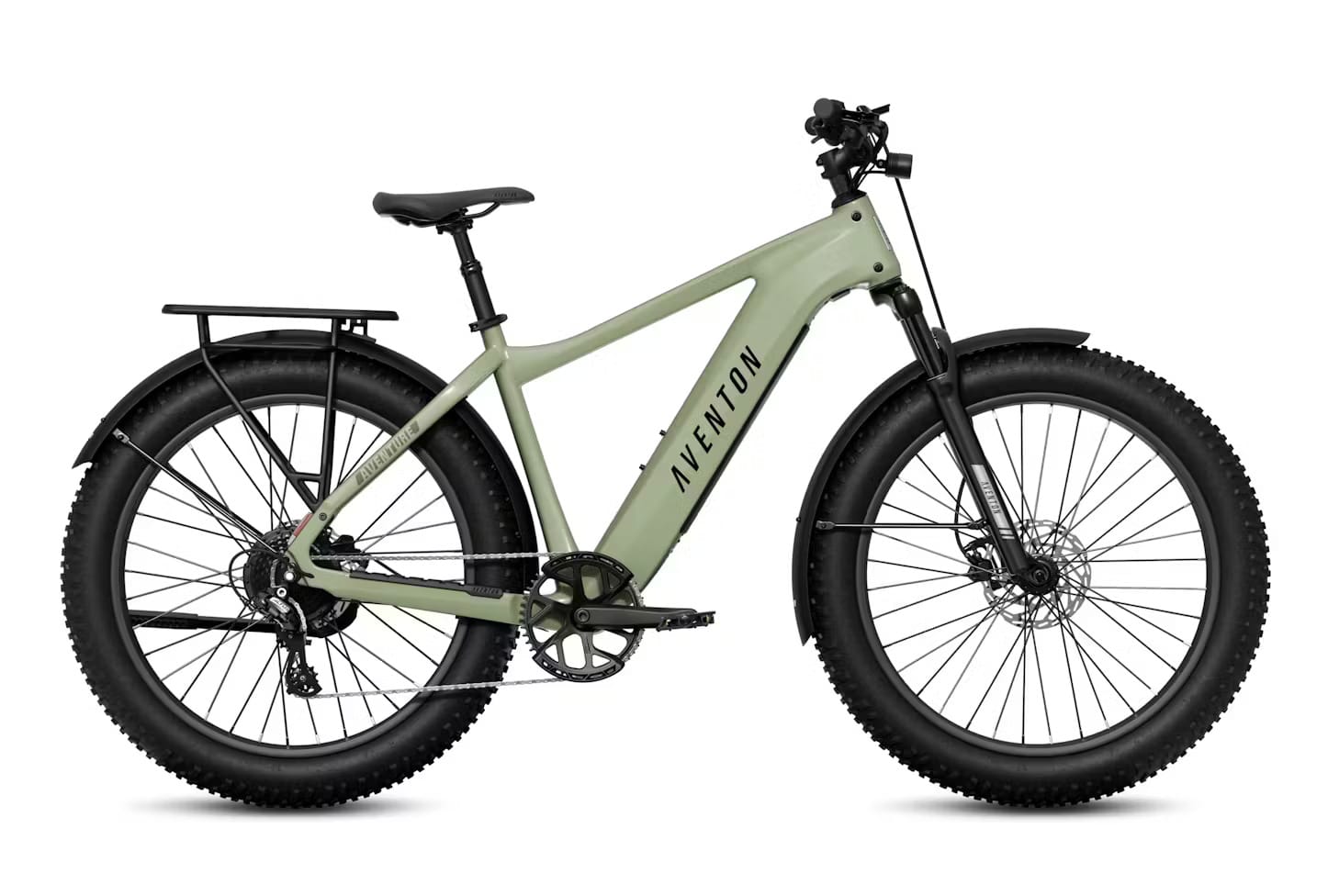
3. Aventon Aventure 3: Best Fat Tire Ebike for Heavy Riders
Not everyone wants a “long-tail” cargo bike that looks like a tiny limousine. The Aventure 3 offers a 400 lb payload in a traditional fat-tire frame. It is the choice for the rider who wants to commute on pavement during the week but hit a gravel trail on Saturday without the bike feeling out of its element.
The Heavyweight Reality: When you weigh 250+ lbs, a standard 2-inch tire has to be pumped up so hard that you feel every pebble in your spine. The Aventure’s 4-inch tires allow you to run at a lower pressure, using the massive air volume as a primary suspension system. This protects the rims and spokes from the “death by a thousand potholes” that usually kills commuter wheels. It also features the new ACU Tech, which lets you tune the pedal assist levels via an app to match your specific strength level.
- The Vital Stats: ~$1,999 | 400 lb Payload | 750W Hub (1,188W Peak) | 733Wh Battery.
- What We Love: Those 26″ x 4.0″ tires provide a “float” factor that is incredibly comfortable for larger riders. Plus, the integrated turn signals and 180mm hydraulic brakes make this one of the safest-feeling bikes in traffic.
- The Trade-Off: This bike has a massive physical footprint. If you live in a small apartment or have to navigate a tight elevator, the Aventure 3 is going to be a struggle to store.
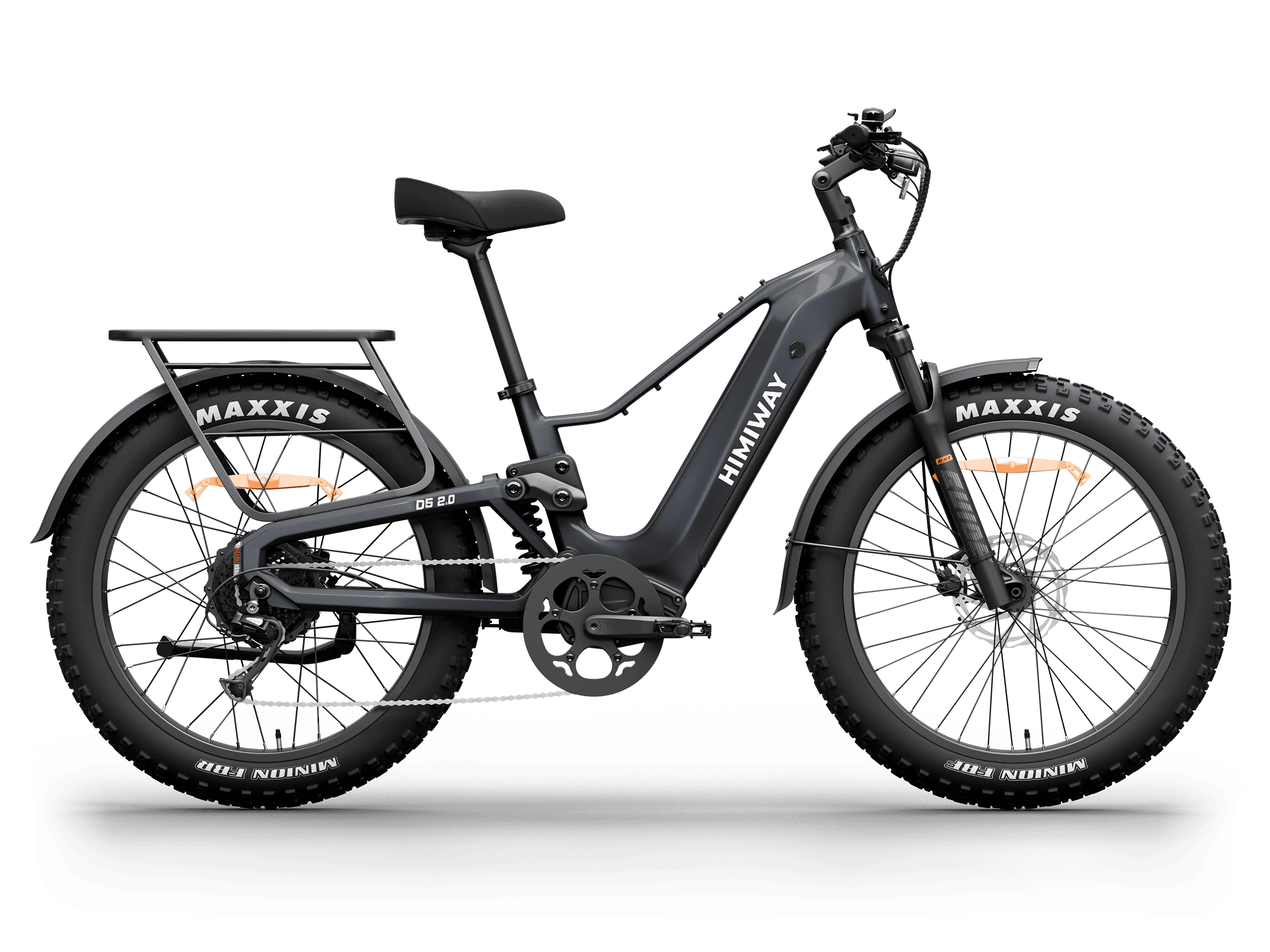
4. Himiway D5 2.0: Best Full Suspension Ebike for Heavy RidersÂ
Ride harshness is the biggest enemy of the heavier cyclist. If a bike is rigid, every bump is a direct hit to your lower back. The Himiway D5 2.0 solves this by offering a full-suspension setup (front fork and rear shock) that is rated to handle a 400 lb total load.
The Heavyweight Reality: This bike uses a massive 203mm front brake rotor. Most ebikes use 180mm. That extra surface area is vital for a heavier rider because it dissipates heat faster and provides significantly more “bite” when you need to stop 350 lbs of momentum in a hurry. It also comes with a memory foam saddle that is 260mm wide: finally, a seat designed for actual human sit-bones rather than Lance Armstrong’s frame.
- The Vital Stats: ~$1,999 | 400 lb Payload | 750W Hub (90 Nm) | 720Wh Battery.
- What We Love: The combination of front and rear suspension makes this the most comfortable ride on the list. It also features a high-torque motor (90 Nm) that is specifically tuned for low-end grunt rather than top-end speed.
- The Trade-Off: At 92 lbs, this is the heaviest bike in our guide. It is built like a tank, but it handles like one too: do not expect “nimble” steering in tight bike lanes.
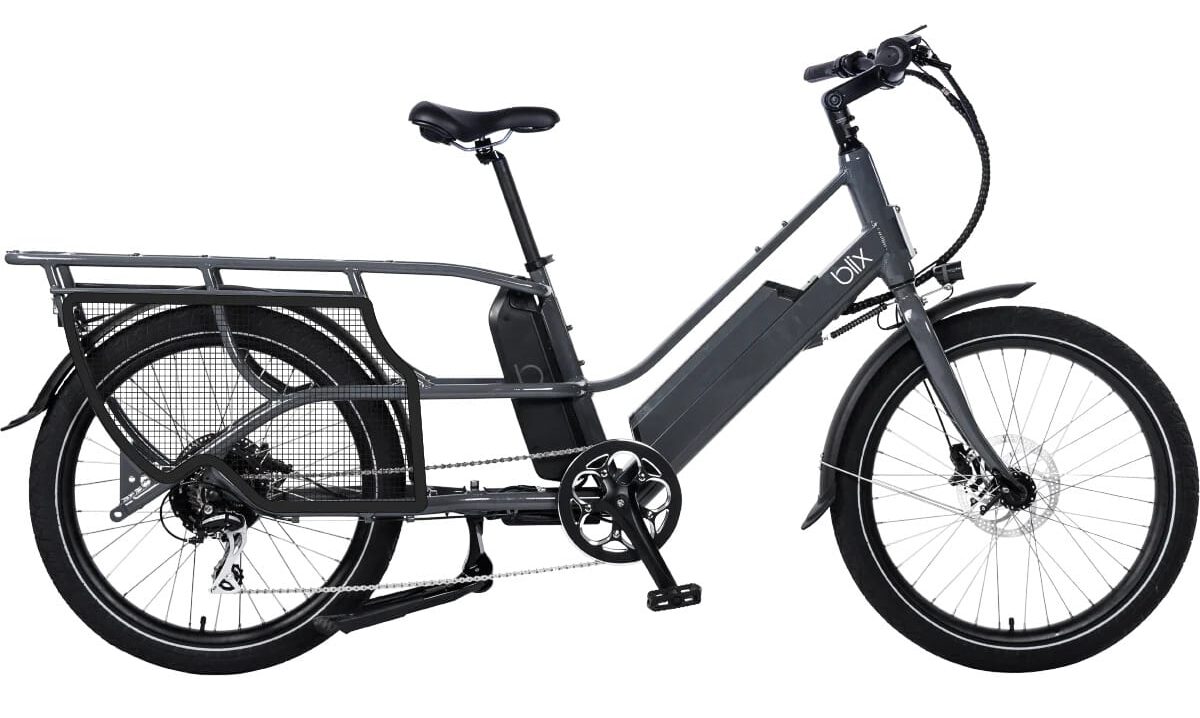
5. Blix Packa Genie: Best Mid-Size Cargo Ebike for Heavy Riders
The Packa Genie sits in the “sweet spot” of cargo design. It uses 24-inch wheels, which are larger and more stable than the 20-inch wheels on the Lectric, but lower and easier to manage than the 26-inch wheels on the Aventure. It is a “mid-size” winner that provides a very natural riding height for taller or heavier riders.
The Heavyweight Reality: The rear rack on the Blix is not just “attached”; it is a structural extension of the 6061 aluminum frame. This is a critical detail. Bolt-on racks can rattle or shear under the weight of a heavy passenger, but the Packa Genie’s integrated design feels like a single solid unit. It also features a dual-battery system that mounts one battery behind the seat tube, keeping that extra weight centered and low where it won’t affect your balance.
- The Vital Stats: ~$2,099 | 400 lb Payload | 750W Hub | Up to 1,344Wh Battery.
- What We Love: The 24-inch wheels offer the perfect balance of stability and low center of gravity. The step-through frame also has one of the lowest standover heights in the industry (19.4″), making it effortless to hop on and off at red lights.
- The Trade-Off: It uses a cadence sensor rather than a torque sensor, which can feel a bit more “on/off” in terms of power delivery. It lacks the refined, natural pedaling feel of the Aventon models.
High Weight Capacity Ebike Comparison Table (2026)
For quick side‑by‑side shopping, this high weight capacity ebike comparison table shows payload limits, motor torque, battery capacity, and ideal use case for each model in 2026.
|
Model |
Payload Limit |
Motor / Torque |
Battery Capacity |
Best For |
|
Aventon Abound LR |
440 lbs |
750W / 80 Nm |
733Wh |
Premium Stability |
|
Lectric XPedition 2.0 |
450 lbs |
750W / 85 Nm |
Up to 1,680Wh |
Maximum Value |
|
Aventon Aventure 3 |
400 lbs |
750W / 80 Nm |
733Wh |
All-Terrain Use |
|
Himiway D5 2.0 |
400 lbs |
750W / 90 Nm |
720Wh |
Full Suspension Comfort |
|
Blix Packa Genie |
400 lbs |
750W / ~75 Nm |
Up to 1,344Wh |
Classic Hauling |
Tips for Riding and Maintaining an Ebike at Higher Rider Weights
If you are looking for the best ebikes for heavier riders, how you ride is just as important as what you ride. Here is how to keep your bike in peak condition:
- Leave a “Payload Buffer”: You never want to operate right at the maximum weight limit. If you weigh 300 lbs and carry 50 lbs of gear, look for a bike rated for at least 400 lbs. This prevents the frame and motor from being “stressed” on every single ride.
- The “Ping” Test for Spokes: Every few weeks, take a screwdriver and lightly tap each spoke on your rear wheel. They should all make a clear, high-pitched “ping.” If one sounds dull or feels loose, get it tightened. A single loose spoke will quickly lead to a broken wheel under heavy loads.
- Monitor Your Brake Pads: Heavy loads generate more heat and friction, which wears through brake pads faster. Check your pad thickness every 200 miles. If they look thin, swap them out before they start damaging your rotors.
- Shift Early and Often: If you have a multi-speed bike, do not rely solely on the motor to pull you up a hill. Shift into a lower gear before you start climbing. This reduces the strain on the motor and helps prevent it from overheating.
Which Ebike Is Best for Your Weight, Riding Style, and Cargo Needs?
If you want the most refined, natural-feeling ride with zero frame flex, the Aventon Abound LR is the gold standard for 2026. The torque sensor makes a massive difference in how the bike handles under pressure.
If your primary concern is value and raw hauling capacity, the Lectric XPedition 2.0 is the practical choice. It offers the highest weight rating and the best range flexibility for the money.
For those who prioritize comfort over cargo, the Himiway D5 2.0 provides the suspension needed to make long rides enjoyable, while the Aventure 3 is the perfect middle ground for riders who want off-road capability in a high-capacity frame.
Now go find a pothole and show it some disrespect: you finally have the hardware to handle it. See you in the bike lane!
FAQ About Ebikes for Heavy Riders (Including 300 lb and 400 lb Riders)
What is a good weight capacity for an ebike for a heavy rider?
A good target is an ebike with at least 330 lbs of total payload capacity, and many heavier riders are better served by fat tire or cargo ebikes rated for 350 to 500+ lbs. If you are carrying gear, groceries, or a child seat, you should choose a bike with extra capacity rather than riding close to the posted limit.
Can a 300 lb person ride an ebike safely?
Yes, a 300 lb rider can safely ride an ebike if the bike’s total payload rating is high enough for the rider plus accessories and cargo. In practice, that usually means looking beyond standard commuter models and focusing on high-payload cargo bikes, fat tire ebikes, or other heavy-duty frames.
What is the best ebike type for a 300 lb or 400 lb rider?
For many riders in this range, fat tire ebikes and cargo ebikes are the best fit because they typically offer higher payload ratings, stronger wheels, and more stable handling under load. Cargo bikes are often best for maximum payload, while fat tire models are a strong option for comfort and all-terrain stability.
How much motor torque do heavy riders need on an ebike?
Heavy riders should pay close attention to torque, especially if they ride hills or start from stops with cargo. Current heavy-rider buying guides consistently emphasize that higher torque improves low-speed pulling power and hill performance more than wattage claims alone.
Do heavier riders get less battery range on an ebike?
Yes, heavier riders usually see lower real-world range because the motor has to work harder under a higher total load. That is why battery size matters more for this audience, especially on hilly routes or when carrying cargo.
Are cargo ebikes better than commuter ebikes for heavy riders?
Often yes, because cargo ebikes are commonly built around higher payload limits and stronger frame designs than standard commuter bikes. If your priority is weight capacity, hauling ability, or long-term durability, cargo ebikes usually make more sense than lightweight commuters.
Are fat tire ebikes good for heavy riders?
Yes, fat tire ebikes are often recommended for heavy riders because they tend to support higher loads and offer more stability and comfort on rough pavement, gravel, sand, or snow. Their wider tires can also help smooth out harsh road feel compared with narrower commuter tires.
Should heavy riders avoid ebikes with a payload limit close to their body weight?
Yes, because payload capacity includes the rider, the bike’s accessories, and any cargo you carry. Several current guides recommend leaving a capacity buffer instead of buying a bike that barely covers your body weight on paper.
What bike features matter most for heavier riders besides weight limit?
The most important features are a strong frame, durable wheels, hydraulic disc brakes, and a motor with enough torque for hills and stop-and-go riding. Heavy-rider guides also repeatedly stress the value of stable geometry and robust components over cosmetic extras.
Are hydraulic brakes worth it for heavy riders?
Yes, hydraulic disc brakes are usually the better choice because heavier combined loads demand more stopping power and better heat management. Current buyer guides for heavier riders consistently treat strong braking performance as a core safety requirement, not an optional upgrade.