If you own an original Juiced Camp Scrambler, the relaunched Scrambler probably looks familiar enough to catch your attention. The long seat, compact wheels, and motorcycle-inspired styling remain central to its appeal. But underneath that familiar silhouette, several important things have changed.
The new Scrambler offers a larger standard battery than the 13Ah original we reviewed, updated equipment, and a choice between hardtail and full-suspension configurations. It also gives up the original’s seven-speed drivetrain. Perhaps most consequentially, the revived Juiced brand does not provide a replacement-parts path for legacy bikes.
For existing owners, that creates two separate questions: Is the new Scrambler a worthwhile replacement, and is there a reason to stop riding an original that still meets your needs? Those questions do not necessarily have the same answer.
This comparison focuses on the original 52V/13Ah Camp Scrambler featured in our 2021 review and the current single-battery Scrambler HT, with a separate look at the Scrambler FS. Our riding observations apply to the original; the new-bike assessment draws on published specifications and independent testing.
Quick Verdict
For a satisfied Camp Scrambler owner: Keep riding your existing bike if it remains in good condition, meets your needs, and has a workable maintenance plan. A newer model alone does not justify replacing it.
For an owner facing battery or proprietary-parts problems: The new Scrambler deserves consideration as a complete replacement. However, buying one will not solve parts compatibility problems on your old bike.
For someone shopping for a Scrambler today: We would steer most buyers toward the current lineup rather than a used legacy model. The old bike’s purchase price needs to be weighed against the difficulty of sourcing model-specific replacements.
For riders choosing between HT and FS: The FS deserves attention for its rear suspension and torque-sensing option, but its lower payload limit can rule it out before comfort or price enters the discussion.
Juiced Scrambler Comparison at a Glance
Feature | Original Camp Scrambler reviewed | New Scrambler HT | New Scrambler FS |
Purchase status | Legacy model; not in current lineup | Listed in stock | Listed in stock |
Displayed price* | No current manufacturer price | $1,699 | $1,899 |
Motor | 750W Bafang rear hub | 750W nominal rear hub | 750W nominal rear hub |
Battery | 52V, 13Ah | 52V, 19.2Ah | 52V, 19.2Ah |
Calculated nominal energy | 676Wh | Approximately 998Wh | Approximately 998Wh |
Drivetrain | Shimano seven-speed | Single-speed | Single-speed |
Pedal sensing | Cadence | Cadence | Switchable torque/cadence |
Suspension | Front suspension | Front suspension | Front and rear suspension |
Published bike weight | 71.5 lb in our review** | 83 lb | 85 lb |
Published carrying limit | 275 lb in legacy manual | 300 lb payload | 225 lb payload |
Prices checked October 25, 2026, before tax. Current listings include promotional accessory bundles; displayed package savings should not be treated as a verified historical bike-only discount.
The legacy manufacturer manual lists 75.5 lb with the battery, conflicting with our review’s figure. These published weights are not measurements from a matched comparison. Specifications come from our original review, the legacy manual, and current Juiced listings.
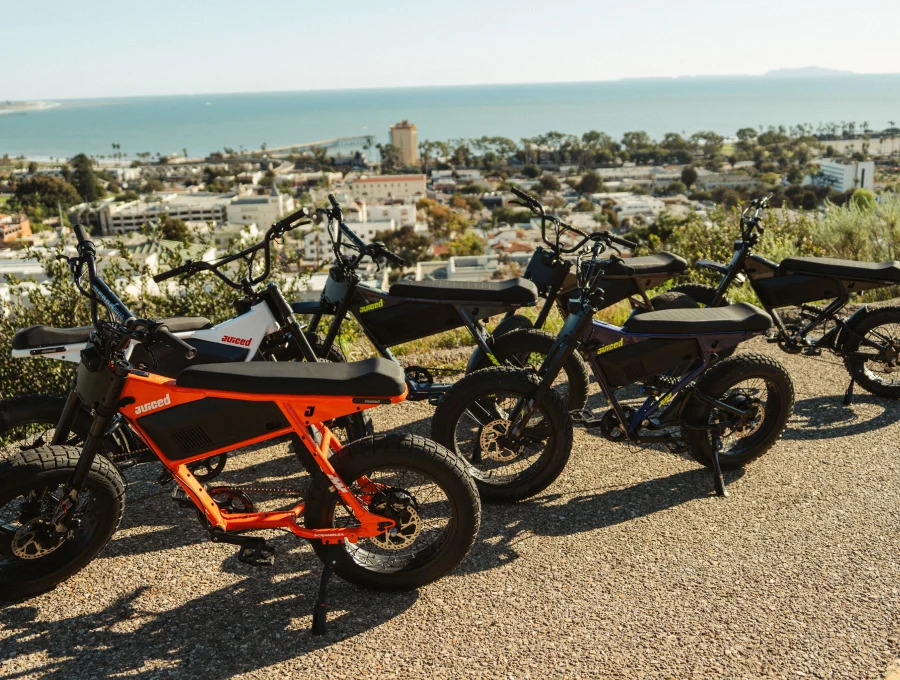
The Biggest Ownership Change Is Legacy Support
Before getting into batteries or suspension, existing owners should understand what the Juiced relaunch means for their bike.
According to Juiced’s FAQ, Lectric purchased the Juiced brand and intellectual-property rights without acquiring its physical inventory or assuming the former business’s liabilities. Juiced also states that it lacks access to parts for previous models and that its new products are incompatible with legacy bikes.
That makes the new Scrambler a replacement option rather than an upgrade platform for your original. You should not buy a new battery, charger, or accessory expecting it to transfer between generations.
It also explains our reluctance to recommend a used Camp Scrambler to the average buyer. A low asking price can lose its appeal quickly if a necessary proprietary component becomes difficult to obtain.
That does not mean every legacy bike is unrepairable. Routine bicycle maintenance and model-specific electrical repairs are different problems. Before spending heavily on an older Scrambler, have a qualified shop assess the particular issue and confirm that suitable parts are available.
A Larger Battery—With an Important Configuration Caveat
The reviewed Camp Scrambler’s battery works out to 676Wh of nominal energy. The new single-battery pack calculates to approximately 998Wh: about 48% more nominal capacity.
That comparison applies specifically to the original 13Ah configuration. The legacy manual also documents a 19.2Ah battery option, so owners of that version should not expect the same capacity increase. Safety Guidelines.
More stored energy gives the new bike greater potential riding range, but it does not establish a proportional mileage gain. Speed, terrain, load, tires, and assistance use all affect consumption. An older battery’s present condition adds another variable.
For independent context, Electric Bike Report recorded 43.4 miles using throttle power on the Scrambler FS. Its HT review explicitly explains that only the FS underwent that range test because the publication shared one battery between the bikes. The result should therefore remain an FS measurement, rather than being presented as separately tested HT range. Electric Bike Report.
For an owner deciding whether to replace a bike, the useful question is whether the current battery reliably covers the routes you actually ride. If it does, extra capacity may be convenient without being worth the cost of replacement.
Seven Gears Become One
One change deserves particular attention from owners who enjoy pedaling: both new Scramblers use a single-speed drivetrain, replacing the original’s selectable gears. Juiced Bikes
Removing shifting simplifies the controls and eliminates derailleur adjustment. The tradeoff is losing the ability to choose a lower mechanical ratio for starts and climbs or a higher one for faster riding.
Our original Camp Scrambler review already described compromises in pedaling comfort, particularly limited leg extension and the effect of the wide seat. Those observations belong to the original bike; they do not establish how the replacement fits. Top5ebikes
Independent testing offers useful context here. Electric Bike Report found the new HT difficult to pedal without assistance, although its reviewer considered the geometry more accommodating than some other bikes in this style. Electric Bike Report.
If you mostly use the throttle, losing gears may barely affect your riding. If you regularly contribute substantial pedal effort—or want an easier ride home with a depleted battery—the drivetrain change is a meaningful compromise.
The HT Keeps Cadence Sensing; the FS Adds Another Option
Do not assume that buying the new hardtail brings torque sensing. The HT remains cadence-sensing, while the FS offers a choice between torque and cadence sensing. Juiced Bikes
Cadence sensing responds to crank rotation. Torque sensing uses pedal pressure to help govern assistance, which can make your effort a more direct part of controlling motor output.
For an existing owner who wants more involvement while pedaling, that makes the FS worth examining. It still does not restore selectable gears or guarantee an ideal fit. Sensing, gearing, and riding position each influence the experience.
Likewise, owners who already enjoy easy cadence-based assistance should not treat the HT’s familiar sensing approach as a drawback simply because another option exists.
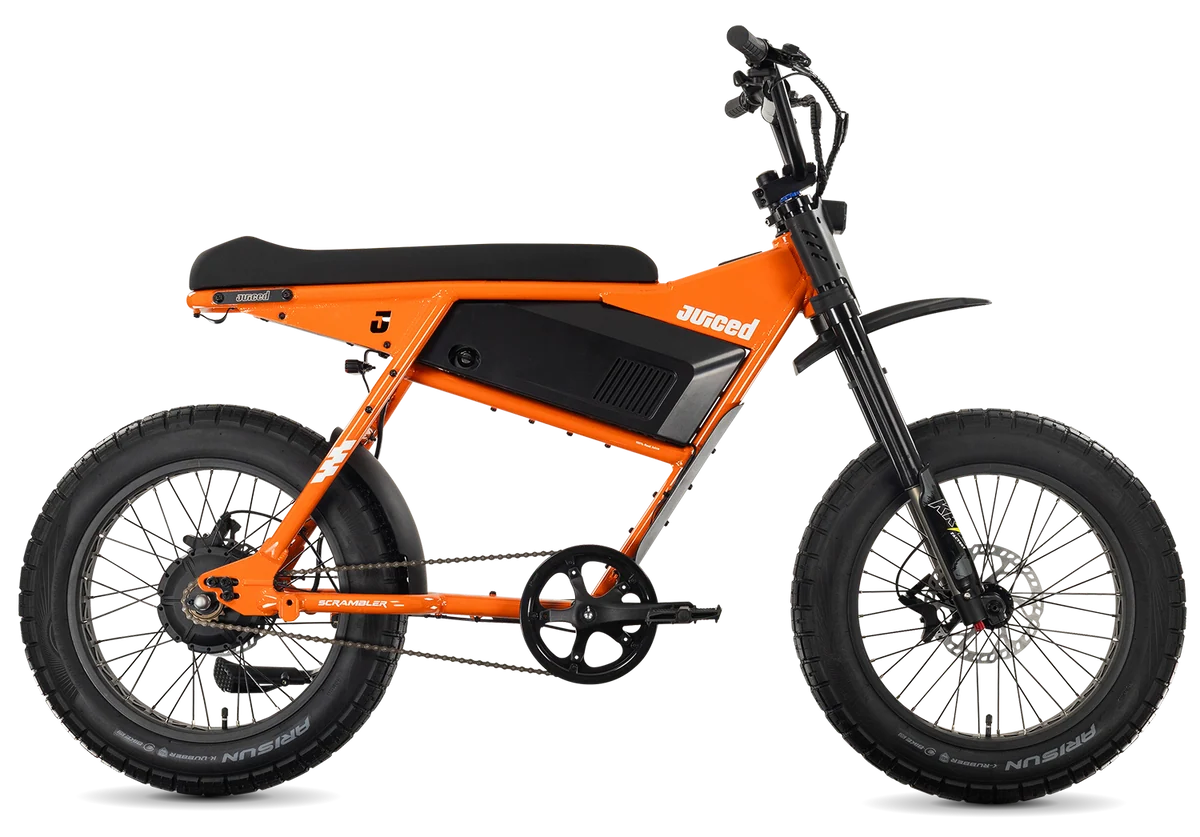
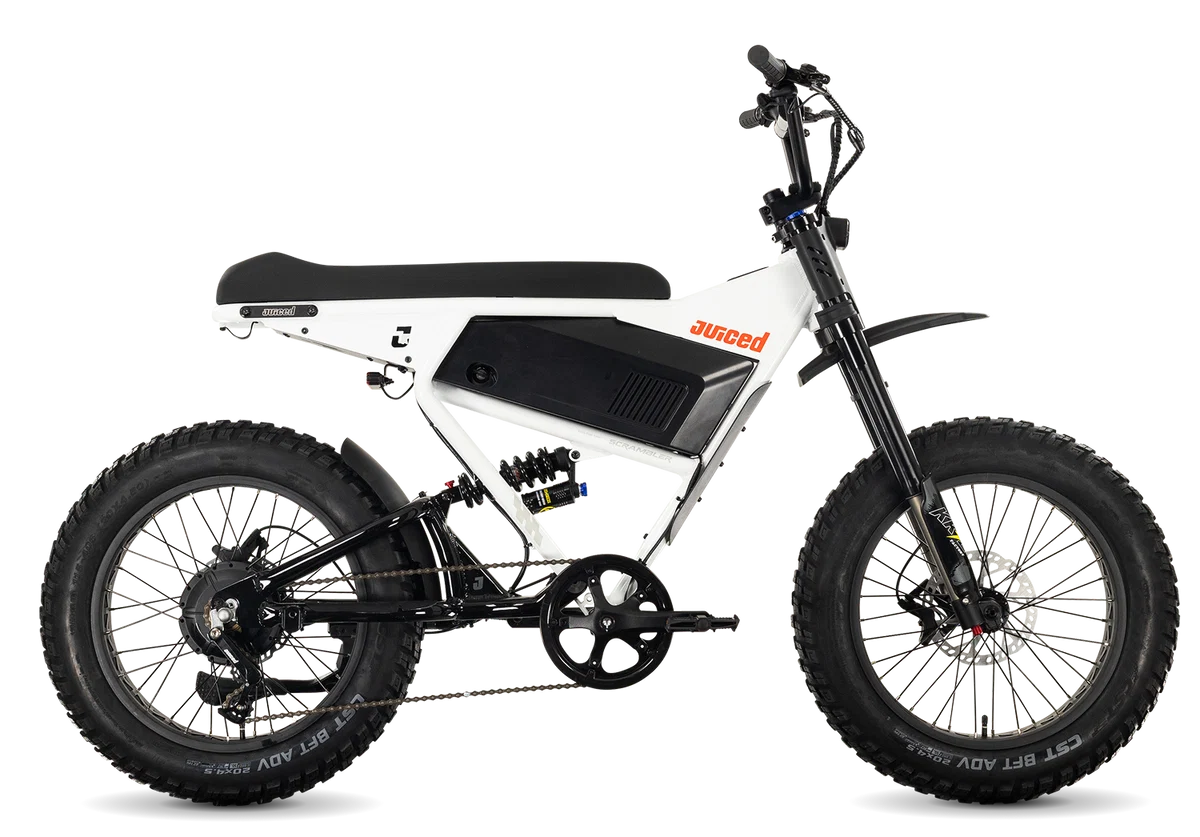
Scrambler HT vs. FS: Comfort Comes With a Capacity Tradeoff
The HT follows the original’s basic front-suspension layout. The FS adds a rear shock, creating another way to cushion impacts beneath the rider.
However, Juiced lists a 300 lb payload for the HT and 225 lb for the FS. That 75 lb difference is more important than a small price premium for anyone approaching the FS limit. Juiced Bikes
Include the rider and carried belongings when evaluating payload. A higher limit also does not, by itself, establish approval for a passenger arrangement.
For rough pavement, rear suspension is a compelling reason to investigate the FS. It also adds another component requiring setup and maintenance. For smoother routes, the HT may provide the simpler ownership experience.
Neither version solves the problem of carrying a substantial ebike upstairs. Electric Bike Report measured approximately 84.9 lb for the HT and 87.7 lb for the FS, above their advertised figures. Consider where you will store, charge, and transport the bike before treating either as an everyday replacement. Electric Bike Report.
Updated Equipment Does Not Establish Every Performance Gain
The current Scrambler adds integrated rear lighting, a brake light, and turn signals. Juiced also specifies four-piston hydraulic brakes. These are meaningful equipment changes, but the original already had hydraulic disc brakes; this is not a transition from mechanical to hydraulic braking. Juiced Bikes
Without comparable stopping tests across generations, we would not assign a braking-distance improvement.
The same caution applies to motor marketing. Comparing the new motor’s advertised peak output with the old motor’s 750W rating would mix different definitions of power. The published figures alone cannot tell an owner how much quicker the replacement will accelerate or climb.
There are also everyday usability details to consider. Electric Bike Report criticized the HT’s display readability and found reinstalling its removable battery awkward. Those observations matter if you frequently glance at riding data or remove the pack for charging. Electric Bike Report.
Warranty and Certification: Read the Specific Terms
Juiced states that the current Scrambler’s electrical system is certified to UL 2849 and its battery to UL 2271. These are manufacturer-published certification claims covering different aspects of the electrical system and battery; they should not be used to declare every historical Juiced battery unsafe. Juiced Bikes
The current manufacturer warranty provides three years for covered parts, with one year for the original battery, subject to its terms. The three-year headline therefore does not mean three-year battery coverage. juicedbikes.com
For a new purchase, that provides a defined warranty relationship. It does not eliminate the need to check local service options or guarantee future parts availability indefinitely.
Conclusion
The relaunched Juiced Scrambler gives original Camp Scrambler owners a credible replacement to consider, especially when an aging battery or unavailable proprietary part makes continued ownership difficult. But replacement makes the most sense when it solves a specific problem.
Keep your original if you enjoy it, its condition remains sound, and maintenance is manageable. Its seven-speed drivetrain may be something you prefer to preserve.
Consider the HT if you want to stay with the Scrambler format and prioritize purchase cost, payload, and a simpler suspension layout. Accept the additional weight and single-speed drivetrain as part of that decision.
Consider the FS if rear suspension and torque sensing address shortcomings in your current ride—and you comfortably meet its lower payload limit.
For someone entering the category today, we would generally choose the current lineup over a used legacy Camp Scrambler. For a satisfied existing owner, the better decision may still be to enjoy the bike you already have.
FAQ
Will a new Scrambler battery work on my original Camp Scrambler?
Do not assume compatibility. Juiced states that its new products are incompatible with legacy bikes. Confirm any replacement against your exact model rather than relying on the shared brand name.
Does the new Scrambler HT have torque sensing?
No. The HT uses cadence sensing; the FS offers switchable torque or cadence sensing.
Should I replace my original Scrambler because the brand changed ownership?
Ownership changes alone are not a reason to replace a functioning bike. The practical issue is whether its condition, maintenance needs, and access to suitable replacement parts still support continued use.
Is the Scrambler FS automatically the better upgrade?
No. Its extra features need to match your needs. Check its payload limit first, then consider whether rear suspension and torque sensing justify the added cost and maintenance.