

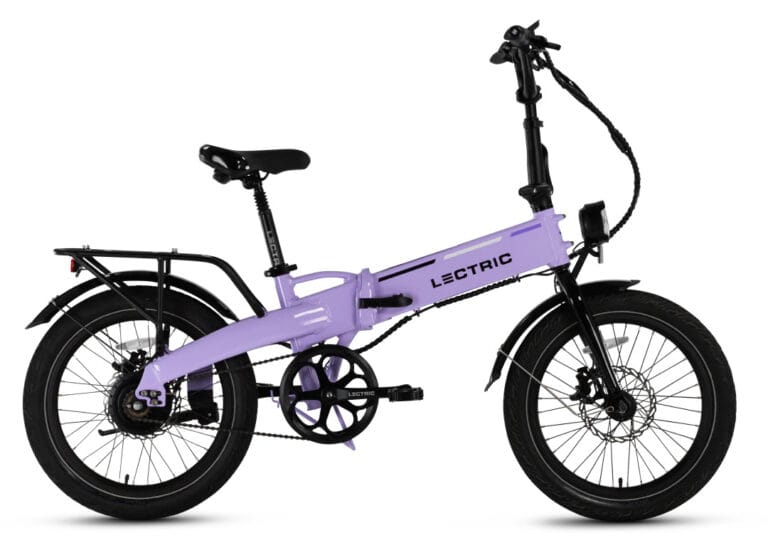
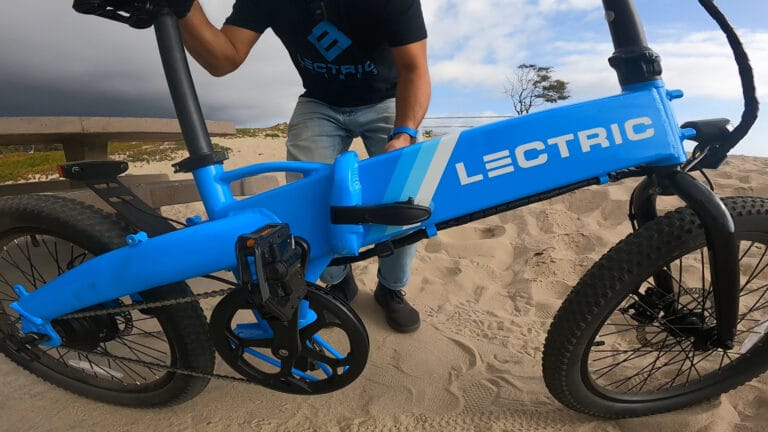
The Lectric XP Lite has always been the “no excuses” e-bike. It wasn’t built to win drag races or haul a week’s worth of lumber; it was built to be light, cheap, and small enough to shove into the trunk of a Honda Civic without a secondary engineering degree. It was a simple tool for short commutes and RV park cruising.
But the original Lite had its quirks, specifically mechanical brakes that needed constant babysitting and a motor that felt a bit like an “all-or-nothing” switch. With the release of the XP Lite 2.0, Lectric didn’t just throw a fresh coat of paint on the frame. They went after the engineering “pain points” that owners have been talking about on Reddit for years.
If you’re sitting on an original Lite wondering whether it’s time to trade up, or you’re a first-time buyer comparing models, this Lectric XP Lite 2.0 vs XP Lite comparison breaks down what actually changed under the hood.
Quick Differences: XP Lite vs XP Lite 2.0
When comparing the Lectric XP Lite 2.0 vs XP Lite, the biggest upgrades come down to braking power, battery flexibility, and ride refinement. While both bikes share the same lightweight folding design and 300W hub motor platform, the 2.0 focuses on smoother performance and lower maintenance.
Key differences include:
- Hydraulic brakes replace the original mechanical brakes for stronger stopping power
- Optional long-range battery increases potential range to about 80 miles
- PWR programming delivers smoother pedal assist instead of abrupt speed cutoffs
- Optional Gates belt drive reduces drivetrain maintenance
- BMX-style handlebars and slick tires improve handling and stability
1. Motor Upgrade: Stealth M24 and PWR Programming
As said, on the spec sheet, the motor looks identical: a 300W nominal hub motor. But when you dig into the details of the Lectric XP Lite comparison, the real story is in how the motor is tuned. The 2.0 uses Lectric’s Stealth M24 technology, which makes the motor roughly 400% quieter. In the real world, this means you no longer sound like a remote-controlled car whirring down the bike path. It’s a hushed, professional-feeling motor.
The bigger shift is the PWR (Pedal Assist Wattage Regulation) programming, one of the most noticeable XP Lite 2.0 upgrades compared to the original model.
- The Old Way: The original Lite used speed-limited PAS levels. If you were in PAS 1, the motor would shove you to 8 mph and then abruptly cut off, like the motor was constantly toggling between “full power” and “zero help.”
- The 2.0 Way: The 2.0 limits wattage, not speed. In PAS 1, the motor gives you a gentle, consistent nudge (say, 50 watts) regardless of how fast you’re going. It makes the bike feel much more like a “bicycle” and less like a motorized scooter. It’s smoother, more predictable, and much better for navigating tight crowds.
2. Battery Upgrade: Standard vs Long-Range Options
The original XP Lite was a “one-size-fits-all” battery situation (7.8Ah / 375Wh). While that was fine for neighborhood loops, it left a lot to be desired for anyone with a real commute. The Lectric XP Lite 2.0 fixes this by offering two distinct paths:
- The Old Way: You had one battery choice, period. If you wanted more range, you had to buy a second battery and carry it in a backpack like a heavy brick.
- The 2.0 Way: You can choose between the Standard (375Wh) battery, which keeps the bike at a featherweight 41 lbs, or the Long-Range (672Wh) battery. The Long-Range option bumps the weight up by about 8 lbs but effectively doubles your range to a claimed 80 miles, solving one of the biggest limitations for Lectric.
3. Brake Upgrade: Mechanical vs Hydraulic Disc Brakes
If you’ve ever had to adjust mechanical disc brakes every 50 miles just to keep them from squealing or fading, you’ll understand why this is the most important XP Lite 2.0 upgrade.
- The Old Way: The original Lite used 160mm mechanical disc brakes. They worked, but they felt “squishy,” and because they only moved one brake pad against the rotor, they required constant manual adjustments with an Allen wrench to keep them biting.
- The 2.0 Way: The 2.0 moves to 180mm hydraulic disc brakes. These offer ‘one-finger’ stopping power that gives you way more control over how fast you’re slowing down. Because hydraulic systems apply pressure to both sides of the rotor simultaneously and self-adjust as the pads wear down, you won’t be out in the driveway “tightening” your brakes every week. For a bike that hits 20 mph in traffic, this is a non-negotiable safety upgrade.
4. Drivetrain Upgrade: Belt Drive vs Chain
The original Lite was chain-drive only, which is fine until you have to fold it up and put it in your car. One of the more interesting XP Lite 2.0 features is the optional Gates Carbon Drive belt system (found on the JW Black model).
- The Old Way: You had a traditional steel chain. It needed grease, it could rust if you lived near the beach, and it was a liability for your car’s upholstery when the bike was folded.
- The 2.0 Way: The optional belt drive is a “set it and forget it” Holy Grail. It requires zero grease, can last up to 15,000 miles, and is nearly silent. If you’re a “low-maintenance” rider who just wants to hop on and go without checking your chain tension every morning, the $100 upgrade for the belt drive is the best money you’ll ever spend.
5. Handling Improvements: BMX Bars and Street Tires
The original Lite always felt a little “nervous” at top speed. Because the bike has such a short wheelbase and came with narrow, flat bars, the steering could feel twitchy, like it was waiting for any excuse to veer off-course. In this Lectric XP Lite 2.0 vs XP Lite comparison, Lectric’s updated handlebars and tires are designed to make the bike feel noticeably more stable.
- The Old Way: Flat, narrow handlebars and knobby tires meant you felt every bump, and the steering required a lot of micro-corrections at high speeds.
- The 2.0 Way: Lectric swapped the flat bars for BMX-style handlebars, which sit higher and wider. This gives you significantly more leverage and a more upright, stable position. They also moved to 20″ x 2.5″ street slick tires with 3mm Hippo Skin puncture protection. These have lower rolling resistance, making the bike roll smoother and quieter than the original’s more aggressive tread.
Lectric XP Lite vs XP Lite 2.0 Specs Comparison
For riders researching lightweight folding commuters, the Lectric XP Lite 2.0 vs XP Lite comparison table helps clarify which model fits different riding needs.
| Â | Original XP Lite | XP Lite 2.0 | Why it Matters |
| Motor | 300 W (720 W peak) | 300 W (819W Peak) | Higher peak power = better acceleration and hill climbing |
| Brakes | 160mm Mechanical | 180mm Hydraulic | Stronger stopping; zero maintenance. |
| Battery Options | 375Wh Only | 375Wh or 672Wh | Potential to double your distance. |
| Drivetrain | Chain Only | Chain or Gates Belt | Belt is silent and grease-free. |
| Handlebars | Flat/Narrow | BMX-Style | More stability and upright comfort. |
| Programming | Speed-based PAS | PWR (Wattage-based) | Much smoother, natural assist. |
| Display | Basic Greyscale | Full-Color w/ USB Port | Charges your phone while riding. |
| Tire size | 20×2.04″ or 2.6″ Chao Yang tires | 20×2.5” slick tires | Wider tires improve comfort and grip; slicks roll faster on pavement. |
| Bike weight | 46 lb | 49lbs | Slightly heavier, but often due to upgraded components and larger battery. |
Should You Upgrade to the XP Lite 2.0?
Deciding between keeping your current ride or jumping to the 2.0 comes down to how much you value your time away from a toolkit. For riders comparing the Lectric XP Lite 2.0 vs XP Lite, the biggest improvements come down to braking performance, battery flexibility, and reduced maintenance.
Stick with your Original XP Lite if:Â
Your rides are short, flat, and your mechanical brakes are still biting well. If the bike is just a “last-mile” tool for getting you from the train to the office, the original Lite is still an honest e-bike that does exactly what it says on the box. You’ll save some money and skip the extra 8 lbs that the long-range battery adds to the frame.
Buy (or Upgrade to) the XP Lite 2.0 if:
- You’re tired of maintenance: The hydraulic brakes and optional belt drive are the biggest “pros” here, you’ll spend 90% less time fiddling with grease and cable tension. Just keep in mind that the belt drive is an extra $100 and the long-range battery will add about $200 to your upfront cost.
- You have range anxiety: The 14Ah battery option turns this from a neighborhood cruiser into a legitimate, long-distance commuter. It makes the bike heavier to lift into a trunk, but the 80-mile potential is a massive win for longer days.
- You want a “refined” ride: The combination of the stealth motor, PWR programming, and BMX bars makes the 2.0 feel like a much more stable machine.
For new buyers, it’s a no-brainer. The Lectric XP Lite 2.0 fixes the original’s biggest shortcomings while keeping the price in “sensible” territory. It remains the benchmark for what a lightweight folding e-bike should be.
See you out there and happy riding!
FAQ: Lectric XP Lite 2.0 vs XP Lite
What changed between the Lectric XP Lite and XP Lite 2.0?
The biggest XP Lite 2.0 upgrades include hydraulic disc brakes, improved motor tuning with PWR programming, optional long-range battery options, and the availability of a Gates belt drive. In this Lectric XP Lite comparison, the 2.0 model also adds BMX-style handlebars and street tires that improve stability and comfort compared to the original XP Lite.
Is the Lectric XP Lite 2.0 worth upgrading to?
For many riders, the Lectric XP Lite 2.0 vs XP Lite decision comes down to maintenance and ride quality. The newer model introduces hydraulic brakes, smoother pedal assist programming, and optional battery upgrades that significantly extend range. These XP Lite 2.0 features make the newer model feel more refined for everyday riding and commuting.
Does the XP Lite 2.0 have hydraulic brakes?
Yes. One of the biggest XP Lite 2.0 upgrades is the move to 180mm hydraulic disc brakes. The original XP Lite used mechanical disc brakes, which required more frequent adjustments and offered less consistent stopping power.
What is the range of the Lectric XP Lite 2.0?
The XP Lite 2.0 specs include two battery options. The standard 375Wh battery provides a similar range to the original XP Lite, while the larger 672Wh long-range battery can reach up to about 80 miles in ideal riding conditions.
Is the motor different on the XP Lite 2.0?
Both bikes use a 300W nominal rear hub motor, but the 2.0 includes updated motor tuning and Lectric’s Stealth M24 technology. In many Lectric XP Lite 2.0 reviews, riders note that the updated PWR programming makes pedal assist smoother and significantly quieter than the original XP Lite.
Does the Lectric XP Lite 2.0 come with a belt drive?
Yes. Certain versions of the XP Lite 2.0 offer an optional Gates Carbon Drive belt system. This is one of the newer XP Lite 2.0 features, allowing riders to enjoy a drivetrain that requires no lubrication and significantly less maintenance compared to a traditional chain.
How heavy is the Lectric XP Lite 2.0?
The weight depends on the battery option. The standard configuration weighs about 41 pounds, which keeps it close to the original XP Lite. Models equipped with the larger battery are slightly heavier, but the additional range is a major advantage noted in many Lectric XP Lite comparisons.
Which is better for commuting: XP Lite or XP Lite 2.0?
For most riders, the Lectric XP Lite 2.0 vs XP Lite comparison favors the newer model for commuting. Hydraulic brakes, smoother pedal assist programming, and optional extended battery range make the XP Lite 2.0 more practical for daily transportation.

Lectric XP Lite 2.0 vs XP Lite: What Actually Changed?
The Lectric XP Lite has always been the “no excuses” e-bike. It wasn’t built to win drag races or haul a week’s worth of lumber; it was built to be light, cheap, and small enough to shove into the trunk of a Honda Civic without a secondary engineering degree. It was a simple tool for short commutes and RV park cruising. But the original Lite had its quirks, specifically mechanical
How to Choose the Right Lectric Model for You — A Complete Buyer’s Guide
With the recent demise of Rad Power Bikes, Lectric is now the most visible ebike brand in the US — not just for their products, but for what the company represents. Founders Levi Conlow and Robby Deziel have built more than an ebike manufacturer; they’ve created a brand with a clear identity centered on affordability and giving back to the community. That’s why many riders are choosing Lectric: they’re buying
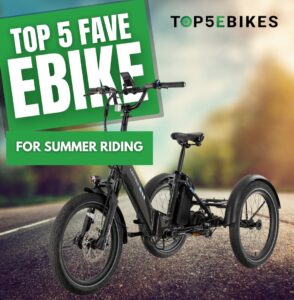
Best Ebikes for Summer 2025: Our Top Picks
Summer is here, and so is peak riding season. Whether you’re chasing weekend adventures, daily commutes, or easy neighborhood cruises, the right ebike can completely transform your experience. This year’s lineup brings serious variety, from connected fat-tire powerhouses to ultra-light folders and heavy-duty trikes that can haul it all. We’ve rounded up six standout models that impressed us for their performance, smart features, and rider-first design. These are our top