The Ebike Class System Explained (and Why It Matters More Than Ever)
The U.S. ebike boom has happened faster than most traffic codes were written, and for a while it was working. Now that more riders, more speed, and more power are sharing the same paths and streets, the question “what class is this?” is starting to matter as much as “how far will it go?”
At the federal level, the familiar three-class framework is meant to separate bicycle-like ebikes from mopeds and motorcycles. Most states have now adopted some version of this system, with their own twists layered on top. The details can feel technical, but they decide where you are allowed to ride, whether you need a helmet, and in some cases whether your “ebike” is legally an ebike at all.
The tension is simple: the three-class system was built around relatively modest pedal-assist bikes. A growing share of the market now looks and rides like small electric motorcycles. That gap between the rules on paper and the bikes on Instagram is exactly where riders are getting into trouble.
Class 1, 2, and 3 — What the Numbers Actually Mean
Most U.S. ebike laws start with three categories:
- Class 1
- Pedal assist only, no throttle.
- Motor cuts out at 20 mph.
- Often allowed on most bike paths and multi-use trails where traditional bikes are allowed, though local rules can vary.
- Class 2
- Pedal assist plus a throttle that can move the bike without pedaling.
- Throttle and assist limited to 20 mph.
- Typically allowed anywhere Class 1 is, but some trail and park systems restrict throttles even if state law allows them.
- Class 3
- Pedal assist up to 28 mph, usually with no throttle, though a few bikes offer limited-speed throttles.
- Often restricted from certain bike paths and multi-use trails.
- Common helmet and age requirements (for example, riders under 16 barred from operating Class 3 in many states).
This system is meant to define “low-speed electric bicycle,” not to cover everything with a battery and two wheels. Once you get beyond 28 mph assist or 750W nominal motor power, many states stop seeing your bike as a bicycle and start treating it as a moped or motorcycle instead.
How States Layer Their Own Rules on Top
The three classes are a starting point, not a ceiling. Federal agencies focus mostly on manufacturing and safety standards. States decide how and where ebikes can be ridden on their roads, paths, and trails.
That means the same ebike can effectively live three different lives depending on where you take it:
- In some states, Class 3 ebikes are allowed in bike lanes on the road but banned from shared-use paths.
- Helmet rules change: a Class 3 rider might need a helmet in one state and only be “strongly encouraged” to wear one in the next.
- Age minimums vary: many states prohibit riders under 16 from operating Class 3 ebikes; others go further for any motorized device on certain paths.
- Overpowered or modified bikes that exceed class limits may be reclassified entirely, triggering motorcycle-style rules on licensing, registration, and insurance.
For buyers, this is where the risk starts. A bike sold as “Class 3 compliant” on a national website might be treated as a moped in one state, a trail-restricted bike in another, and a normal commuter in a third.
The Regulatory Tightening Trend — What’s Driving It
For years, ebike law guides could treat the three-class system as a static chart. That is no longer the case. In 2024 and 2025, several states began revisiting their rules, and that process has only accelerated into 2026.
Three real-world pressures are driving this.
Injury and Conflict Data
Emergency departments and local governments have reported rising collisions involving ebikes, especially higher-speed models ridden by teens or newer riders on shared paths and sidewalks. Pedestrian complaints about near-misses and high-speed passing on narrow paths are also becoming more common in public meetings and local enforcement discussions.
Fire and Battery Safety
A wave of apartment and shop fires tied to uncertified batteries and chargers has pushed cities and states to take battery safety far more seriously. Much of that conversation now centers on UL certification, which refers to safety testing standards developed by Underwriters Laboratories for products like battery systems, chargers, and electrical components. Requirements for UL-certified systems, retailer obligations, and storage rules are now appearing in legislation and building codes rather than sitting off to the side as optional industry guidance.
Category Confusion
Devices like high-power moped-style ebikes and e-motos look like bikes to consumers but behave more like small motorcycles once they are in traffic. The problem is not just speed. It is that many riders assume they can use bike lanes, shared paths, and other bicycle spaces the same way they would on a standard ebike, even when the size, weight, and performance of the machine make that a much worse fit.
California has become one of the clearest examples of a state responding to all three pressures at once. Recent legislation and policy updates there combine speed rules, youth restrictions, and battery standards, and treat 28+ mph devices and higher-power e-motos as fundamentally different from Class 3 ebikes. Other states, including New Jersey and some East Coast and Pacific Northwest markets, are watching closely and beginning to adopt their own versions of these ideas.
The Brands in the Crosshairs — Performance Ebikes and the Classification Problem
Most riders do not shop by reading transportation code. They shop by brand and vibe, which is part of the problem.
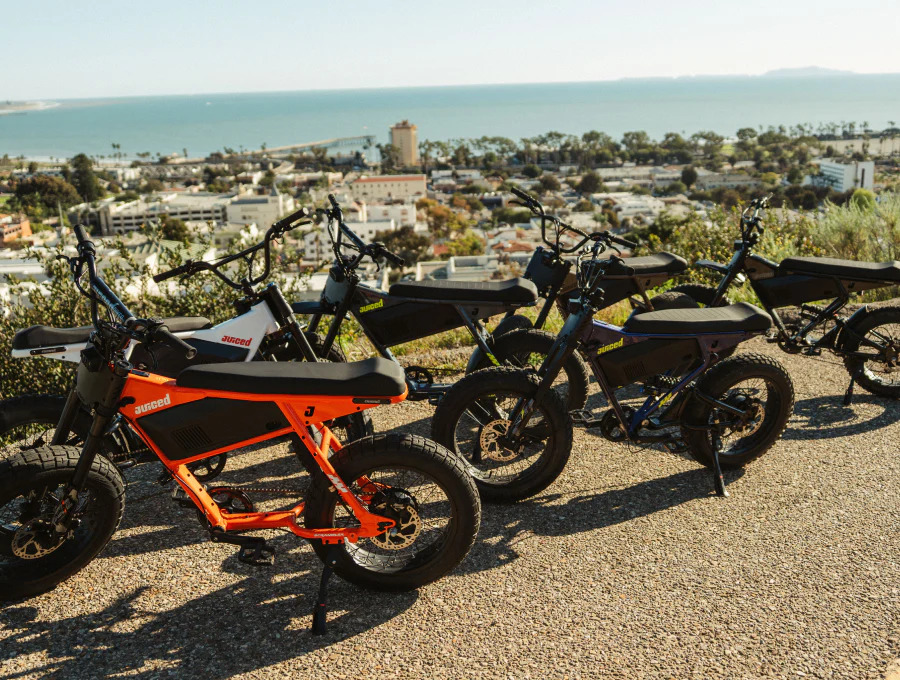
A growing part of the market is built around moped-style frames, motorcycle-like styling, and performance-oriented marketing. These bikes are sold on power, torque, and “off-road” feel, sometimes with quiet references to “unlocking” higher performance modes. The branding lives in the motorcycle space; the legal labels are often still “Class 2” or “Class 3.”
This is where the classification problem shows up most clearly. Some of the most popular models from brands like Super73 and Sur Ron sit at or beyond the edges of the three-class framework, especially when modified or used outside their as-sold profiles.
Super73
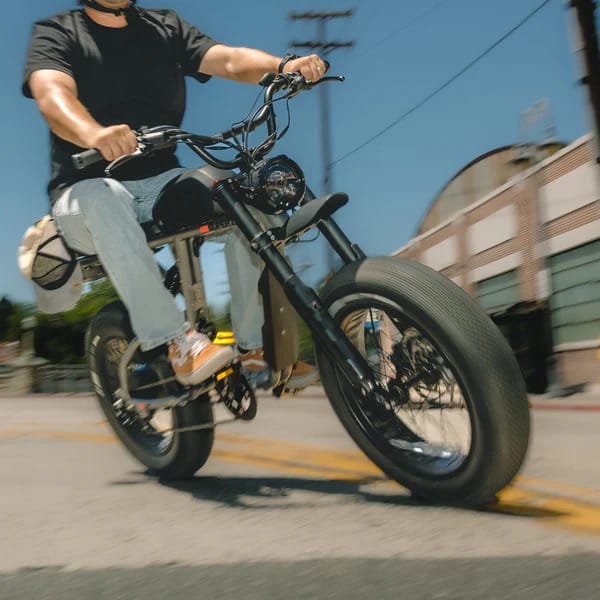
Super73 built its identity around retro, moto-inspired ebikes with long benches, fat tires, and strong accelerations. Many of its bikes ship configured to fit within Class 2 or Class 3 definitions: 20 mph throttle limits, 28 mph pedal-assist caps, and nominal motor power at or near the 750W mark.
In practice, several factors muddy the water:
- Some models offer “off-road” or “unlimited” modes that raise speed or power beyond class limits, typically through app settings, display controls, or other user-accessible configuration changes.
- The bikes’ motorcycle-like appearance leads some riders and bystanders to assume they are mopeds or motorcycles, regardless of how they are configured.
- When a Super73 is used at higher speeds on shared paths, it behaves less like a traditional bicycle and more like a small motorcycle in terms of reaction distance and braking needs.
Legally, a Super73 that stays within 20 mph throttle and 28 mph assist limits, with functional pedals and appropriate labeling, is usually treated as an ebike in jurisdictions that use the three-class system. Once those limits are bypassed or the bike is used as a de facto moped, riders can find themselves in a gray area, especially if an incident occurs and police or insurers decide to take a closer look at the bike’s actual capabilities rather than its marketing label.
Sur Ron (E-Moto)
Sur Ron sits in a different category entirely. Models like the Sur Ron Light Bee X are marketed as electric dirt bikes or e-motos with motorcycle-style frames, foot pegs instead of practical pedals, plus power and speed that go well beyond typical ebike limits.
In most U.S. jurisdictions, a Sur Ron Light Bee is not considered an ebike at all. It is treated as a motor-driven cycle, moped, or motorcycle, depending on state law. That usually means:
- It is not street legal without registration, plates, and often a motorcycle endorsement.
- It is not legal on public multi-use paths or bike trails that allow Class 1–3 ebikes.
- It may be restricted to off-road areas where motorcycles are allowed, subject to land-use rules.
The Lake Forest case in California made this distinction painfully public. According to prosecutors, a 14-year-old riding an electric motorcycle hit an 81-year-old man, leaving him critically injured. The district attorney has framed the device as an illegal e-motorcycle, and the teen’s parent now faces felony charges tied to allowing an underage rider to operate it on public roads.
That case is not about an ordinary Class 1 commuter rolling through a stop sign. It highlights what happens when e-moto-class machines are bought and ridden as if they were just faster ebikes, without the licensing, training, and restrictions that normally follow motorcycles.
Sur Ron does sell road-legal variants in some markets, and local rules differ, but the broad pattern is consistent: these machines sit outside the three-class ebike framework. Riders who treat them as Class 2 or Class 3 ebikes on streets and paths are often operating well outside what their state considers legal ebike use.

What This Means If You’re Buying an Ebike in 2025
If you are in the market for a new ebike in 2025, the legal side of the decision is no longer something you can leave entirely to the product page. The difference between a compliant Class 3 commuter and an e-moto that needs registration is not always obvious in a lifestyle photo.
A few practical steps can keep you on the right side of the rules:
- Check your state’s ebike laws before you buy
Start with your state’s transportation or motor vehicle department website, or a reputable ebike laws by state guide, and look specifically for ebike classes, age limits, helmet rules, and where different classes can ride. Treat “ebike laws California” and “ebike laws [your state]” as separate questions, because the answers often are. - Look beyond marketing language
“Off-road,” “unlimited mode,” and “30+ mph” may sound appealing, but they also move a bike toward moped or motorcycle territory in the eyes of the law. Pay attention to the listed class, nominal motor wattage, and top assisted and throttle speeds as sold. - Make sure the class labeling is clear
Many states now require a permanent label on the frame showing the bike’s class, top assisted speed, and motor power. If that information is missing or vague, assume you will be the one explaining the bike to law enforcement or insurers if anything goes wrong. - Think about where you will ride most
If your main use case is multi-use paths, off-street trails, and boardwalks, a Class 1 or well-behaved Class 2 is usually easier to live with than a borderline moped-style machine. If you need a fast commuter to mix with traffic, a clearly defined Class 3 ebike may be a better fit than a “sort of Class 3” moped-style device. - Use buying guides that treat law as part of the spec sheet
A good ebike buying guide in 2025 does not just compare range and motors. It should also flag whether a given model is likely to be considered a bicycle, a moped, or something in between in the states where you plan to ride.
The more performance-oriented your dream bike is, the more important this homework becomes.
Where Ebike Regulation Is Headed
The only safe assumption about ebike laws in 2026 and beyond is that they will keep changing.
A few trends look especially likely.
More States Will Revisit Their Frameworks
States watching California, New Jersey, and others are already debating speed caps, age limits, and battery requirements. Some are also considering new categories for e-motos and other high-power devices that do not fit comfortably inside the three-class system.
The Three-Class System May Be Refined Rather Than Abandoned
The basic idea of separating low-speed ebikes from motor vehicles is unlikely to disappear, but the definitions may tighten around peak power, unlocked speeds, and what counts as operable pedals. Devices that exceed those limits are more likely to be routed into moped or motorcycle categories.
Battery and Safety Standards Will Get Stricter
UL-type certification requirements, retailer obligations, and storage rules in dense urban areas are likely to expand. That will affect which brands can sell where, and how apartments, workplaces, and transit systems treat charging and storage.
Performance-First Brands Will Face Harder Questions
Companies that build their identity around high speed and motorcycle aesthetics, whether in the Super73 or Sur Ron mold, will have to navigate a narrower legal corridor if they want their bikes to remain easy to buy and ride in more states.
For riders, the takeaway is less dramatic than some headlines suggest but still important. Ebike law is not heading toward a sudden ban on Class 1 commutes. It is heading toward clearer boundaries between bicycle-like ebikes and motor-vehicle-like e-motos, with more responsibility on brands and buyers to know which side of that line they are on.
Sites like Top5ebikes exist to track that moving target. As more states update their rules and more performance models hit the market, the goal is simple: help riders understand not just what a bike can do, but where and how it can be ridden legally.
FAQ: Ebike Laws, Classes, and Regulations
Do I need a license to ride an ebike?
In most states, you do not need a driver’s license to ride a Class 1, 2, or 3 ebike that stays within the standard limits. Once a bike exceeds those limits or is classified as a moped or motorcycle, licensing and registration requirements usually apply.
What is the difference between an ebike and an e-moto like a Sur Ron?
A legal ebike has operable pedals, a motor under 750W nominal power, and speed limits that match Class 1, 2, or 3 definitions. E-motos like many Sur Ron models have higher power and speeds and are typically treated as motor vehicles, not bicycles, under state law.
Are Class 3 ebikes legal on bike paths?
Often, no. Many states and cities restrict Class 3 ebikes to bike lanes in the roadway and ban them from certain multi-use paths and trails. Local rules vary, so it is important to check specific path and park regulations where you ride.
Can I ride a Super73 on the street without registration?
If a Super73 model is configured and labeled to meet Class 2 or Class 3 limits, it is usually treated as an ebike and does not require registration in states that use the three-class system. If it is modified beyond those limits or used in “unlimited” modes on public roads, it may fall into a moped or motorcycle category in practice.
Are ebike laws the same in every state?
No. Many states share the same basic three-class structure, but they differ on age limits, helmet rules, path access, licensing for higher-power devices, and how strictly they enforce speed and power caps. Some cities add their own rules on top of state law.
What changed in ebike laws around 2024–2026?
Several states, led by California and New Jersey, introduced or updated laws covering youth riders, helmet requirements, path access, and battery safety. Urban areas with high ebike adoption have also tightened fire and charging regulations for apartment buildings and businesses.
How can I quickly check ebike laws in my state?
The most reliable sources are your state’s transportation or motor vehicle department and recent, well-sourced state-by-state ebike law guides that clearly show when they were last updated. Always make sure you are looking at current information rather than pre-2020 articles.