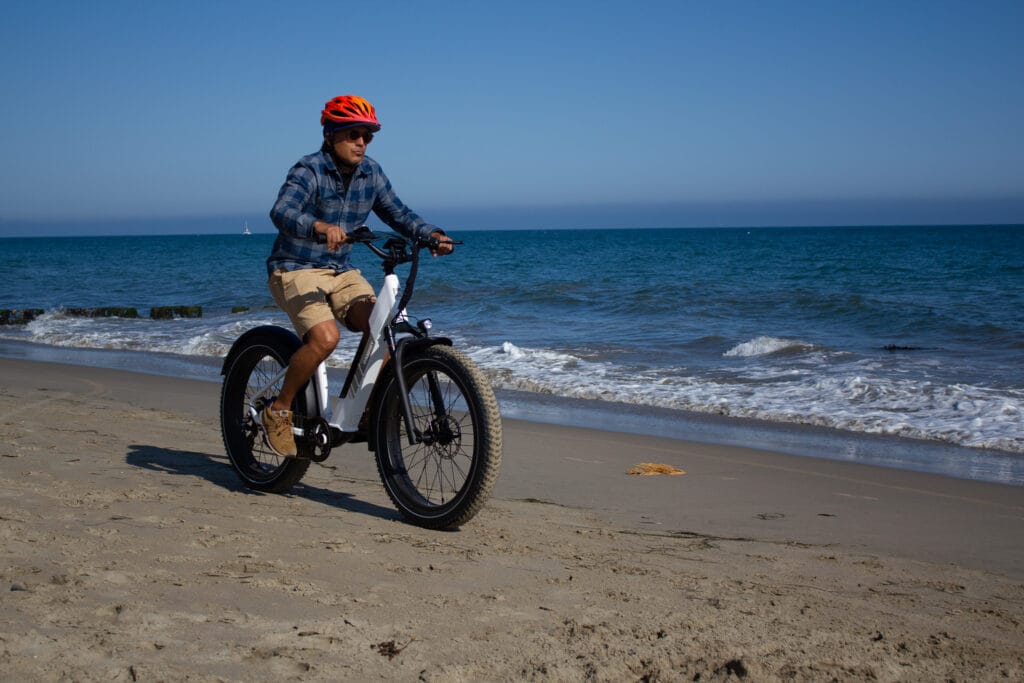
Choosing between an ebike vs regular bike sounds simple until you actually start thinking about how you currently ride and how you want to ride. Do you want the cheapest, lightest bike possible and to just get from point A to point B? A regular bike makes a lot of sense. Do you want help with hills, longer rides, commuting, or arriving somewhere without looking like you just survived a spin class hostage situation? An ebike starts looking pretty tempting.
The good news is that neither option is “better” for everyone. Electric bikes and regular bikes are built around different priorities. Ebikes add a motor, battery, and pedal assist to make riding easier and more practical for more trips. Regular bikes keep things lighter, simpler, cheaper, and more traditional.
So the real question is not “Are ebikes better than regular bikes?” It is “Which one fits the way I want to ride?”
This guide compares electric bikes vs regular bikes across cost, commuting, exercise, hills, maintenance, storage, and everyday practicality so you can choose the bike that makes the most sense for your life.
Ebike vs Regular Bike: Quick Comparison
Here is the short version: ebikes are usually better for elevation, commuting, longer rides, carrying gear, and reducing effort. Regular bikes are usually better for lower cost, lighter weight, simpler maintenance, easier storage, and riders who want a more traditional workout.
An ebike can make biking feel more realistic for everyday transportation. A regular bike keeps the experience simple and human-powered. One gives you a helping hand. The other makes you earn every mile yourself, for better or worse.
If you are brand new to electric bikes, start with our guide to what an ebike is. But if you already understand the basics and are deciding between a regular bike vs ebike, the choice mostly comes down to distance, terrain, budget, storage, and how much help you want from the bike.
Key Differences Between Ebikes and Regular Bikes
The biggest difference is obvious: an ebike has a motor and battery, while a regular bike does not. But that one difference changes almost everything else, from price and weight to commuting comfort and maintenance.
Here is how the two compare in everyday terms.
Feature | Ebike | Regular Bike | Better Choice |
Cost | Higher upfront cost, plus battery and electrical parts | Lower upfront cost and fewer expensive parts | Regular bike for budget |
Weight | Heavier because of the motor, battery, and frame reinforcement | Lighter and easier to carry | Regular bike for stairs/storage |
Speed | Easier to maintain higher speeds with assist | Speed depends fully on rider effort | Ebike for faster everyday rides |
Exercise | Still provides exercise, but effort can be adjusted | Requires more effort per mile | Regular bike for max effort |
Hills | Much easier with pedal assist | Fully rider-powered, harder on steep climbs | Ebike for hills |
Maintenance | More parts: motor, battery, display, wiring, controller | Simpler drivetrain and fewer systems | Regular bike for simplicity |
Range | Limited by battery capacity and charge level | Limited by rider energy and time | Depends on the rider and habits |
Storage | Heavier and may need indoor battery storage | Easier to hang, lift, and store | Regular bike for tight spaces |
Commuting | Great for longer, hillier, sweat-sensitive commutes | Best for shorter or flatter commutes | Ebike for practical commuting |
Fun factor | Feels fast, easy, and confidence-boosting | Feels simple, direct, and classic | Tie, depending on your version of fun |
The table makes it look neat, but real life is messier. A regular bike can be perfect for an easy, flat ride, while an ebike starts to make more sense when distance, hills, heat, or daily consistency become part of the equation. The better choice is the one you will actually use.
Which Is Better for Commuting?
For commuting, an ebike usually has the edge. That does not mean a regular bike is bad for commuting. It just means an ebike solves more of the annoying little problems that stop people from biking to work in the first place.
The biggest commuting advantage is effort control. With pedal assist, you can ride faster with less strain, especially on hills or longer routes (or if you’re running late for that 9:00 AM meeting). That matters if you need to show up to work looking like a normal employee and not like you fought Mother Nature on your way in.
Ebikes are also helpful when your commute is just a little too far for a regular bike to feel realistic. A five-mile ride may be totally fine on a traditional bike. A 12-mile ride with hills, traffic stops, a backpack, and a headwind can quickly become a character-building experience nobody asked for.
An ebike can help with:
- Longer commutes
- Hilly routes
- Hot weather
- Carrying a backpack or panniers
- Reducing sweat
- Keeping a steadier pace
- Replacing short car trips
- Riding when you feel tired
Regular bikes still make sense for shorter, flatter commutes, especially if you have secure storage and do not mind the extra effort. They are lighter, cheaper, and easier to lock up without worrying about a battery.
The main downside of commuting by ebike is security. Ebikes are more expensive, more attractive to thieves, and heavier to bring indoors. If you cannot store it safely at home, work, or school, that needs to be a big part of the decision. A bike you are scared to lock outside defeats the purpose of the stress-free transportation we are going for.
For a deeper look at whether the extra cost makes sense, see our guide to are ebikes worth it.
Which Gives You More Exercise?
A regular bike usually gives you more exercise per mile because every bit of movement comes from your legs. There is no motor helping on hills or pedal assist taking the edge off stop-and-go riding. If the ride gets harder, your legs are the backup plan.
So if your main goal is a traditional workout, a regular bike is the cleaner choice. It forces more effort, burns more energy per mile for many riders, and gives you a more direct fitness experience.
But that does not mean ebikes do not count as exercise. They absolutely can. You are still pedaling, balancing, steering, climbing, braking, and moving your body. The difference is that you can choose how much help you want.
This is where ebikes get interesting. A regular bike may require more effort per mile, but an ebike may help someone ride farther, ride more often, and choose biking on days when they would otherwise drive. A person who rides an ebike five times a week may end up getting more total movement than someone whose regular bike sits in the garage giving motivational speeches to nobody.
Calories burned depends on how hard you ride, how much assist you use, how long you ride, and your body size. Lower assist usually means more effort. Higher assist usually means less effort. But the “best” option depends on what keeps you consistent.
If you want maximum workout efficiency, choose a regular bike. If you want adjustable effort that makes biking easier to stick with, an ebike can still be a very solid fitness tool.
Which Is Better for Hills?
For hills, the ebike wins. This is one of the clearest differences in the electric bike vs regular bike comparison.
Pedal assist makes climbing easier by adding motor power while you ride. That helps you maintain momentum, reduce strain, and avoid turning every hill into an “alright… here we go”. For commuters, older riders, heavier riders, people carrying gear, or anyone who lives in a hilly area, that support can completely change whether biking feels like a go-to or not.
Regular bikes can absolutely handle hills, but the rider has to supply all the power. That can be great if you want the workout. It can be miserable if you are trying to get to work, carrying groceries, towing a kid trailer, or riding home after a long day.
Ebike hill performance depends on the motor, battery, gearing, rider weight, and assist system. A strong motor can make a big difference, but the way the bike delivers power matters too. Some ebikes use cadence sensors, which provide assist when the pedals are turning. Others use torque sensors, which respond more naturally to how hard you press on the pedals.
The simple version: if hills are part of your normal ride and you do not want every climb to feel like a fitness test, get the ebike.
Cost Comparison: Ebike vs Regular Bike
Regular bikes are usually much cheaper than ebikes. That is true upfront and often true over time.
A basic regular bike can cost a few hundred dollars. A higher-quality commuter, road, gravel, or mountain bike can cost much more, but you still avoid the big-ticket electrical parts that come with an ebike. Ebikes add a motor, battery, display, controller, wiring, and often stronger frames, wheels, and brakes to handle the extra weight and speed.
That is why ebikes usually cost more at purchase. The cost difference does not stop at checkout. Ebike ownership can also include:
- Battery replacement
- Charger replacement
- Electrical diagnostics
- Heavier-duty tires
- More frequent brake service
- Better locks
- Insurance or theft protection
- Replacement displays or controllers
- Brand-specific parts
The battery is the big one. Ebike batteries usually last several years, but replacement can be expensive depending on the brand, size, and compatibility. A regular bike does not have that problem, because there is no battery sitting there plotting its eventual retirement.
That said, an ebike can still be worth the higher cost if it replaces car trips, public transit, rideshares, or parking fees. The value is not just in the bike itself. It is in what the bike lets you avoid.
A regular bike is cheaper if you only compare bikes. An ebike may make more financial sense if it helps replace part of your transportation routine.
Maintenance Comparison: Ebike vs Regular Bike
Regular bikes are simpler to maintain. They have fewer systems, fewer expensive parts, and fewer things that require brand-specific support. Most bike shops can handle basic regular bike maintenance like brake adjustments, tire changes, chain replacement, cable service, and drivetrain tuning.
Ebikes still need all of that regular bike maintenance, but they add electrical components on top of it. That means you also have to think about the motor, battery, display, controller, wiring, sensors, charger, and software or error codes depending on the model.
Ebikes may also wear through certain parts faster because they are heavier and often ridden at higher average speeds. Tires, brake pads, chains, and drivetrains often take on more wear and tear, especially on commuter or cargo ebikes.
That does not make ebikes fragile. A good ebike can be very reliable. It just means maintenance is less simple than a traditional bicycle. When something goes wrong with a regular bike, it is often mechanical and visible. When something goes wrong with an ebike, sometimes the bike starts speaking in error codes that only someone who is fluent in ebike can understand. And those people are often expensive translators.
If you want the easiest ownership experience, a regular bike wins. If you are comfortable with a little more complexity in exchange for pedal assist, the ebike trade-off can be worth it.
Storage and Portability
Regular bikes are usually easier to store, lift, hang, and carry. They are lighter, simpler, and less awkward to move around. If you live in an apartment, carry your bike upstairs, use a wall rack, or lift your bike onto a car rack often, that weight difference matters.
Ebikes are heavier because of the battery, motor, and reinforced parts. Even “lightweight” ebikes are usually heavier than regular bikes. That can be fine if you roll the bike into a garage. But not so fine when you are dragging it up three flights of stairs while it hits each individual stair and annoys your neighbors.
Ebikes also need more thoughtful storage because of the battery. If the battery is removable, you may want to store it indoors, especially in extreme heat or cold. If theft is a concern, bringing the battery inside can also make the bike less attractive to steal.
Regular bikes are less demanding. Lock them, hang them, roll them inside, toss them on a rack, and move on with your life. There is beauty in that simplicity.
Ride Feel and Fun Factor
This is where the choice gets personal. Ebikes and regular bikes feel different, and both can be fun for different reasons.
A regular bike feels direct. You pedal, it moves. You push harder, it goes faster. There is something satisfying about that. It is quiet, light, responsive, and fully powered by you.
An ebike feels more flexible. You can cruise when you are tired, boost up hills, keep pace in traffic, or take a longer route without worrying about whether your legs signed off on the plan. It can make riding feel more accessible and less intimidating, especially if you are coming back to biking after a long break.
Some people love the purity of a regular bike. Some people ride an ebike once and immediately start wondering why they ever conquered a hill without one.
Neither version of fun is wrong. One is “I want the ride to be the workout.” The other is “I want the ride to be easy enough that I actually do it.”
Which One Should You Choose?
The best choice depends on how you plan to use the bike. Not how you imagine yourself riding in a perfect world with perfect weather and perfect legs.
Choose an Ebike If…
Choose an ebike if you want help with hills, longer rides, commuting, cargo, or reducing effort. Ebikes are also great if you want to bike more often but feel limited by fitness level, distance, terrain, weather, or time.
An ebike may be the better choice if:
- Your commute is longer than you would comfortably ride on a regular bike
- You live somewhere hilly
- You want to arrive less sweaty
- You carry groceries, gear, or a child seat
- You want to replace short car trips
- You need help keeping up with faster riders
- You want adjustable effort
- You are returning to biking after time away
- You want biking to feel more practical than heroic
The best reason to choose an ebike is simple: it makes you more likely to ride. That is the whole point.
Choose a Regular Bike If…
Choose a regular bike if you want the lightest, simplest, most affordable option. Regular bikes are great for riders who enjoy the workout, ride shorter distances, have flatter routes, or do not want to deal with charging, batteries, or electrical components.
A regular bike may be the better choice if:
- You want a lower upfront cost
- You want simple maintenance
- You need to carry the bike upstairs
- You have limited storage space
- You mostly ride short distances
- You want a harder workout
- You do not want to charge anything
- You prefer a lighter, more traditional ride feel
- You are not trying to replace car trips
The best reason to choose a regular bike is also simple: it gives you exactly what you need without extra cost or complexity.
Final Verdict: Ebike vs Regular Bike
In case you have not gotten the point yet: an ebike is better for commuting, elevations, longer rides, and everyday transportation. A regular bike is better for cost, simplicity, lighter weight, and a more traditional workout.
That is the real difference. Ebikes remove barriers. Regular bikes keep things simple.
So if you want biking to feel easier, more useful, and more realistic for transportation, go electric. If you want the lowest-cost bike with the least fuss and the most leg-powered effort, stick with a regular bike.
Whatever you choose, we hope to see you out there!
FAQ
Is an ebike better than a regular bike?
An ebike is better if you want help with hills, commuting, longer rides, carrying gear, or reducing effort. A regular bike is better if you want a lighter, cheaper, simpler bike and prefer a traditional workout. The better choice depends on how and where you plan to ride.
Do ebikes give you exercise?
Yes, ebikes can give you exercise. You still pedal, steer, balance, and move your body. The difference is that pedal assist lets you control how hard you work. A regular bike usually requires more effort per mile, but an ebike may help some riders ride farther and more often.
Are ebikes harder to maintain?
Ebikes are usually harder to maintain than regular bikes because they add electrical parts like a motor, battery, display, controller, sensors, and wiring. They also tend to be heavier, which can wear tires and brakes faster. Regular bikes are simpler and usually cheaper to service.
Is a regular bike better for weight loss?
A regular bike may burn more calories per mile because it requires more effort, but weight loss depends on consistency, ride duration, intensity, diet, and overall activity. An ebike can still support weight loss if it helps you ride more often or replace inactive trips with active ones.
Can an ebike replace a car?
An ebike can replace some car trips, especially short commutes, errands, school drop-offs, and local rides. It may not replace a car for everyone, especially for long highway trips, bad weather, or large cargo needs. But for many riders, an ebike can reduce how often they need to drive.
Should I get an e bike or regular bike?
Get an ebike if distance, hills, sweat, cargo, or motivation are stopping you from riding more. Get a regular bike if you want something lighter, cheaper, simpler, and more workout-focused. The best choice is the one that fits your actual routine.
Are ebikes cheating?
No, ebikes are not cheating. They are bikes with pedal assist. You can still get exercise, still pedal, and still choose how hard you want to work. Unless you are secretly entering the Tour de France in turbo mode, nobody needs to be this dramatic about it.